Home » Councils implement smart-city ready infrastructure*

Councils implement smart-city ready infrastructure*

Smart controls and innovations are on the rise in the lighting sphere. In 2016, 80,000 LED street lights, the bulk of them smart-city ready if not enabled, were installed throughout Australia.

Compared to the excitement and occasional confusion of only 12 months ago, councils are thinking through the practicalities of managing data and control.

Ironbark Sustainability’s Business Manager, Alexi Lynch, presenter at the Australian Smart Lighting Summit 2016, has seen a lot of changes in the smart control street lighting domain within the last year.

Lynch says councils have moved beyond the innovator phase of technology adoption to an early adopter phase where more mature discussion can transpire concerning smart lighting controls and smart cities.

Victoria is leading the way, with an Australian-first, network-wide, smart street lighting system for councils that will include thousands of smart-city enabled LEDs in Melbourne.

Lynch projects that councils will watch with interest where funding from the first round of the Federal Government’s $50m Smart Cities and Suburbs Program is invested.

Council amalgamations can be viewed as an opportunity for increase in scale, leading to lower capital costs and a more coordinated approach.

The Western Sydney Regional Organisation of Councils (WSROC), for example, are still looking at collectively rolling out street lighting programs despite amalgamations and are even open to supporting other councils in the Endeavour Energy distribution area to progress their LED projects.

The City of Ryde is a notable case study with residential and city smart controls installed over two years ago.

Since 2002, the City has seen street lighting upgrades with multi-functional poles (MFPs) as well as underground metered circuits. The Council is currently converting existing MFP’s to LED with smart controls.

In gearing up for a smart city future, barriers for councils to overcome include a low understanding of the technology, opportunities, ideas and risks associated with smart lighting implementation and the need to adapt to continuous change as opposed to traditional, contained projects.  Ultimately, the smart city is a new interaction between static infrastructure and technology, requiring the integration of knowledge and skills in both areas.
Collective industry knowledge gaps can hold back progress as well. Lighting distribution network service providers must work with local governments to understand budget and procurement requirements and the integration of lighting with other council infrastructure.
The Australian Smart Lighting Summit 2017 will see Anthony Ogle present a case study on the City of Ryde’s approach to smart controlled lighting. Alexi Lynch also joins a panel discussion on lighting in urban centres at the Summit.
*Copy supplied by Expotrade

Digital Editions


  • Alice skating program a success

    Alice skating program a success

    Free ice skating, packed programs and smiling faces have marked the end of a hugely successful school holiday program delivered through a partnership between Alice…

More News

  • First-class Pump Track opens in Ballina

    First-class Pump Track opens in Ballina

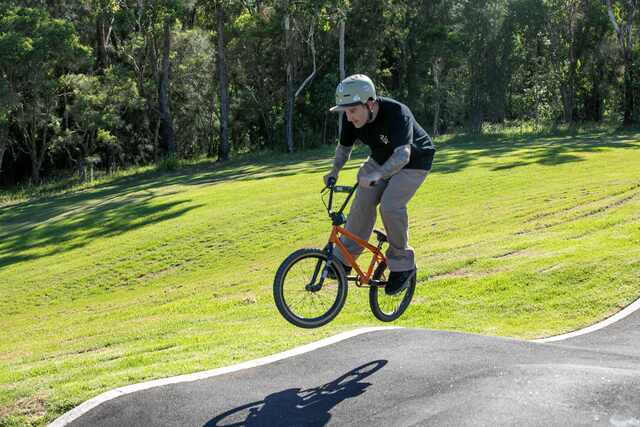
    Ballina Shire Council is thrilled to announce the completion of the new Ballina Pump Track at Kingsford Smith Reserve in the heart of Ballina. Designed to national competition standards, the…

  • Fraser Coast support announced

    Fraser Coast support announced

    Fraser Coast Regional Council has renewed and expanded its support for three key emergency services – the Royal Flying Doctor Service (RFDS), LifeFlight, and local Rural Fire Brigades. At their…

  • Council named among Australia’s most inclusive employers

    Council named among Australia’s most inclusive employers

    Lake Macquarie City Council has become one of only two local government organisations in Australia included in a benchmark list of inclusive employers. The Diversity Council of Australia (DCA) added…

  • New deputy in Griffith

    New deputy in Griffith

    Griffith City Council has elected Councillor Scott Groat as the new Deputy Mayor at the Ordinary Council Meeting held on Tuesday, 28 October 2025. Cr Groat will hold the position…

  • Planning for the future

    Planning for the future

    Cowes Primary School students brought plenty of energy and curiosity to Berninneit Cultural Centre in mid-October for a special Meet the Mayor visit as part of their Community Walk. Organised…

  • Wollongong named as host city

    Wollongong named as host city

    Wollongong has been announced as the host city for the 2026 Local Government NSW (LGNSW) Annual Conference, following a warm invitation from the Lord Mayor of Wollongong Councillor Tania Brown…

  • Grant secured for Northwood Street Road Safety Masterplan

    Grant secured for Northwood Street Road Safety Masterplan

    The Town of Cambridge, in partnership with the Flower District Town Team, has been awarded a 2025 Streets Alive Stream Two Grant to develop the Northwood Street Road Safety Masterplan.…

  • WSROC President re-elected, Board appointed

    WSROC President re-elected, Board appointed

    Councillor Brad Bunting has been re-elected as President of the Western Sydney Regional Organisation of Councils (WSROC) at its Annual General Meeting held at Blue Mountains City Council Chambers on…

  • Council seeks new voices for Advisory Committees

    Council seeks new voices for Advisory Committees

    Georges River Council is seeking new members for the Multicultural Advisory Committee and the Access and Inclusion Advisory Committee. They are part of Council’s ongoing commitment to diversity, inclusion and…

  • New president meets PM

    New president meets PM

    Newly elected Local Government NSW (LGNSW) of president Mayor Darcy Byrne has wasted no time in advocating for councils across the State, heading to Canberra to meet with Prime Minister…