How the City of Greater Geraldton implements participatory budgeting to find solutions.
The City of Greater Geraldton, like other local governments in Western Australia, is facing the difficult challenge of achieving financial sustainability in an environment of reduced funding, escalating costs and increasing community expectation. Within this environment, the City of Greater Geraldton has been challenged to balance the needs and aspirations of a growing community, with the community’s ability and willingness to pay.
In coming up with solutions to these challenges, the City has long recognised that the best solutions are those that are made collaboratively between Council, City staff and the community utilising the principles of deliberative democracy.
From November 2013 to March 2015 the City undertook several Participatory Budgeting processes to facilitate community input into Council decision making with the most recent initiative being a Community Summit held in March 2015.
Under the banner of #changesCGGcommunity, the City worked with the community via two Community Panels from Nov 2013 to April 2014. The first panel met over four weeks to determine the priorities for the 10 Year Capital Works Plan and develop a framework for evaluating new projects for inclusion in future capital works plans.
This provided staff with a more focused approach for progressing capital works and some level of certainty for the community about what facilities they can expect Council to deliver in the coming years. The second panel reviewed the level of services the City provides and made recommendations to Council on increasing, decreasing or maintaining the current level of service. The recommendations put forward by the two Panels were fully endorsed by Council.
However, since these two panels submitted their reports and recommendations to Council significant reductions in State and Federal Government funding, escalating costs, particularly utility costs and a growing backlog of infrastructure renewals have impacted upon the City’s budget. Although Council could simply increase rates to cover the growing shortfall, the community had made it very clear that rates needed to be kept at manageable levels.
Within this context the City started identified internal efficiencies but was unable to achieve the savings required. The only avenue left was to examine the range of non-mandatory services. Council would need to make some very difficult decisions about which services would continue to be provided, which would be reduced and in some cases stopped altogether.
To better understand which non-mandatory services the community values the most the City held a two day Community Summit. The Summit gave residents the opportunity to learn about the City’s non-mandatory services and what it costs to provide them; deliberate these services with other participants whilst having questions answered by City staff; and then vote for the services they believed the broader community valued most.
To assist participants in their task, the City developed an online tool which enabled participants to learn about each of the 98 services and spend their allocated budget. Participants were given $2.5million less than the total cost to provide the services which essentially forced prioritisation.
At the end of the two day workshop process Summit participants not only produced the priority list of non-mandatory services they were tasked with, they also submitted more than 90 pages of recommendations regarding these services, many of which the City is currently investigating.
The prioritised list of services has since been given to Council to inform their decision making regarding the 2015/16 budget and in determining which non-mandatory services the City of Greater Geraldton will continue to provide. By involving the community in the decision making process Council is ensuring the services that the City provides align with community need and aspiration and more importantly their ability and willingness to pay for them.
Who participated in the Community Summit?
The Summit was widely advertised via local media, social media and posters and flyers inviting residents to attend with the condition they must attend both Summit days. Thirty-five self-selecting residents attended.
Randomly selected residents that statically and demographically represented the community were recruited by a third party. 14 Randomly selected residents attended.
Members of the two previous Community Panels were invited to attend as they already had a good understanding of services and the Summit provided some continuity to their work. 11 previous Panel members attended.
The City invited the many partners or key stakeholder organisations in the community with whom it works(other tiers of government, NGOs, community groups, business sector). Thirteen key stakeholders attended.
The Process Day One
On the first day participants were given an overview of the City’s financial situation, given time to discuss what they heard and then ask questions of the CEO.
A set of six assessment criteria developed by the previous Community Panels was presented, reviewed and amended by participants to be used when deliberating services.
Participants were given a demonstration of how to use ‘Particibudget’, the online tool for making service selections.
Homework packs containing information on the 98 services and personal login details for the online tool were distributed to participants.
Participants had ten days to make their preliminary service selections and recommendations before the second workshop.
The Process Day Two
Participants received the preliminary results of their collective service selections.
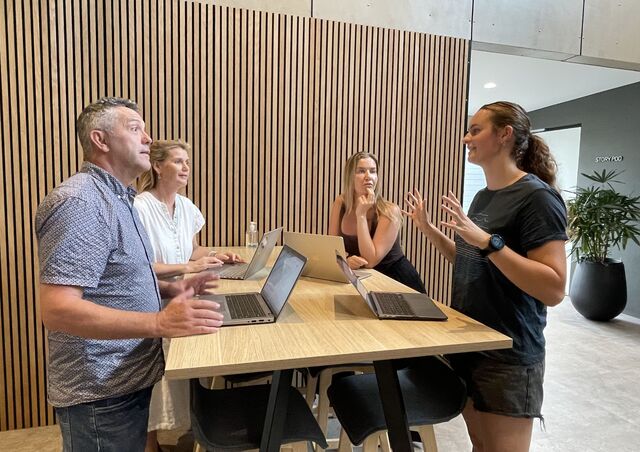
Sitting at small tables, each participant chose ten services they wanted to discuss and these were deliberated over a two hour period.
Participants were given the opportunity over an extended lunch hour to make changes to their service selections online if they wanted to.
A poll was conducted to learn from participants which services they would be willing to pay more rates for to keep.
Time was allocated for participants to make further recommendations which was followed by a ‘soap box’ session where participants spoke for one minute about a service of their choice.
Particibudget remained open for 24 hours to enable participants to make further changes to their service selections if so desired.