Consumers in western countries are becoming more aware and concerned about the potentially negative environmental effects of energy intensive lifestyles. As such, carbon offsetting as part of a ‘carbon neutral’ lifestyle is fast gaining appeal and momentum.
A carbon offset is a financial instrument representing a reduction in greenhouse gas emissions. Although there are six primary categories of gre*enhouse gases, carbon offsets are measured in metric tons of carbon dioxide equivalent (CO2e). One carbon offset represents the reduction of one metric ton of carbon dioxide, or its equivalent in other greenhouse gases.
There are two primary markets for carbon offsets.
In the larger compliance market, companies, governments or other entities buy carbon offsets in order to comply with caps on the total amount of carbon dioxide they are allowed to emit. In 2006, about $5.5 billion of carbon offsets were purchased in the compliance market, representing about 1.6 billion metric tons of CO2e reductions.
In the smaller voluntary market, individuals, companies, or governments purchase carbon offsets to mitigate their own greenhouse gas emissions from transportation, electricity use, and other sources. For example, an individual might purchase carbon offsets to compensate for the greenhouse gas emissions caused by personal air travel.
In 2006, about $91 million of carbon offsets were purchased in the voluntary market, representing about 24 million metric tons of CO2e reductions.
Offsets are typically generated from emissions reducing projects. The most common project type is renewable energy, such as wind farms, biomass energy, or hydroelectric dams. Other common project types include energy efficiency projects, the destruction of industrial pollutants or agricultural byproducts, destruction of landfill methane, and forestry projects.
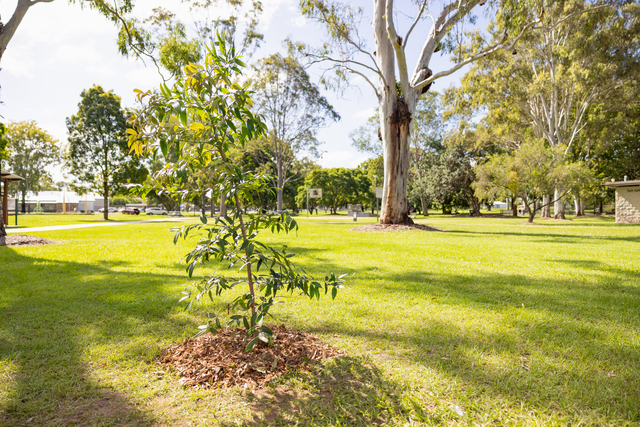
In May, Tasmania’s Launceston City Council approved a three year carbon offset project at Hoblers Bridge Reserve, located on the banks of the North Esk River in Newstead, just under three kilometres from the Launceston CBD. In partnership with the Tasmanian Government’s Private Forests Division, Council will plant out 12 hectares of the reserve with native tree species.
Covering 25 hectares, the reserve has been actively restored by the Council since the early 1990s and features a network of walking trails. The new plantings will transform the site into a major urban forest as a carbon offset promotion site.
Council’s Parks and Recreation Manager, Andrew Smith, said the project will revitalise an area currently vegetated with grass and weeds.
“The 12 hectares of plantation will account for the annual emissions of 60 cars, which is significant in terms of a contribution towards offsetting emissions from Council’s light vehicle fleet,” he said. “The site also has huge potential for education initiatives given its close proximity to the city, diversity of recreational experiences and wildlife in the area. It offers the opportunity for students to study the role of trees in offsetting carbon outputs.”
The amount of carbon captured will be calculated over time and posted on Council’s website.
Andrew Smith said once the plantings are established, selective harvesting will take place. He said it would be based on the size and merchantable characteristics of each tree.
“Any harvesting would be aimed at materials for the production of fine furniture, thereby retaining carbon within the end use,” Andrew Smith said.
“Selective harvesting would also provide an income to assist in maintaining the reserve. It would be undertaken on the absolute basis that a minimum of 60 per cent cover would be maintained at all times.”
The project will cost $30,000 over the three years, with contributions of $5,000 a year by the State Government and Council in the first three years.
Maintaining the reserve will cost Council between $1,000 and $1,800 a year after that time.
Andrew Smith said there are also other sites on Council land that could be considered for future plantings.
For further information contact Nicola Karpeles at Launceston City Council on (03) 6323 3111.