Crows Nest Shire Council in south east Queensland has captured the imagination of the community with an innovative, holistic natural resource management (NRM) project that mixes planning, policy, on ground works and incentives. The project’s origins go back to 1990 with a small tree planting program along a barren roadside. Following this, an assessment was made of the conservation values of bushland reserves, mapping of extent and condition of native vegetation, a wildlife corridor management strategy and finally, Project Green Nest.
Supported with $334,000 from the Australian Government’s Natural Heritage Trust, the project has activated an entire community – rural, lifestyle and urban residents. It followed a community attitude survey conducted in 2002 and the Shire’s recognition of increasing threats, such as rural development pressure and weed invasion.
Two hundred survey participants demonstrated their support for the project. The widespread community acceptance stimulated interest and activity from landholders and this has consequently changed landholder perceptions. Today, NRM is core Council business resulting in increased on ground actions.
The nuts and bolts of Project Green Nest include: an NRM strategy, community partnerships between Landcare, regional NRM bodies, funding for on ground works, a voluntary conservation agreement program, an environmental levy and rate rebates for entering into conservation agreements. All of this represents a $1.25 million investment in the community’s future.
In addition to the $334,000 from the Natural Heritage Trust, more than $900,000 came from kind contributions from Council and the wider community. The investment was worth every cent because Crows Nest Shire is located at the head of two major catchments – the Brisbane River to the east and the Murray Darling Basin to the west – which provide water to a surrounding population of about 120,000 residents.
The Shire’s NRM officer, Rick Galbraith, said the dominant industry was agricultural production particularly cattle grazing, which covers the greatest land areas of any single industry. However, land use from agricultural and horticultural production, urbanisation and a new economic development program within the area has the potential to severely impact the natural resources of the Shire.
“The developing Shire was one of the reasons for the project,” Rick explained. “From a Council point of view, we wanted to balance economic development with sustainable land management practices that ensured the preservation of the Shire’s unique values, while at the same time supporting land managers and businesses with good quality information.”
Environmental challenges faced by the Shire include small areas of dryland salinity, declining water quality in some areas, extensive areas of woody weeds (lantana in particular), the potential local extinction of some plant and animal species and declining tree health. Gully and streambank erosion and the ongoing drought is contributing to sediment loads in the Upper Brisbane River catchment.
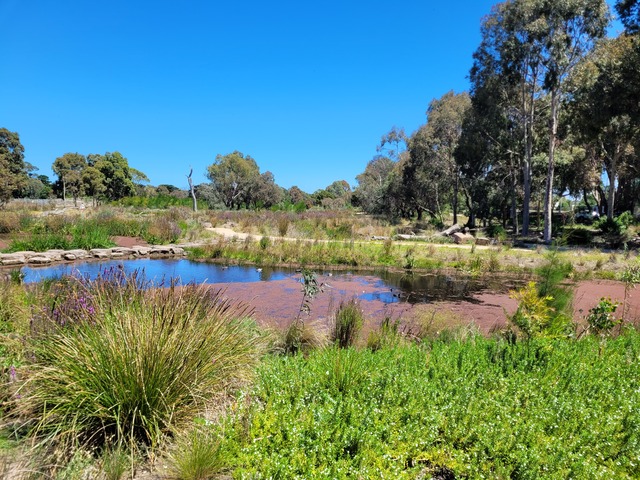
With the arrival of Project Green Nest came 30 people taking part in the devolved grants on ground work projects. Landholder grants help carry out NRM activities on private property such as fencing off areas of significant remnant vegetation, native pasture rehabilitation, replanting native vegetation for wildlife habitat or providing alternative watering points for livestock. With only 7.8 per cent of public land in national parks or similar reserves in Australia, it is essential that private landholders are on board for NRM.
The results are impressive – protection, rehabilitation and revegetation works covered an area of 1,485 hectares, which exceeded the original project target of 1,220 hectares. Tree planting also exceeded expectation, with 11,000 trees being planted across the Shire and more than 100 school students getting involved. Voluntary Conservation Agreements in the form of Land for Wildlife helped protect 1,020 hectares of land and 2.5 hectares have been covenanted. More than 20 kilometres of protective fencing has been erected and workshops have been held covering topics such as the conservation status of regional ecosystems and the role of fire in the sustainable management of native vegetation and fauna.
A mapping exercise saw the recording of remnant vegetation within the Shire – an area covering 1,700 square kilometres. Of this, 23 per cent was mapped as remnant vegetation and 43 per cent woody vegetation was mapped using satellite imagery. A flora and fauna inventory was also undertaken.
Participants in the project also gained access to an NRM work crew, technical support and native plants provided by the Shire managed nursery.
Project Green Nest could easily be adopted by other Local Government areas. With the regional NRM bodies that have been established throughout Australia, there are great opportunities to work together to further integrate NRM projects with Local Government.
For information about the Natural Heritage Trust visit www.nrm.gov.au or free call 1800 065 823.