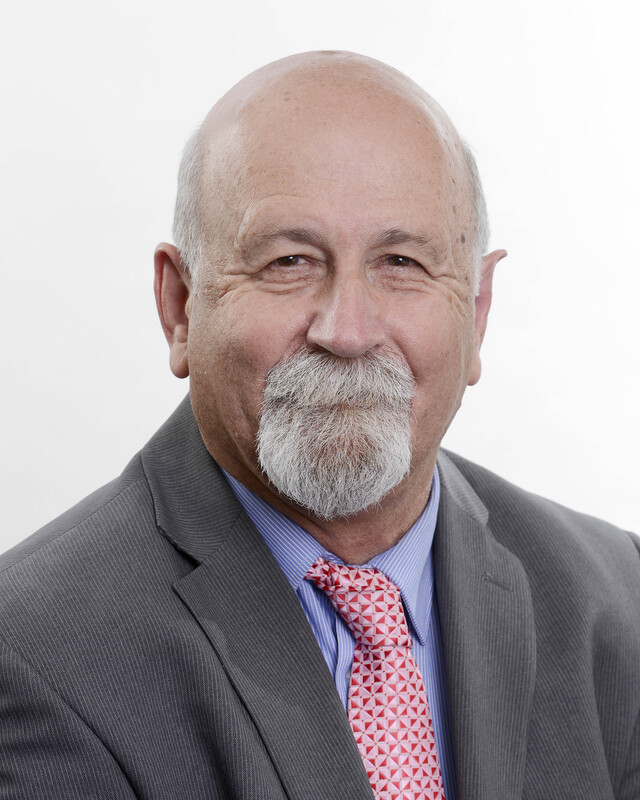
We were recently debating collaboration at the regional level. A very interesting contribution was made by Bob Neville, a community consultant from the NSW Northern Tablelands, as follows:
“The challenge we have is that Aussies are generally very independent in their outlook – even to the death. I recall one time during a severe drought, when farmers and businesses were dying like flies. One bright spark had the idea of pulling together, pooling resources and equipment. A great plan was formulated and people were rallied behind it. Just as all of this was about to begin, it rained – and everybody IMMEDIATELY lost interest and went back to their independent ways.”
Bob continues, “I tried to encourage them to keep it going, but to no avail…a change of mindset is the first step. The same is true for struggling businesses in regional communities. Many are struggling to survive – how do they find time or clarity of mind to get their position into perspective? The challenge is that communities are merely collections of highly parochial INDIVIDUALS. But the mindset here is that communities rarely work together, except in times of severe disaster. There is no one simple solution, but it’s worthy of serious focus.
Identifying the problem
Well, it’s hard to disagree with Bob, and from our experience part of the answer lies in better identifying the quantum of a problem and then explaining it. For example, the Greens have a patchy track record in this area and lose credibility as a result.
Another example is the social costs of bored youths. There is much anecdotal evidence, but little cost-benefit analysis, of how sports facilities can help kids get healthy, let off steam and develop self-worth. Could be a role for a university to take the lead here? We could even build a case for poker machine profits to flow to such infrastructure, rather than the pockets of investors!
Identifying the solution
The other part of the answer lies with a practical solution.
For example, three years ago the Federal Government’s high-speed train consultants arrived at $114 billion as the likely construction costs to link Melbourne, Sydney, Canberra and Brisbane over 30 years. That was never a practical solution. But government advisers are now talking about a staged solution, starting with a Sydney-Canberra leg of $23 billion over 17 years. This could be a very practical solution if the feds, NSW and ACT governments, councils, institutional investors and developers could agree on a funding cocktail.
Another example is the $614 million for light rail between Gungahlin and Civic here in Canberra. While the Greens are leading the charge, most Canberrans are choking on their scotch and sodas. The general consensus is that we simply avoid the 15 minutes of heavy traffic at peak hours. Indeed, Infrastructure Australia doubts whether the territory has enough traffic congestion to warrant federal funding for light rail or rapid buses!
In any case, the solution has to be a staged approach – the best cost-benefit arguably lies on the Civic-Manuka-Kingston route (5km). The benefits include easy access for Manuka Oval patrons, activity to soften the Stalinist features of the Parliamentary Triangle, and smart transport for the many apartment dwellers in this area.
Getting back to Bob Neville’s point about parochialism, I suspect he is right. We will not collaborate unless someone properly explains the problem and provides a sensible solution. One without the other is not enough.
The best politicians – an insider’s view
Met with a very senior Parliamentary Officer recently, who spends hours every day at close quarters with the pollies. A nomination of the ‘best and fairest’ from each side ensued.
Among Labor ranks – Tanya Plibersek (‘very good at enunciating policy’), Jenny Macklin and Stephen Smith.
Among the conservatives – Craig Kelly (member for Hughes, NSW), Ewen Jones (Herbert, Qld) and Wyatt Roy (Longman, Qld – ‘old head on young shoulders’).
Regional soldiers
The Herald Sun ran an article earlier this year about Australia’s top five soldiers. We did some further research.
Thomas Blamey grew up in Wagga, became Australia’s only ever Field Marshall, and later became Chief Commissioner of the Victorian Police.
Captain Albert Jacka VC, was born on a dairy farm near Winchelsea before moving to Wedderburn. He fought at Gallipoli and on the Western Front, and became a champion for the unemployed. Also Mayor of St Kilda.
Colonel Sirçç Edward ‘Weary’ Dunlop, the surgeon renowned for his leadership in a Japanese POW camp, was born in Wangaratta and schooled in Benalla.
General Sir John Monash, arguably Australia’s greatest soldier, spent his formative years in Jerilderie. He did fantastic work in repatriating Australian troops, and established the Latrobe Valley coal industry.
General Peter Cosgrove grew up in Sydney’s eastern suburbs and attended Waverley College and then Duntroon. He does a huge amount of social service, and is tipped as our next Governor General.
Notice a trend here? Well, except for Cosgrove, they all grew up in northern Victoria or the Riverina. One might say that half the nation came from the regions in those days, but the clustering effect is quite remarkable. Did the rural lifestyle instil some particular characteristics?
Rod Brown is a Canberra-based consultant and lobbyist specialising in industry/regional development, investment attraction and clusters, and accessing federal grants. He also runs the Cockatoo Network.
Phone: (02) 6231 7261 or 0412 922 559
Email: apdcockatoo@iprimus.com.au
Blog: www.investmentinnovation.wordpress.com (750 articles)