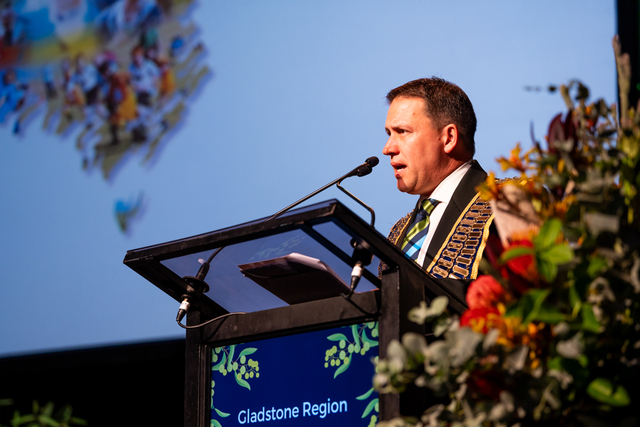
Speaking at the recent Tasmanian Local Government Annual Conference, General Manager Corporate Strategy at Cairns City Council, John Howard, stated that he believes the crunch time for Local Government infrastructure management will occur in the next ten years.
One of Australia’s key Local Government experts on this area, John Howard told delegates that failures will start to occur more and more.
“We cannot afford to wait until things start failing,” he said. “We must avoid accidents and potential deaths. “Asset identification and asset planning are essential to maintain service levels at an acceptable standard, have adequate funds to replace major infrastructure, and be able to meet other commitments, such as new facilities.”
He warned failure to do this will reverberate through the ballot box.
John Howard said that Councils must also be careful not to over commit to new infrastructure without allowing for the resources needed to cover ongoing maintenance, depreciation and ultimately, replacement. To adequately manage infrastructure on behalf of the community, Councils must allocate resources and clearly define service levels and costs. They must also improve their infrastructure management systems.
“Improvement in maintenance management systems; evaluation and justification of all new works; 20 year infrastructure plans; and a 10 year financial plan, setting out exactly how you pay for all this, are essential,” John Howard said. “Infrastructure should be viewed as an investment, so consider using an investment manager.”
He said that residents have every right to ask, ‘What is Council doing with the money I have invested in infrastructure?’
In measuring service levels, he said look at factors such as extent and condition.
“For example, by increasing the percentage of paved footpaths, service levels will increase,” John Howard said. “Similarly, define the condition of all paths rating them from ‘A’ to ‘D’. With ‘A’ being the highest quality, work at increasing ‘A’ paths and eliminating ‘D’ paths. Set performance targets, such as 90 percent of all paths to have an ‘A’ rating in the next two years. Cost this out and put a maintenance program in place to achieve this goal.”
He said it important to report back to the community through Council’s Annual Report on service levels set, what was achieved and what this cost.
“Look at the annual service costs of all new infrastructure, including interest costs, depreciation, operating and maintenance costs and finally demolition,” John Howard said. “Each new asset adds to service costs and will affect your bottomline.”
He said that Councils have three choices: increase funds by raising rates; make efficiency improvements to reduce service costs; or do nothing!
“Community education is vital,” he said. “People need to be aware that Council is not an endless pit of money to fund infrastructure needs.”
He urged Councils to purchase the International Infrastructure Management Manual produced by the Institute of Public Works Engineers Australia to assist them in this area.
For further information on the Manual contact IPWEA, telephone (02) 9267 6677.