The vital role women play in driving economic and social change within their communities has been recognised with the publication of Women Taking Action: Making a Difference in Regional and Rural Communities. Women Taking Action is a series of stories about women who have been a major force for change within their community, often without seeking or receiving recognition.
This book is about giving due recognition to the very real and practical contribution women make to rural and regional Australia. There are more than two million women in regional and rural Australia and they contribute significantly to their local communities and economies.
Whether it be paid or unpaid, their work in agricultural businesses, in town based professional and commercial fields, and in community work is critical to the rural and national economy. However, women’s contributions are often undervalued and taken for granted; they can seem to be invisible.
This is simply because if it needs to be done, they just do it, without seeking praise or recognition.
Stereotyping women and their roles in a rural culture leads to expectations that women will adopt the role of carer and take on other traditional functions. Such expectations serve to reduce the capacity of women to participate in positions within the public sphere, and marginalise women as leaders.
The stories in Women Taking Action are of women who have made a difference. As leaders and builders of their communities they have used their enthusiasm, skills and wisdom to seize opportunities to change things for the better. Whether the changes are big or small, these women share the ability to inspire, to engender confidence and to promote a positive outlook among others.
Women Taking Action highlights the positive impact that individual women have made in their communities. The book has been produced to raise the profile of women in regional Australia and to acknowledge their contribution and dedication to their work, families and the future of our regional communities.
Launching the publication, Deputy Prime Minister, John Anderson said that despite their range of experiences, knowledge and abilities, women were not well represented in public positions of power in Australia.
“As a nation we are all the poorer for that, as women can bring a very different perspective to both economic and social issues that is critical to good policy debate and development,” he said. As an advocate for the involvement of women in regional policy development, the Deputy Prime Minister established the Women’s Advisory Council in September 1999. The council provides the Federal Government with advice to assist the development of better targeted policies and programmes to meet the needs of regional Australians.
Mr Anderson said that the women in these stories represented just a tiny fraction of those who are doing amazing and inspirational things in Australia’s regions – things that are making a real difference within their communities.
Leah Munro’s story of Dorrigo in New South Wales, tells of how she established a bereavement service for residents of her Shire. The service is free and run by volunteers who provide a safe environment for people to learn about loss and grief.
Ms Munro says, ’living in a rural area, there is always the challenge of not having services close by. As our service is based on the needs of the community it is an ever changing process.’
Elaine McKeon a descendant of the Kalkadoon tribe from Cloncurry in Queensland, has been on many committees and said she ‘saw people’s needs and knew we needed to help ourselves’. Ms McKeon set up a company on behalf of Aboriginal people for training and employment in the mining industry.
“It is about opportunities – going into business and creating employment and training has changed our lives,” she said.
These stories are not only recognising the achievements of these individuals, but also inspiring others to take action, and increasing the profile and participation of women as leaders and ‘doers’ right across Australia.
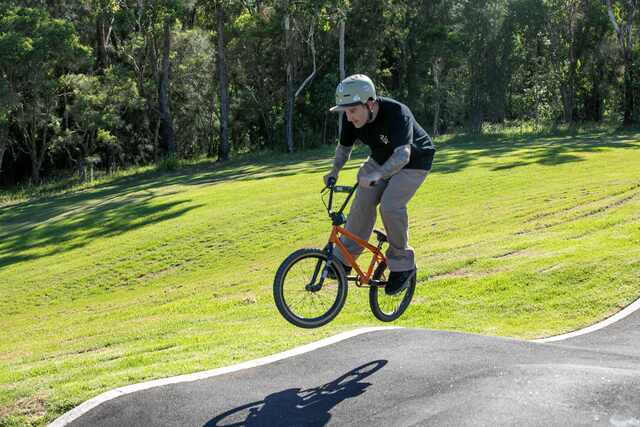
Mary Ash from Horrocks Beach in Western Australia has been involved in developing a number of community initiatives such as a youth skate park, Battle of the Bands, and the redevelopment of the local jetty.
”Once I start talking about an idea then more people add to those ideas and want to help,” she said. “I was taught when I was a kid that everybody’s got something special to offer – that’s how communities become special.”
The women whose stories are included in Women Taking Action are from large and small regional communities throughout Australia. Through their stories, others can learn about the importance of maintaining networks, how to get other people involved and aware of community activities, how to utilise individual skills and how individuals can make a real difference to a lot of people. It is hoped that these stories will empower other women to believe in their ability to make a difference and take action.
Copies of Women Taking Action are available for the Regional and Rural Women’s Unit of the Department of Transport and Regional Services on (02) 6274 7328 or electronically at www.dotars.gov.au/rural/womenwomen_taking_action/index.htm.