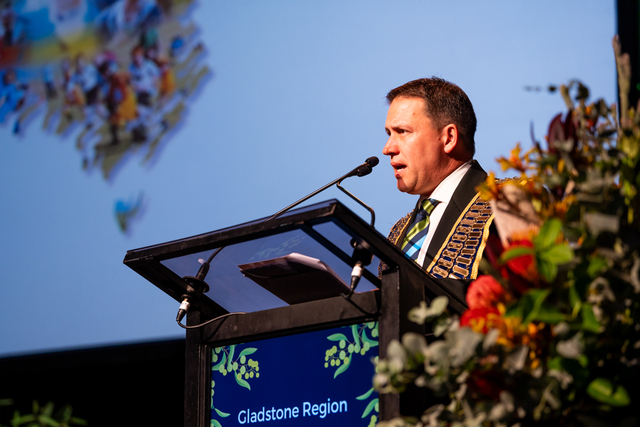
At the 2006 Western Australian Local Government Week Convention, Executive Director of the John Curtin Institute for Public Policy, Professor Greg Craven, announced that more than half of Western Australian Councils are financially unsustainable from their current own source revenue. This is the key finding from an independent Systemic Sustainability Study (SSS) commissioned by WALGA.
The report identified the following:
- 83 of the 144 Western Australian Councils require revenue increases of more than ten per cent to eliminate underlying operating deficits
- in total, $1.75 billion is required to redress the backlog of infrastructure managed by Local Government
- the current system of Local Government Financial Assistance may work against efficient and rational practice.
WALGA President, Councillor Bill Mitchell, said the report highlighted serious concerns for Local Government, which he believed the sector would embrace and seek to redress.
“Many industries and businesses would not dream of openly admitting to such an urgent predicament, but Local Government has a responsibility to the communities it serves,” he said. “Undoubtedly, as a consequence of these report findings there will be the need for change for Local Government. But if we want the community to be involved and support any changes, then we have to be prepared to involve them at all stages of the process.”
Chaired by Professor Craven, the SSS Panel will now conduct a three month consultation period in which Councils, the community and any other interested parties will be encouraged to respond to the report findings. At the conclusion of the consultation period, the panel will provide comprehensive recommendations as to the future direction of Local Government in Western Australia.
“The Association is confident that Local Government in Western Australia will acknowledge the enormity of the report findings and make the necessary decisions for the future benefit of their communities,” he said. “However we will not support forced amalgamations of Councils as evidence from the reform process in other States suggests that community support and agreement to any change is vital in ensuring a sustainable outcome.”
Western Australian Premier, Alan Carpenter, agreed that to achieve sustainability across Local Government reform is inevitable.
“We can’t keep going with an unchanged model,” he said. “There is an opportunity to make significant changes. If we change just a few things, we can position Western Australia for a better long term future. The way forward is to celebrate the community and opportunities for the future. To achieve this, cooperative governments is the key.”
Councillor Mitchell said Western Australian Councils are facing a funding crisis that requires greater commitment to genuine growth revenue streams from both State and Federal Governments.
“Currently Councils hope for generosity in the allocation of the Local Governments Financial Assistant Grants,” he said. “A fairer system would be an allocation of a fixed percentage of total tax revenue.”
Opposition leader, Paul Omodei, agreed there needs to be a tax shift from the State and Commonwealth to Local Government.
“Drought is a key example of where the State and Federal Government need to step up,” he said. “When a cyclone destroys banana crops, State and Federal Governments step in and declare it a natural disaster. It is the same when fire destroys crops. “However, the sufferers of drought and extreme weather are expected to bare the burdens of exceptional circumstances on their own. It is not good enough.”
In addition to the uncertainty of revenue allocation, the convention also addressed cost shifting as a significant issue.
“While the signing of the Intergovernmental Agreement was a hard fought battle, we are still seeing cost shifting practices,” Councillor Mitchell said. “The battle is not over. “For example, in July, the State Government extended smoking restrictions in hospitality venues with the expectation that Council staff will police the bans – but with no additional resources allocated to Local Government. The coming years will present many challenges and opportunities, but it is up to each Local Government to decide how they respond.”
The full report of the SSS Panel is available online at www.systemicsustainabilitystudy.com.au