Councillor Profiles is a regular feature. This month we feature two Councillors from Tasmania.
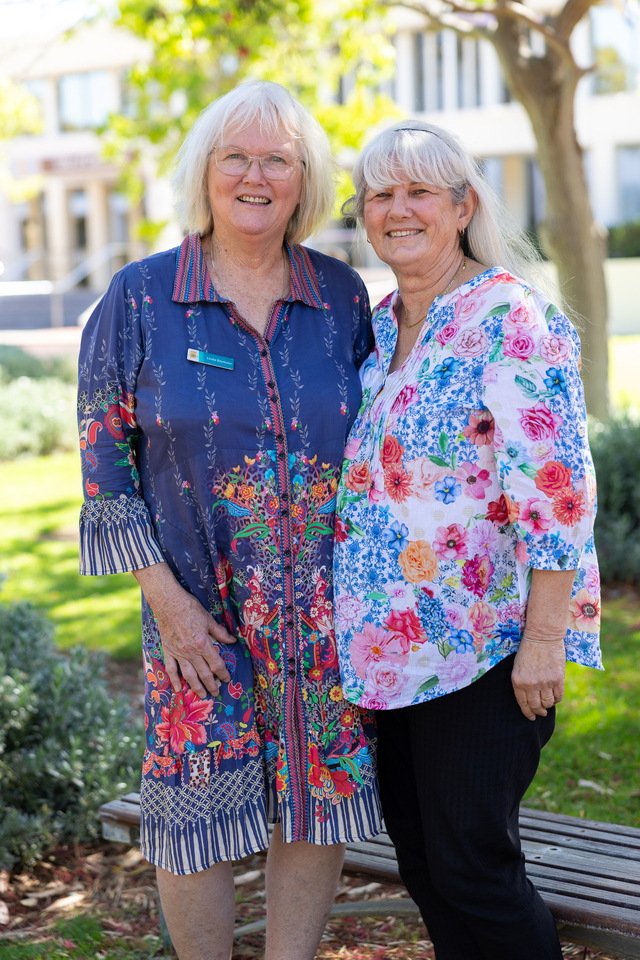
Councillor Leila (Margaret) Osborne, Deputy Mayor, Break O’Day Council, Tasmania
Q. How long have you been in Local Government?
I first entered Local Government in 1999 and became Deputy Mayor in 2002.
Q. Why did you want to become involved in Local Government?
All my life I have been involved in my local community through organisations such as sporting clubs and school associations. I entered Local Government because I thought I could make a difference in areas such as sport, local events and township image – things that I am passionate about and find it easy to get a community point of view on.
I chair community focused committees such as the Sport and Recreation Committee and the Streetscape Committee in St Helens, the town where I live. We are currently working on a main street make over, which is a combined project between Local and State Government.
Q. Can you tell us about your Local Government area?
Break O’Day is located on the east coast of Tasmania and comprises farmland and coastal hinterlands. Covering 3,810 kilometres, St Helens is the regional centre, located about 165 kilometres from Launceston. Other towns include Fingal, St Marys and Scamander. Our population of 5,938 is mainly centred at St Helens and along the coast, but also in the smaller towns of Ansons Bay, Binalong Bay, Beaumaris, Cornwall, Falmouth, Four Mile Creek, Goshen Goulds Country, Lottah, Mangana, Matthinna, Priory, Pyengana, Seymour and Welborough.
Binalong Bay Beach on the Bay of Fires was declared the second best beach in the world in 2005 and the Blue Tier Recreational Area/St Columba Falls draws tourists to our area.
Major industries include mining, farming, fishing, forestry, retail and tourism. Recently a new shopping complex was built at St Helens and over the last few years we have had an influx of people from the mainland making this area their home. Our schools have increasing numbers as the sea change effect puts increasing pressure on our infrastructure.
Q. What are some of the challenges you have faced in Local Government?
Having our town centres upgraded has been something that we have needed to do, but previously have not had the funds. The last two years have seen this process begin and we have commenced work at St Helens. Our other major towns – St Marys, Fingal and Scamander are also priorities, although their rate bases are quite small.
Sport, Culture and the Arts is another issue. Money is out there, but small Councils such as ours do not have the resources to write the required submissions to source it. There are also questions with each project about its sustainability in the long term. Setting the priorities is a balancing act – trying to satisfy the young, older people, business and professional residents.
Attracting and retaining GPs and other health professionals can be challenging. We have a very active community Health Resource Association but Council is being called on for financial assistance in providing ‘health’ infrastructure.
Q. What are the specific issues currently facing your Council
Keeping up with the demands to build new infrastructure to address environmental issues. We have been required by State legislation to upgrade our sewerage treatment plant on the edge of Georges Bay to the tune of $5.7 million. As our area is so widespread we also have problems in supplying treated drinking water to all our outlying smaller towns and villages.
Assisting the community to recover from bushfires in December 2006, which destroyed 26 homes, four business premises, two orchards and 29,000 hectares of bush is another issue. Council is gathering input from emergency services, the community and our officers for a revision of Emergency and Disaster Relief procedures following this event.
Q. What are the key aspects of being a good Councillor?
- being honest with your ratepayers/voters
- being approachable at all times
- working hard to achieve outcomes that deliver long term benefits for your community
- be proactive in talking to State and Federal representatives about future goals
- not letting personal or political issues cloud your judgment.
Mayor Tony Foster, Brighton Council, Tasmania
Q. How long have you been on Council?
I was first elected in 1985 and resigned in 1988 as a frustrated Councillor. After two years on the sidelines, I was encouraged to give it another go. This time, however, I was determined to be a little more mature in my approach to challenges. I have been Mayor since March 1993.
Q. Why did you want to become involved in Local Government?
Brighton was predominately a rural community when my wife and I moved there in 1978 after living overseas for 11 years. I quickly became involved in the local church, football club, cricket club and various other small community groups, so it seemed a natural progression to become involved in Council.
Q. Can you tell us about your Local Government area?
Brighton is one of five metropolitan Councils situated beside the Derwent River north of Hobart. It was a rural Council when it was first established in 1863. It is now much more urban than rural, and although dry farming is pretty well non existent, intensive agriculture of crops and stone fruits are still providing good incomes for our farmers.
Q. What are some of the challenges you have faced in Local Government?
I think my major challenge was getting Council to understand the value of water. In my early days on Council I promoted the idea of water meters for our Municipality, but was quickly put in my place and told it was too much of a politically sensitive nature to even consider it. Becoming Mayor in 1993 did allow me to revisit the idea, and this time there was enough Councillor support. So over the next three years Council installed water meters with two part pricing of a fixed connection amount to each household or business, and a kilolitre cost for consumption. This fully user pays system reduced Council’s water consumption by 25 per cent in the first year and we have not had to have water restrictions in our Municipality since 1996.
Continuing with our water management policy, Council embarked on a major project to stop all effluent from being dispersed into our waterways. Council achieved this in 2000 and now 100 per cent of our effluent is piped to our farmers and used for irrigation. This reuse of treated effluent was recognised by the Australia and New Zealand Environment Conservation Council in 2000 with a Banksia Foundation Award – a delight for our Council.
Q. What are the specific issues currently facing your Council?
For over 20 years we have been lobbying for a bypass for Brighton and Pontville. The national highway currently runs through the centre of our Municipality. It is a single lane highway and is certainly not capable of handling the hundreds of large trucks that use it daily. This increased growth in heavy truck traffic certainly raises many issues for us, not the least being safety, particularly as the highway passes right through the township of Brighton. However, it is difficult to get State and Federal Governments to agree on transport related priorities in Tasmania, which is very frustrating for us at the local level.
Q. What are the key aspects of being a good Councillor?
To me it is very important to understand the role, responsibilities and functions of a Councillor, and to differentiate between that role and the role of the General Manager and Council staff. If this is understood and appreciated, then you have created a very harmonious working Council.
Being a team player is very important in producing positive outcomes for Council so it is important to encourage Councillors and Council staff to be innovative in their thinking, to come up with better ways to do things and think outside the square. I try to encourage this whenever and wherever I can.
I also strongly believe that good communication with my fellow Councillors and the electorate itself is extremely important.