Home » Latrobe technology a first for maintaining road safety signs

Latrobe technology a first for maintaining road safety signs

Victoria’s Latrobe City Council has successfully pioneered the Australian development and use of a testing procedure for assessing road signs and their retroflectivity.

Council’s Senior Manager Infrastructure Operations, Stephen Howe, said road signs are an essential part of a community’s transport infrastructure.

“They guide, inform, warn and control road and pedestrian traffic, helping to maximise safety,” he said.

“Unless they are correctly maintained, signs can fade to the point where they cease to serve their purpose.”

The night time luminance of a sign is measured by a scientific property of the sign sheeting known as retroflectivity. This can diminish and the sign can become virtually invisible at night, even though it looks perfectly functional by day.

In Australia, only the initial manufacture and installation of road signs is covered by industry standards, with no guides as to when signs in service should be replaced.

Stephen Howe said in the past, Latrobe Council would only assess a sign’s day time suitability, against factors such as traffic accident damage, rust, grime or graffiti.

The few documented approaches to night time testing were simplistic and subjective.

“This was odd, as sophisticated and scientific methods existed in Australia for testing road pavement markers and edge delineators, but not for signs,” Stephen Howe said. “We therefore set out to find and implement a practical way of assessing road signs for their night time performance during the day.”

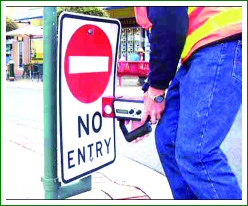
Council is now using a portable retroflectometer, along with a GPS data logger and a laser range finder to conduct scientific testing in daylight.

“The mobile GPS unit allows us to record where signs are and log data against each sign,” he said.

“The laser range finder enables officers to measure the distance between themselves and a sign without having to get out of the car and physically measure it.

“This information is then used to compare results against appropriate visibility and legibility standards so signs are replaced only when needed.”

The system was implemented during the 2005/2006 summer.

It builds on the latest complex research and testing from around the world, as well as established methods used by Australian traffic engineers.

“As a result of this technology, Council is improving the safety of its road network, particularly for older drivers, who have been shown from research to need an average of three to four times as much reflected light as other drivers in order to drive safely,” Stephen Howe said.

For further information contact Stephen Howe on (03) 5128 5470.
 

Digital Editions


  • Jack Iori honored by the Hills.

    Jack Iori honored by the Hills.

    The Hills Shire Council has officially named the grandstand at Kellyville Memorial Park Community Centre the Jack Iori Grandstand, recognising the enormous impact Jack Iori…

More News

  • Unwavering support and thanks in Bondi aftermath

    Unwavering support and thanks in Bondi aftermath

    Councils across NSW are being encouraged to continue to provide direct support for the Waverley community in the wake of December’s devastating terrorist attack at Bondi while Waverley has paid…

  • Redlands Koala population stable

    Redlands Koala population stable

    Redland City Council has become the first local government in south-east Queensland – and within the koala’s federally-listed northern endangered range – to report stabilisation of its city-wide koala population.…

  • Looking for “Red Fleet” Solutions

    Looking for “Red Fleet” Solutions

    The Country Mayors Association of NSW (CMA) has met with NSW Emergency Services Minister the Hon Jihad Dib MP about the Red Fleet issue, which refers to local Councils currently…

  • Three small changes making big differences in grand programs

    Three small changes making big differences in grand programs

    Local government grant programs are designed to create community impact. Yet for many councils, the effectiveness of those programs is shaped less by intent and more by the processes that…

  • Alice skating program a success

    Alice skating program a success

    Free ice skating, packed programs and smiling faces have marked the end of a hugely successful school holiday program delivered through a partnership between Alice Springs Town Council, the Northern…

  • Supporting Waverley

    Supporting Waverley

    Councils across NSW are being encouraged to continue to provide direct support for the Waverley community in the wake of December’s devastating terrorist attack at Bondi. In the aftermath of…

  • New deputy for Liverpool

    New deputy for Liverpool

    Councillor Peter Harle has been elected Deputy Mayor of Liverpool City Council following the resignation of Cllr Dr Betty Green. Councillor Harle, who has served the office in the past,…

  • Erosion reef wins awards

    Erosion reef wins awards

    A West Australian-first coastal erosion research reef installed off C.Y. O’Connor Beach in 2022, reducing wave height and energy and blossoming into a thriving habitat, took out the 2025 WA…

  • More rehabilitation works for Coffs

    More rehabilitation works for Coffs

    Scores of local flood-damaged roads will be improved after the City of Coffs Harbour determined to expand rehabilitation works. An initial program of stabilisation works had already been approved for…

  • First-class Pump Track opens in Ballina

    First-class Pump Track opens in Ballina

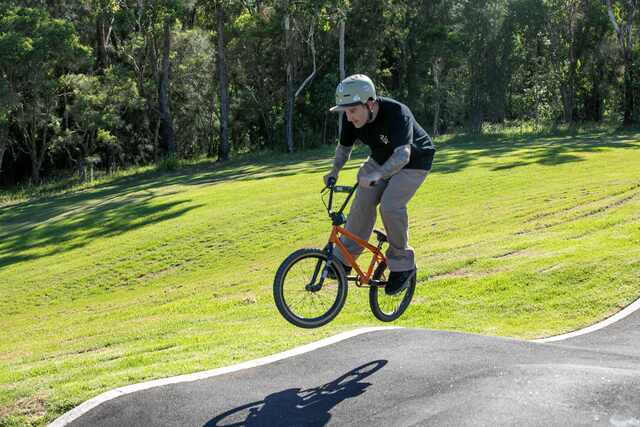
    Ballina Shire Council is thrilled to announce the completion of the new Ballina Pump Track at Kingsford Smith Reserve in the heart of Ballina. Designed to national competition standards, the…