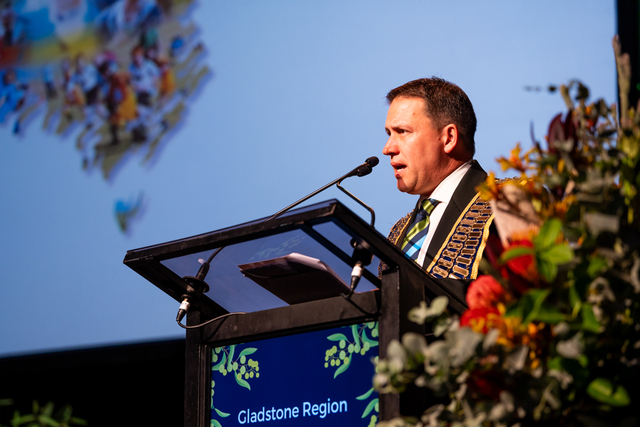
Speaking at the Local Government Association of the Northern Territory’s recent General Meeting in Alice Springs, the Operational Commander for the Emergency Response in the NT, Major General David Chalmers, outlined specific achievements from the Intervention Program that commenced last June.
Major General Chalmers has extensive experience in dealing with emergency responses having headed up the Australian taskforce in Aceh following the 2004 Boxing Day tsunami, and as national commander of Australian troops in East Timor under Operation Tanager in 2000–2001.
The Intervention Program was established by the Howard Government in June 2007. Some $625 million was pledged for various agencies to implement a range of policies that aim to create safer and healthier Indigenous communities in the Northern Territory.
Major General Chalmers said that early in last year’s election campaign Kevin Rudd said that this program would continue under a Labor Government, and this has occurred.
“An independent review will be undertaken in June for the Rudd Government to determine what aspects will continue and what will not,” Major General Chalmers said. “Now almost 12 months into the program, the primary aim of this period was stabilisation, but at the same time quite a few new things have been rolled out.”
He said that new police presence has been established in 18 communities to help in improving law and order. These placements also mean a shorter response times for a number of other communities still without a permanent police presence.
“Alcohol restrictions have resulted in some people moving into the larger towns, shifting problems elsewhere,” he said. “We need to provide help to assist these people to return to their communities.”
He said that income management via welfare quarantining aims for this money to be spent on children for housing, food and other essentials.
“At the same time the Government wants to ensure that community stores sell healthy food at reasonable prices,” Major General Chalmers said. “This in turn could lead to a range of improvements in respect to health issues in remote communities.”
He acknowledged that fixing houses and the opportunity for new jobs being created in communities to achieve this end has not worked that well to date. Overcrowding and housing shortages remain a key issue for Indigenous communities, with one delegate pointing out – when the Major General took questions – that on his community there are just 85 houses for a population of 1,000 people.
Health checks under the program have been carried out on 8,500 children aged up to
15 years. A further 1,500 children have been checked by Territory Health. Checks for sexual abuse were dropped early in the program. Various referrals for ear, nose and throat complaints have been made and dental referrals will be next.
Major General Chalmers said that annual health checks in each community is vital and the Federal Government has set aside $180 million for the next three years to achieve this.
“Education is the key to a better life,” he said. “School enrolments are up by 1,000 this year. The Schools Nutrition Program provides healthy breakfasts and lunches at school and has also created additional local jobs to deliver this service.”
He said that a number of communities were adversely affected by the removal last year of Community Development Employment Projects (CDEP) funding.
“The Rudd Government has pledged to reintroduce a reformed format of CDEP, but there have been no announcements on this as yet,” he said. “Cultural differences must be addressed. There have been instances of well meaning officials going into communities to speak to residents and leaving behind them confusion.
“Currently Government Business Managers have been appointed in 51 communities. It is important that they live in communities and work closely with local people to ensure that government services run smoothly. It is vital that this aspect of the program is supported and made to work.”
Major General Chalmers said that through this program a platform has been created to improve health and safety in remote communities.
“There have been some successes but challenges remain in other areas,” he said. “The next step is the review and talking to all stakeholders about what is working and what needs to be changed.”