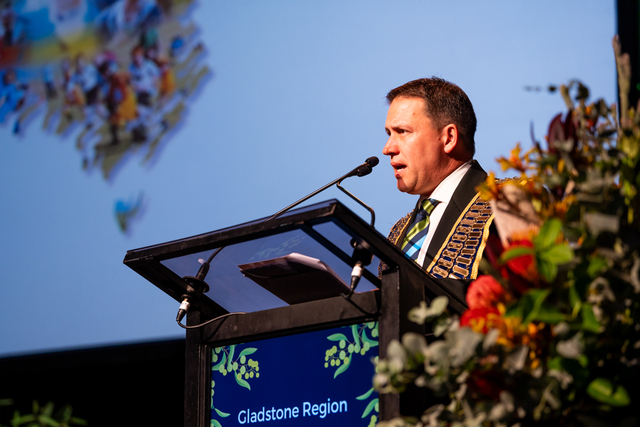
Mayor Bryan Small, Northern Grampians Shire, Vic
Q. Why did you become involved in Council?
This is a question I often ask myself, usually over a glass of our excellent Pyrenees wine on a Friday night. The truth is that in 1996, when the Victorian Government carried out its inept amalgamation of councils, I correctly perceived that it could disadvantage my own community. Therefore, I stood for the inaugural elected Council and was successful.
Q. Tell us about your Local Government area.
Northern Grampians is made up of two distinct regions. In the north, which I represent, is a rich farming district served by the old gold town of St Arnaud, with its fine heritage buildings, charming streetscapes and botanic gardens. Eighty kilometres to the south is Stawell, home to the famous foot race, the State’s largest gold mine, and the headquarters of the Shire. We also have the village of Halls Gap nestled in the beautiful Grampians National Park, and the old wine centre of Great Western.
These two distinct ends of the Shire have no community of interest – different highways and railways, different hospital and school clusters and different electorates – they’re not even in the same footy league. This divergence was always going to be a challenge for the Shire, especially as the southern ward has double the population of the northern ward, and twice the number of Councillors.
Q. What innovative projects is your Council working on?
The drought and the disastrous Grampians bushfires in 2006 devastated our thriving tourism industry. In conjunction with Tourism Victoria and our neighbouring councils, we have established a highly focused regional tourism organisation to promote the region. We have just let the contract for the building of an exciting contemporary visitor centre in Halls Gap to complement those in St Arnaud and Stawell.
Q. What are the key challenges facing you and your Council?
Like all small rural councils our primary challenge is the indifference of State and Federal Governments to the role and importance of Local Government. This indifference has led to miserly scattergun funding, cost shifting, reduction in Councillor numbers, and an irritating ‘we know what’s best for you’ attitude.
Internally our biggest problem has been to address the challenge of having two quite different and unconnected regions to govern.
Q. Tell us about a specific success you have had on Council.
The inaugural Council thought it could manage the challenge mentioned above by treating both communities as one. This was an abject failure with the more numerous Councillors in the Southern Ward using their numbers to impede projects and expenditure in the Northern Ward, which understandably became resentful.
In 2004, I sought and gained the position of Mayor on the understanding that I would try to heal these divisions in the Shire. I did so by ensuring that the day to day decisions regarding each ward were made according to the wishes of the Councillors of that ward. It was simple really, and since then there has been not one instance of the Councillors of one ward using their numbers to outvote the Councillors of the other on a local issue, harmony has descended on our Shire.
Q. What are the key aspects of being a good Councillor?
A good Councillor must have a broad view. Single issue Councillors always disappoint themselves and the electorate. A respect for due process is essential, even though that process may seem at times to be ponderous.
Above all, the good Councillor must have an understanding partner. My wife is a gem, and when we go into the pub for a quiet meal and that inevitable voice behind us says, ‘Ah, just the man I want so see!’, she just smiles and listens, as if the blockage in the public toilets is the most riveting dinner conversation imaginable!
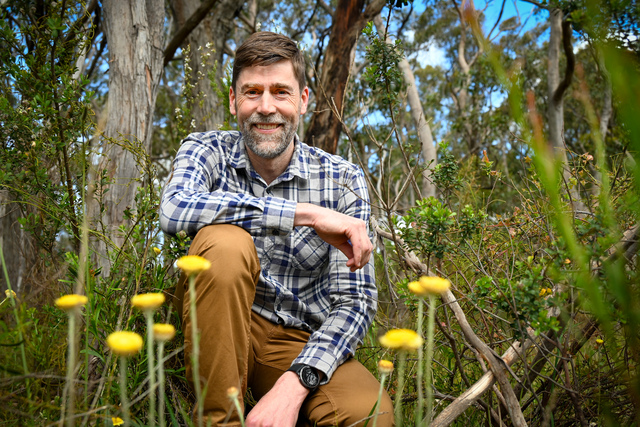
Councillor Ryan Brown, Monash City Council, Vic
Q. How long have you been on Council?
I have been on Monash City Council for two and a half years, which has been a rewarding experience allowing me to develop an appreciation for the Local Government sector. In addition to learning about the community, I have had the opportunity to meet countless passionate residents contributing hours of community service to help build a strong expressive and inclusive community.
Q. Why did you become involved in Local Government?
I became involved through my broader desire of wanting to help people. I see Local Government as the most efficient vehicle to develop and deliver community programs to achieve grassroot outcomes. Standing for election seemed the next natural step after working with a number of community and not for profit agencies, such as the Bonnie Babes Foundation, Leukaemia Foundation, World Vision, Kids Help Line and local disability agencies.
Q. Briefly describe your Local Government area.
The City of Monash is one of Melbourne’s most populous municipalities, with almost 163,000 residents. It is located 20 kilometres southeast of the CBD in Melbourne’s fastest growing eastern corridor. Monash is a cosmopolitan city, with 37 per cent of its residents coming from more than 30 countries. The City has a highly skilled and well educated workforce, with 13 per cent having a degree or higher education. Residents also enjoy a level of home ownership that is considerably higher than the Melbourne average.
Q. What issues are important to you?
When running for election two and a half years ago, my three key platforms were families, facilities and integrity. Since being elected, Council has directed additional resources to assist people with a disability and older residents, and has also built or committed to building numerous community facilities. Developing programs to assist people in need, such as Meals on Wheels, counselling, assistance for young families, improved access to community facilities for people with mobility constraints, and youth services, including pride and diversity are all important issues for me.
Q. What challenges are facing your Council?
The City of Monash has reached a time of consolidation and Council faces challenges posed by changes in demographics, housing types, community aspirations and diversity, business investment and social issues. The changing demographics show that there is a slowing of population growth, with the City’s population shifting to an older profile. The fastest increase is evident in the 50 plus age group. Although there is a significant concentration of separate houses in the City, there is also a trend towards higher density developments. A maturing population, combined with broader local employment opportunities heightens the need for improved public and road transport infrastructure. In addition to our challenge of running the business of Council, our community faces the challenge of increased cost of living and increased interest rates, which will require Council to ensure it isn’t adding to the burden of stretched family budgets.
Q. What has been your greatest achievement on Council?
Over the past two and a half years I have been involved in a number of community development projects and worked alongside many community groups. Being able to facilitate a discussion between the community and Council and ensuring tangible community outcomes is my greatest achievement.
Q. What do you hope to accomplish in the future?
If re-elected in November, I will continue my previously elected three key platforms. I will ensure that Monash continues to be an expressive, vibrant and inclusive community. I will lobby my fellow Councillors to direct additional resources towards the areas of youth, aged care, disability services, multiculturalism and long term strategic development.
Q. What is the best part about being a Councillor?
Surely being featured in Local Government FOCUS is the best part of being a Councillor! If that’s not compelling enough, being invited to community events and being exposed to cultural experiences, which wouldn’t normally have been a weekend activity for me, is certainly the ‘best part of being a Councillor’.