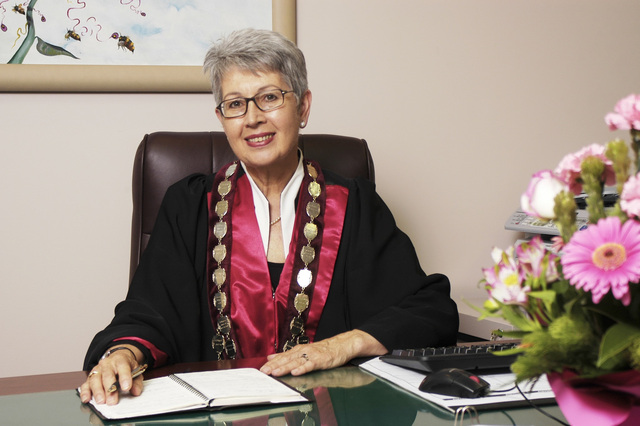
Councillor Bev Brennan, City of Belmont, WA
Q. How long have you been on Council?
I was elected in a byelection in November 2006, so I am in my first term.
Q. Why did you become involved in Local Government?
I decided to enter Local Government shortly after moving back to Belmont, where I started school some 50 years earlier. I felt it was a great place to live and wanted to be a part of the decision making team – after all, it was also my community. I also felt there were a few underlying issues, similar to those of other councils nationally. I of course thought I could make a difference – you know the saying: ‘if you can’t make waves…make ripples’. As an individual voice the ripples are easy, but as a united council all working for the same outcome, together we can make the waves we need to ensure that the City is constantly moving in the right direction.
Q. What makes your Council area special/different?
Originally established as the Belmont Road Board in 1898, the City has since grown into a thriving municipality of over 30,000 inhabitants. The last decade has seen unprecedented growth, with significant commercial and residential developments and the establishment of a number of new industries. Belmont’s business precinct is less than ten minutes from Perth. This, together with affordable land and our proximity to air, rail and road transport arteries has drawn businesses to the area. There are also many opportunities to build, develop or lease business premises in Belmont, and car parking is in greater supply than in Perth’s CBD, allowing for a significant cost advantage.
Q. What issues are important to you?
Our youth – ‘today’s kids are tomorrow’s leaders’, marketing our City for its appeal, location and the fact that we are the ‘City of Opportunity’. We are always moving forward, which will encourage not only families, but new business to our diverse community.
We also need to be focused to ensure we have in place the facilities, aged care centres and great living standards for our large older population, who have been the backbone in bringing our City to where it is today.
Safety is another important issue – reducing the incidence of crime, including graffiti, throughout the City, thus making it a safer place for us all to live, play and work.
Q. How can women in Local Government inspire other women to get involved?
Being involved in Local Government certainly is an
experience – a great experience at that. Knowing that, it is easy for us (women) to manage our time more efficiently, making the time we have to dedicate far more effective. I really didn’t need to be inspired to become involved, but I would say to other women, you will gain so much personal satisfaction knowing you have worked together with your council to ensure your community is well catered for – not only today, but in years to come. Please give it a go…come on board, you’ll love the ride!!!
Q. What innovative projects is your Council working on?
The City was recently awarded $1.4 million to address the ongoing national social issues of crime and safety. This crime prevention initiative is based on an Alarm Assist program to subsidise the installation of alarms into homes and businesses. There is also a mobile CCTV program to help police and assist with monitoring antisocial hot spots.
The City is also a finalist for the 2008 National Customer Service Institute Awards – Local Government category, having won the National Award in 2007. This is based on the City’s focus on continuous improvement in customer service at all levels.
Q. What is the most satisfying part of being a Councillor?
The most satisfying part of being a Councillor is knowing that I have a remarkable team of Councillors to work with. Knowing that our ever efficient CEO, Stuart Cole, and his staff are available to us at all times really makes my work as a Councillor easy. Making myself available to the wider community, being approachable and listening to concerns are all important to me and if I can help and please at least one resident a day, I am happy knowing that my efforts are well received. That to me is very satisfying and that is why I will continue in my role as long as residents want me to.
President Steve Martin, Shire of Wickepin, WA
Q. Why did you become involved in Local Government?
I have been a Councillor since 2001 and Shire President since 2005. There were several reasons I became involved in Local Government. In a very small community such as ours, people get involved because they simply can’t leave it to somebody else. I thought I could make a contribution to my community through serving on the local council. It is also something of a family tradition. My father, grandfather and three uncles have all served on the Wickepin Shire Council.
Q. What makes your Council area special or different?
The large area and small population of Wickepin Shire. Located 220 kilometres southeast of Perth, we have a population of 720 people, three schools, four towns and nearly 900 kilometres of roads. This presents plenty of challenges and opportunities for Council. However, the Shire is also a friendly, safe and clean place to live, with community facilities and a community spirit the envy of many larger councils.
Q. Tell us about your day job and how it contributes to your role/views as a Councillor.
I work full time in a farming business on a 6,000 hectare property east of Wickepin in a family partnership. It would be impossible to devote the time to Council that is required without the support of my family. Grain and livestock farming have been the major industries in the Wickepin Shire for all of its 100 year history. However, over time, the number of farmers has fallen, while the population of our towns has recently started to increase. Farming businesses in the Shire contribute to over 90 per cent of our rates, which you could say gives me a special interest in making sure those funds are spent wisely.
Q. What key challenges are currently facing rural councils?
Rural councils face a number of important challenges. The most pressing and obvious is the gap between what we spend on infrastructure maintenance and construction and what we need to spend. In particular, our roads cannot be properly maintained with the combination of ratepayer, State and Federal funding that small rural councils receive.
Attracting and keeping staff has also been a huge concern for rural councils in recent years. Councils have not been able to compete with Western Australia’s booming mining industry and we work hard to offer our staff an enjoyable and rewarding workplace and lifestyle.
Q. What innovative projects is your Council working on?
Council has been innovative in the area of recycling. With four landfills in the Shire, we were aware of the need to better handle our refuse. A recycling centre was established in Wickepin and transfer stations have been set up around the Shire. Glass, paper, plastics and other recyclables are being separated, collected and sold. The resulting reduction in refuse going to the landfill sites will extend the life of our tips, but at substantial short term cost to the Shire. Our distance from purchasers of recycled materials, and the prices paid, adds to the cost of running the recycling centre, meaning Council’s clean green image comes at quite a price.
Q. What is the most satisfying part of being a Councillor?
The most satisfying part of being a Councillor is when that engagement between Council and community translates into making the Wickepin Shire a better place to live. In recent years, a Council led, but community driven, committee raised the funds to complete a major extension to the Wickepin Community Centre. Getting things done in Local Government can be a slow and frustrating process, but there is great satisfaction in good plans coming to fruition.