Home » Synthetic Sports Surfaces: are they a credible alternative?*

Synthetic Sports Surfaces: are they a credible alternative?*

The dual demands of encouraging sports participation and reducing water usage is creating a facility provision challenge across all spheres of government, sport and industry peak bodies.

It is becoming apparent that we simply cannot continue to water our sporting grounds to the level required to maintain safe play.

With this in mind, many councils and sports organisations are eager to explore both synthetic alternatives and natural enhancements, so that they can continue to provide for sport in their community.

Since its emergence in 1965, there has been a significant evolution in synthetic grass surfaces.

Most recently, third generation products are designed to be more natural looking and to perform more closely to natural turf than any synthetic surfaces to date.

This, combined with the need to conserve water, support infrastructure and enhance community benefit, has made synthetic surfaces a credible alternative.

Synthetic sports surfaces are becoming more commonly used throughout Australia by schools, universities, sporting clubs, associations, peak bodies and Local and State Governments. They are even now endorsed by insurance companies.

The benefits are many and varied, including:

  • synthetic surfaces possibly being used
    around 60 hours per week, assuming it is
    a floodlit facility, whereas high quality
    natural turf surfaces can generally only
    sustain 20 to 25 hours of weekly usage
    before significant deterioration occurs
  • weather having limited impact on synthetic
    surfaces, so it can be used year round and is
    not weather dependent
  • maintaining a natural turf surface can be time consuming, expensive and resource
    intensive, often requiring qualified personnel,
    while synthetic surfaces require lower
    ongoing and less intensive maintenance
    regimes.

However, benefits need to be balanced with the more complex areas of perception, including the perceived ‘loss’ of true open space, concerns over safety and, of course, initial capital cost.

A synthetic surface is not the answer for everyone and the decision to install should not be taken lightly.

Smart Connection Company provides consultancy advice on anything from needs and feasibility analysis to funding and project management.

They worked with councils, State Government and peak bodies in this area, and have developed a free ‘Synthetics Fact Sheet’, which is a perfect start for any organisation considering the alternatives to turf or planning how they will best provide playing surfaces in the future.

To obtain your free copy, simply contact Gary Topp on garyt@smartconnection.com.au

*Copy supplied by Smart Connection Company
Digital Editions


  • New Logan arena

    New Logan arena

    An upgraded arena for equestrians has officially opened at Skerman Park in North Maclean. Logan City Council delivered the $928,000 project, which includes a weatherproof…

More News

  • Tweed residents gunking up wastewater

    Tweed residents gunking up wastewater

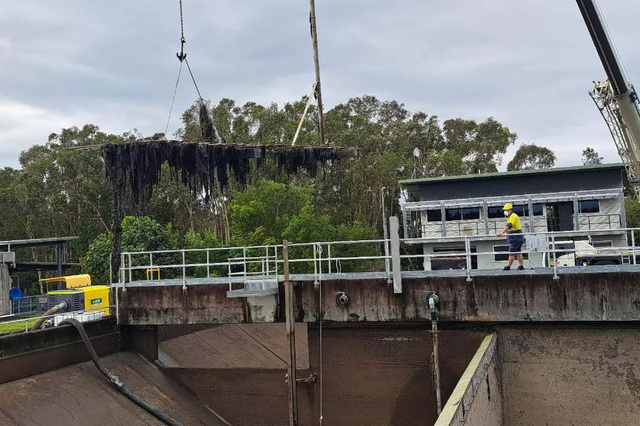
    Tweed Shire Council is urging residents to rethink what they flush down the toilet and pour down the drain, after revealing that crews remove around 156 tonnes of rubbish and…

  • In memory of Chris Quilkey

    In memory of Chris Quilkey

    It was with great sadness that we learned that former Blacktown City Deputy Mayor and Councillor Chris Quilkey has passed away. First and foremost, our thoughts are with Chris’s family,…

  • Unit demolished as Ipswich flood recovery continues

    Unit demolished as Ipswich flood recovery continues

    Ipswich Mayor Teresa Harding has welcomed the demolition of Mihi Grove, a flood-hit 42-unit complex in Brassall purchased as part of the Queensland and Australian Government’s Resilient Homes Fund Voluntary…

  • Fraser adopts tree

    Fraser adopts tree

    The Fraser Coast now has an official tree, with Council today adopting the Kauri Pine as a symbol of the region’s culture, history and natural environment. Fraser Coast Mayor George…

  • Council take on much-loved garden

    Council take on much-loved garden

    Glenorchy City Council will take on the administration of the Chigwell Community Garden, securing the future of the much-loved community space and supporting continued shared use by local groups. Glenorchy…

  • Fuel prices hurt country LGAs

    Fuel prices hurt country LGAs

    The fuel crisis is hitting remote, rural and regional communities hard, with farmers, freight carriers, tourism operators and local government all expressing concerns about the lack of supply and the…

  • Navigating grants

    Navigating grants

    How Administrative Complexity Is Eroding One of Local Government’s Most Powerful Tools Local government grants exist to create impact in communities. Yet across the sector, that purpose is increasingly being…

  • Looking to the future

    Looking to the future

    Flinders Lane will be abuzz for two days this month with Townsville Youth Council – supported by Townsville City Council – set to deliver a free festival focused on the…

  • WA leads the way as people to the regions

    WA leads the way as people to the regions

    Ten million people now call regional Australia home, and Western Australia is leading the way with its regional population growing faster than the cities, according to a deep dive into…

  • Sewer grant sought

    Sewer grant sought

    Fraser Coast Regional Council will seek Queensland Government funding for two major water and sewerage projects with capacity to support more than 11,000 new homes across the region. At its…