“Following the recent period of turbulence caused by both the global financial crisis and amalgamations, governments of every level, everywhere need perspective.”
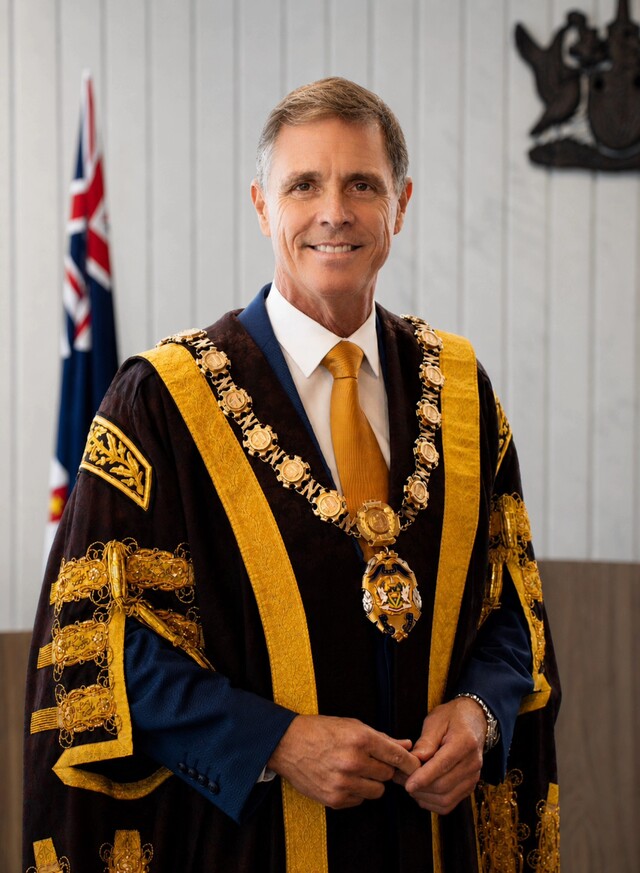
These were the words of Queensland Governor Penelope Wensley in officially opening the Local Government Association of Queensland’s 113th Annual Conference.
Staged in Brisbane from 24 to 27 August, the conference theme was ‘Planning and Performance’.
“With amalgamation, residents generally become apprehensive and unsettled,” the Govenor said.
“Queensland communities are looking for someone to blame and reassure them in moving forward. They look to Local Government first.
“While this is a challenge, it also creates a remarkable position for you to respond.”
She said that while Local Government has a profound and localised knowledge of the communities it serves, Councillors should network more to develop a closer and richer knowledge. She said this would also assist with the difficult task of planning.
“While planning in Queensland Local Government is results oriented and practical, better management is needed, especially for those councils experiencing rapid population growth,” she said.
“To understand communities fully is difficult and consuming but it is necessary to planning in all forms and manifestations.
“It is crucial to planning for the exceptional and the unexpected.”
The Govenor said councils are also faced with a growing complexity of workloads.
She said communities have increasing expectations of councils, demanding they address environmental, economic and social issues.
“There is no hope of meeting expectations at a global, national, or even State level on issues like climate change for example, if local communities are not reacting to change,” the Govenor said.
“Local Government operates at the heart of this.
“It has a real capacity to make a difference in terms of the way it tackles issues and brings its communities along with it.”
In his address to the conference, LGAQ President Councillor Paul Bell agreed that the environment in which Local Government exists and operates has changed forever.
He said community attitude polls are down and councils are being slugged financially with the Queensland Government set to cut the bulk of $1 billion in grants and subsidies over the next decade.
“The State Government implied that after amalgamation there would be less ‘ratty little councils’ and larger councils would get more of the funding cake,” Councillor Bell said.
“Instead they’ve got a pikelet – without the jam and cream.
“Amalgamation didn’t solve our financial problems, it added to them, at least in the short term.
“Any potential gains in efficiency are still years away. In the interim, if we don’t attack our cost structures, our ratepayers will be faced with endless rate rises and they will rebel.”
But councils’ hands have been tied until 2011 by State laws governing post amalgamation transition to new workforce structures and numbers.
Paul Bell said the most obvious way forward is to pursue more funding from the Federal Government to close the $14 billion infrastructure gap backlog.
“The stars in Canberra have never been in better alignment,” he said “It’s up to us to grasp the nettle and fashion a new intergovernmental financial compact with the Feds.”
He said the LGAQ Fighting Fund was recently established to further Local Government’s quest for fairer intergovernmental partnerships and agreements.
“With an opening balance of $600,000, it will grow to a multimillion dollar fund over the next five or so years and become a sizeable deterrent to capricious or unconsidered behaviour towards Queensland councils by the current or any future State Government,” Paul Bell said.
“This fund will be used for the major battles affecting all of Local Government, not for local minor skirmishes.
“We are going to give as good as we get in the future. We won’t be outspent or outmuscled.”
Queensland Minister for Local Government Desley Boyle said while the global financial crisis has had an impact Australia wide, its effect has been particularly bad in Queensland where the State Budget has been left with a $14 billion hole.
She said that all levels of government are experiencing hard times and that longterm financial planning is crucial in moving forward.
“Queensland is taking the bull by the horns in terms of financial management and recognising that there is much to be done,” Minister Boyle said. “We are leading the other States.
“In terms of asset management alone, we have identified 18 different classes of assets, each requiring its own plans.”
She highlighted another key area for improvement as community engagement.
“It is not being done well enough yet,” she said. “You must tell residents how issues are progressing and keep them informed.
“In hard times, and when making decisions council is not likely to be popular for, it will have helped to have kept residents informed on the issues facing them.
“They are then more likely to be able to justify the decision.”