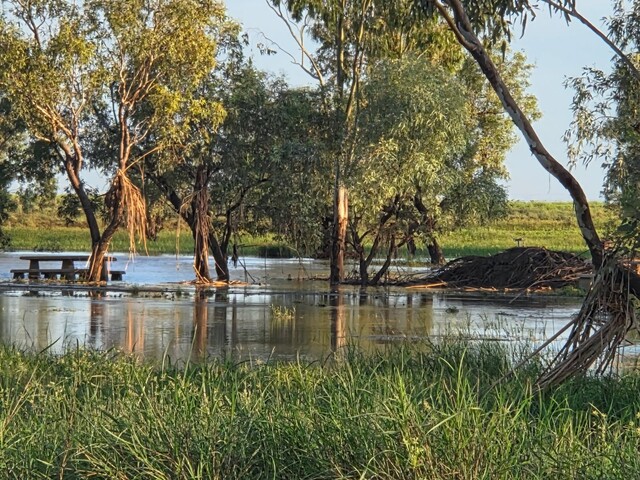
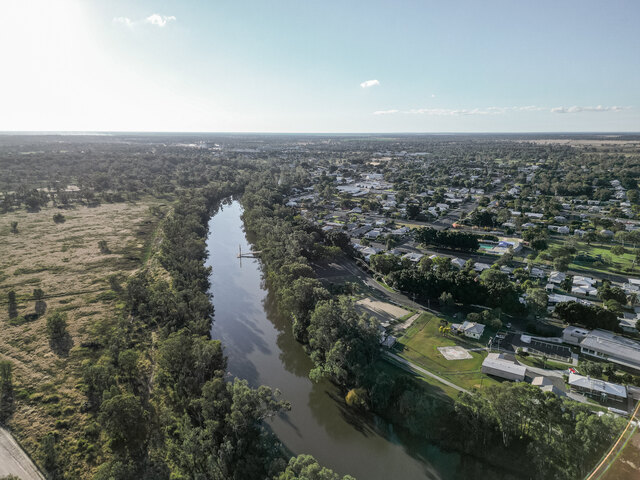
Our sincere condolences to those affected by the floods and Cyclone Yasi. The silver lining is that it’s causing a rethink of disaster relief programs, and a reassessment of national priorities.
As I write, the flood levy looks like a fait accompli. One advantage is that it avoids big cuts to the promised regional development programs. I suspect however that the NBN may get wound back in areas of a certain minimum population.
The national rethink will also include a reassessment of options to reduce the impact of catastrophic events in the future and who pays, some plain speak insurance policies for starters, and some tighter criteria to determine the Federal/State split of infrastructure recovery costs.
It’s incumbent on the Federal Government to crank up decent objective analysis. As we’ve pleaded in the past, we need a Department of National Development as a permanent bastion of knowledge about ‘things spatial’ and the interrelationships between climate, population, immigration, housing, land settlement, agricultural land use, water, transport, telecoms infrastructure and so forth.
These issues hit the ground differently in different places, and policymakers need to embrace localised infrastructure and development programs. The assistance programs for Adelaide (post Mitsubishi) and northern Tasmania (retrenchments) are precedents.
In this context, it’s time the Federal Government ran a Better Cities Program – this was a highly successful program in the 1990s that spent $800 million making strategic plays once State and Local Government commitments were made about the real local priorities.
It made a real difference in places like Newcastle, Brisbane, East Perth and Launceston. If we’re looking at a levy to fund the rebuilding of parts of Brisbane, Toowoomba and the like, it makes sense to do it properly – so why not apply the Better Cities model?
Please contact me if you’d like to make representations.
Local leaders
shine brightly
Brisbane Lord Mayor Campbell Newman did Local Government a great service with his TV performances – as did Mayors Pisasale (Ipswich), Carter (Rockhampton), Schier (Cairns) and Shannon (Innisfail). Others have done a sterling job in helping to coordinate relief programs and explain the state of play.
It’s been a further demonstration of local problems being solved by local leadership, which can then draw in wider support.
And give PM Gillard a break! The harping about her dull performance vis-Ã -vis Premier Bligh is ridiculous.
The floods and cyclone were always going to be the Premier’s show, and Gillard had no choice but to play second fiddle. And Anna Bligh’s ability to coherently inform the nation during these crises was remarkable.
Cowra’s Japanese Gardens
Last week I met a fascinating example of a local leader.
In 1944, Don Kibbler was a nine year old living in Cowra, when 2,223 Japanese POWs broke out of the Cowra Compound. They headed in all directions. Eventually they were rounded up, although 231 of them died in skirmishes or by their own hand.
Don grew up to become a successful builder in Cowra, and somewhere along the line he bought a pub.
As he explains in his Aussie drawl, around 1970 he and a few colleagues decided that the town was ready for a commemorative garden. They figured it would also help attract tourist dollars to the town.
After much preparation, construction got underway in 1977 based around designs prepared by the late Ken Nakajima, a world renowned designer of Japanese gardens. The first stage was opened in 1979, with a second stage in 1986.
The gardens are in the style of the Edo period, and show all the landscape types of Japan. At five hectares, it is more than just a big ‘garden’ – it’s a powerful symbol of goodwill, encouraging reconciliation and peace. It was designed to contribute to cultural exchange, international understanding and to showcase existing nature. 
Ken Nakijima deliberately left gum trees standing in the garden – a grove of gum trees at the top of a hill represents the Australian soldiers who were killed, allowing both the spirits of the Australians and the Japanese to live there.
Don says the success factors include the history and spirits. He says ‘it is hard for Australians to understand, but I liken it to how we feel about Gallipoli.’
The proximity to the War Cemetery is another success factor because it’s the only Japanese War Cemetery in the world. Japan itself doesn’t have a War Cemetery – only a repose for unidentified bones at Yasakuni Shrine in Tokyo.
Japanese culture dictates that when a Japanese person dies, they must be buried in the town of their birth. But the Japanese POWs were considered to be non persons after World War Two because they didn’t die for the Emperor, and had to be buried in Cowra.
Another success factor was the $200,000 (in 1970s dollars) donated by the New South Wales and Australian Governments, as well as Japanese businesses. This covered the initial capital costs and meant they didn’t have debt repayments.
The annual running costs are now around $500,000, which is mostly covered by the 40,000 visitors paying $12 per head.
Don says they’ve never received any financial assistance from Cowra Shire Council. I suspect he hasn’t chased Council funding because of the interference it might bring.
The final success factor is surely Don Kibbler AM and holder of the Order of the Rising Sun. He has been the one constant factor.
Now 75 years old, he continues to put his building and architectural skills, and his creativity to work. He’s now planning Japanese style accommodation, as well as warts n’ all history of Australia–Japan. He speaks the Japanese language, has received a visit from the Emperor and has traveled to Japan 93 times, but has never drawn a salary or stipend from the business, thanks to the sale of his hotel. My meeting with Don confirmed a few things.
First, every region and town needs champions, and we need to treasure them. Second, governments are indeed best suited to funding capital costs, and then getting out of the way. Third, Don’s Japanese Garden has worked because it has leveraged
a competitive advantage.
There are many councils waiting for a champion to do likewise – for example, Victor Harbor’s aged care potential, and Baulkham Hills’ Bella Vista Farm. I’ve uncovered another champion in Cowra, and he’s planning a Creative Village that will knock your socks off. It complements the cultural aspect of the Japanese Gardens.
More next month.
*Rod Brown is a Canberra-based consultant specialising in industry/regional development, investment attraction, clusters and accessing Federal grants. He also runs the Cockatoo Network. He can be contacted at apdcockatoo@iprimus.com.au or phone
(02) 6231 7261.
Go to the blog at www.investmentinnovation.wordpress.com for 550+ articles on issues relevant to Local Government.