Home » President’s comment

President’s comment

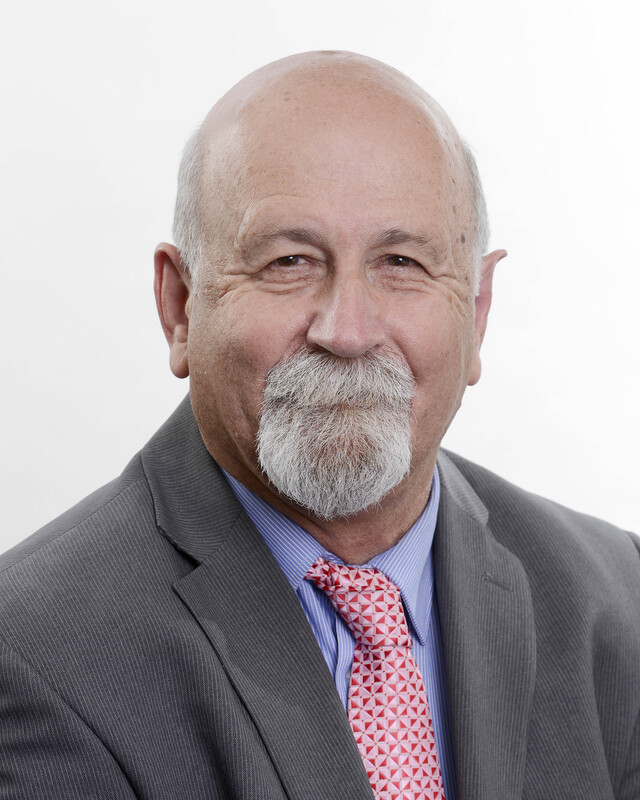
In each edition we feature the views of a Local Government Association president. The following is from Councillor Paul Bell, President of the Local Government Association of Queensland.

As this column goes to press, Queensland’s north and far north is counting the cost of one of the worst cyclones to hit Australia’s coast in more than a century.

Cyclone Yasi slammed into the coast near the town of Mission Beach and laid waste to places like Tully and Cardwell.

This part of the State is used to dealing with cyclones, of course, but even those who experienced the devastation of Cyclone Larry five years ago were awestruck and not a little frightened by what Yasi delivered.

The toll Yasi has extracted on council infrastructure is still being tallied and is likely to be hundreds of millions of dollars, but it is worth noting that whatever the final figure, it will be merely an addition to the huge damage bill that Queensland has sustained over the past month.

To give you an idea of the scale of the destruction we have experienced, in any given year the infrastructure damage bill from natural disaster runs to about $100 million. The Great Floods of 2010 and 2011 caused around $2.2 billion damage – 20 times the average – to council infrastructure alone. This includes roads, bridges, water and sewerage treatment plants, libraries, parks, swimming pools, childcare facilities and other council assets.

This is not counting the damage to local economies from flooded businesses and the ongoing emotional trauma that lingers well after the mud and debris have been cleared away.

My own community of Emerald was hit by major flooding just as it was finally completing its recovery from the massive deluge of 2008.

But what I found in Emerald – the amazing resilience of ordinary people when confronted by extraordinary challenges – has been repeated across the State, from Bundaberg to Brisbane.

These disasters might have left a huge repair bill, but they’ve also created a vast amount of social capital that Local Governments across Queensland are likely to find invaluable in meeting the challenges of recovery.

For all that, the coming months and years will be hard going for councils affected by this string of natural disasters.

Thankfully, the Federal and State Governments have recognised both the importance of getting these communities back on their feet and the crucial role local councils will play to ensure that happens as quickly as possible.

Prime Minister Gillard’s decision to provide Queensland with an upfront repair payment of $2 billion, and Premier Anna Bligh’s initial advance of $400 million to Local Governments to enable them to get on with the rebuilding job, means a lot of regions can look forward to the task with confidence rather than despair.
 

Digital Editions


  • Alice skating program a success

    Alice skating program a success

    Free ice skating, packed programs and smiling faces have marked the end of a hugely successful school holiday program delivered through a partnership between Alice…

More News

  • First-class Pump Track opens in Ballina

    First-class Pump Track opens in Ballina

    Ballina Shire Council is thrilled to announce the completion of the new Ballina Pump Track at Kingsford Smith Reserve in the heart of Ballina. Designed to national competition standards, the…

  • Fraser Coast support announced

    Fraser Coast support announced

    Fraser Coast Regional Council has renewed and expanded its support for three key emergency services – the Royal Flying Doctor Service (RFDS), LifeFlight, and local Rural Fire Brigades. At their…

  • Council named among Australia’s most inclusive employers

    Council named among Australia’s most inclusive employers

    Lake Macquarie City Council has become one of only two local government organisations in Australia included in a benchmark list of inclusive employers. The Diversity Council of Australia (DCA) added…

  • New deputy in Griffith

    New deputy in Griffith

    Griffith City Council has elected Councillor Scott Groat as the new Deputy Mayor at the Ordinary Council Meeting held on Tuesday, 28 October 2025. Cr Groat will hold the position…

  • Planning for the future

    Planning for the future

    Cowes Primary School students brought plenty of energy and curiosity to Berninneit Cultural Centre in mid-October for a special Meet the Mayor visit as part of their Community Walk. Organised…

  • Wollongong named as host city

    Wollongong named as host city

    Wollongong has been announced as the host city for the 2026 Local Government NSW (LGNSW) Annual Conference, following a warm invitation from the Lord Mayor of Wollongong Councillor Tania Brown…

  • Grant secured for Northwood Street Road Safety Masterplan

    Grant secured for Northwood Street Road Safety Masterplan

    The Town of Cambridge, in partnership with the Flower District Town Team, has been awarded a 2025 Streets Alive Stream Two Grant to develop the Northwood Street Road Safety Masterplan.…

  • WSROC President re-elected, Board appointed

    WSROC President re-elected, Board appointed

    Councillor Brad Bunting has been re-elected as President of the Western Sydney Regional Organisation of Councils (WSROC) at its Annual General Meeting held at Blue Mountains City Council Chambers on…

  • Council seeks new voices for Advisory Committees

    Council seeks new voices for Advisory Committees

    Georges River Council is seeking new members for the Multicultural Advisory Committee and the Access and Inclusion Advisory Committee. They are part of Council’s ongoing commitment to diversity, inclusion and…

  • New president meets PM

    New president meets PM

    Newly elected Local Government NSW (LGNSW) of president Mayor Darcy Byrne has wasted no time in advocating for councils across the State, heading to Canberra to meet with Prime Minister…