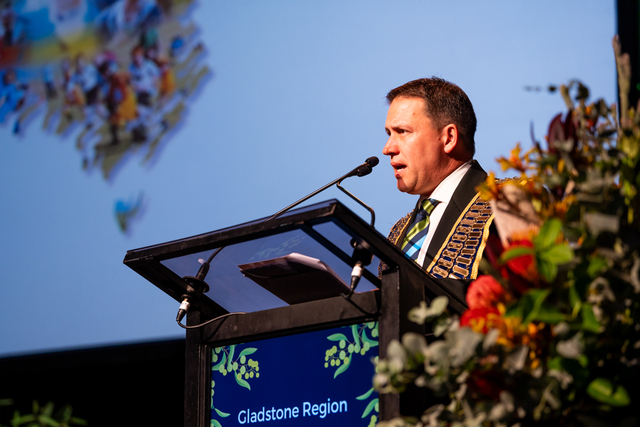
In each edition we feature the views of a Local Government Association president. The following is from Councillor Samantha Dunn, President of the Victorian Local Governance Association.
Land use planning is one of the most important functions of Local Governments in Victoria and most other States and Territories. So what may happen here also has resonance for other places.
Council chambers are often the flashpoint for passionate community conflict about appropriate uses of land and other resources, reflecting different visions of what our future spatial environments should look like.
A planning issue that might initially look like a small scale parochial matter of competing interests can actually be an expression of some of the major national and global challenges of our times.
These challenges include managing population growth, trying to achieve an equitable share of finite resources like land and water, and meeting current human needs and aspirations without incremental and negative impacts on food production and biodiversity.
In Victoria, Local Governments have both strategic and statutory planning functions. In the first role, we have discretion within the parameters prescribed by the State Government to implement strategies appropriate to the local context through the use of planning policies and tools such as zones, overlays and schedules. In the statutory role, we are expected to impartially administer our own planning schemes and exercise decisions about permit applications.
This mix of legislative and judicial roles – often with an additional mediating role at points in the process – places councillors in a unique and complex position compared with elected officials in other spheres. It is simultaneously a huge challenge and a great privilege to have this multi-faceted role in shaping local communities.
Often the role is not as powerful as communities expect it to be, with the extent of authority circumscribed by sweeping Ministerial powers and review processes such as the Victorian Civil and Administrative Tribunal.
Community members have significant third party objection rights in Victoria, but this sometimes creates expectations that exceed legitimate grounds under planning legislation.
Developers, on the other hand, find frustrations with delays in processing applications, some of which are blamed on Local Governments when the hold ups often lie with statutory referral authorities and State Government departments.
Following the election of a new State Government late last year, Planning Minister Matthew Guy has established an independent Ministerial Advisory Committee to take submissions on possible reform of the planning system in Victoria.
Given the Committee’s very broad terms of reference, some of the fundamental structures of the system – including Local Governments’ core roles and powers, as well as third party rights – may be subject to substantial change.
At the same time, the Minister has recently taken an interventionist position by using ‘call in’ powers to override Local Government jurisdiction on a number of local planning matters.
In our submission to the Advisory Committee, we stated our view that the planning system in the State of Victoria is not fundamentally broken, although significant reforms are required if it is to become more effective and efficient.
We have also called for a national population and settlement strategy, supported by adequate Federal and state investment in infrastructure, so that local land use planning is not made in a policy vacuum with Local Governments bearing the consequences of poorly serviced growth areas.
We also urge caution to any State Government that thinks a massive and radical deregulation of the planning system is required.
If we accept that the primary purpose of land use planning is to sustain people and communities, a highly deregulated approach seems anathema to addressing the well documented challenges we face regarding our natural and built environment, in complex social and economic circumstances.
We believe that communities will respect governments that are willing to lead in a collaborative process, based on genuine and thorough community engagement. This will restore their faith in the planning system and its interaction with their everyday lives.
A full copy of the VLGA’s Planning System Review submission can be found at our website: www.vlga.org.au