This month we will profile two councillors from Queensland.
Councillor Deirdre Comerford, Mackay Regional Council, Queensland
Q. Why did you become involved in Local Government?
Amalgamation brought me to Local Government in 1994.
As a 30 year old, I believed the newly formed Mackay City Council (former Pioneer Shire and Mackay City) would benefit from my passion and commitment.
After serving 10 years then retiring to adopt our two children from Taiwan, it was once again amalgamation which brought me back to Local Government in 2008 when the former Mackay City, Mirani Shire and Sarina Shires merged to form the new Mackay Regional Council.
Q. Tell us about your Local Government area?
We currently have about 116,000 people with a projected population of 200,000 by 2031.
Our region’s growth is fuelled by the booming resources sector, along with a resurgence in agribusiness, growth in tourism and a buoyant retail sector. The area is very much a mining and engineering services hub for the nearby coal mines
A coastal location, about one hour’s flight from Brisbane, we also have a picturesque hinterland rainforest about 50 minutes drive to the west of the city.
We are the gateway to the rich coal deposits in the Bowen Basin and are the largest sugar producing region in Australia; nearly a third of Queensland’s export goods originate from the Mackay region.
The region boasts a wonderful climate and spectacular natural environment that has 31 beaches and a picturesque blue river.
Q. What are the key challenges facing you and your Council?
Like many rapidly growing regions, securing and maintaining skilled staff to deliver many council services is a key focus, as well as advocating the needs of our region to Federal and State Governments to achieve suitable funding arrangements that ensure infrastructure keeps pace with growth.
Being a coastal community, another challenge is to prepare and plan for the impacts of climate variability, from land use planning to building resilience in our people.
Q. What is the most difficult part of your role?
Keeping abreast of current trends and issues and managing my disappointment with Local Governments who look at issues in the short term.
At times, I also get frustrated with a reluctance by some within Local Government to not fully embrace customer service or community engagement.
Q. What innovative projects or policies is your Council working on?
We have partnered with Taggle Systems, an Australian specialist radio and telemetry business to develop ‘real time’ water meter readings at an affordable cost. The project has the ability to set a new bench mark for customer service in the Water Industry.
It also has the capacity to reduce the cost of providing water services to the community by deferral of capital investment through improved demand management.
Q. How do you see its future in the 21st Century?
The only constant in life is change and Councils that can best prepare their communities for the challenges and opportunities that the future holds will be the Councils who are in good stead to face the future.
Larger regional governments will be inevitable but hopefully we will learn from the mistakes of other countries, as the best model for Australia is determined.
In the meantime Local Government needs to raise up more visionary, creative Chief Executive Officers who can lead staff in partnership with skilled, community focused elected representatives who want to honestly take a medium to long term view of their Local Government area.
I am still passionate about Local Government and look forward to continuing to serve my community.
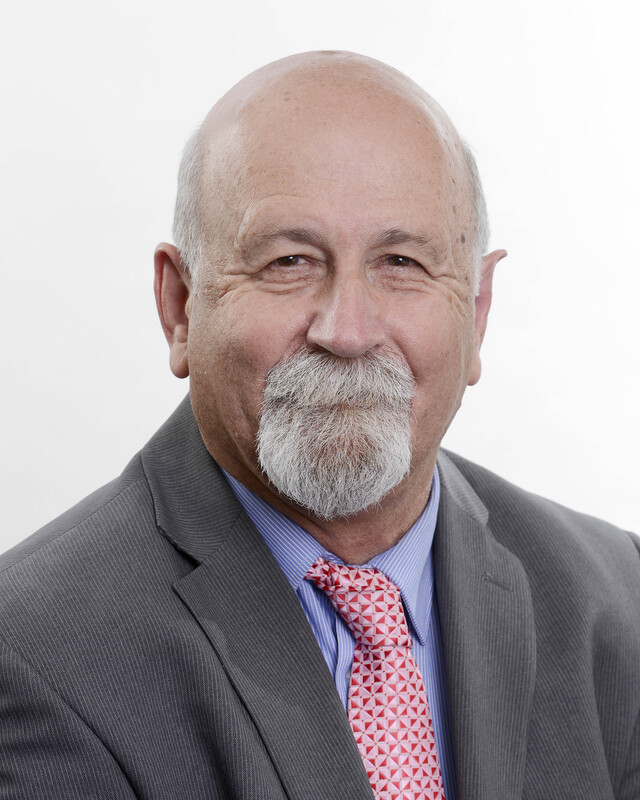
Councillor Peter Maguire, Central Highlands Regional Council, Queensland
Q. Why did you decide to run for Council?
I saw it as a chance to help my local community. I was already involved in some community events and activities, but I thought being on Council would give me an opportunity to really make a positive difference.
Q. Tell us about the Central Highlands.
God’s own country covers around 60,000 square kilometres, stretching from the Arcadia Valley in the south to the Peak Ranges in the north, east from Boolburra to Bogantungan in the west.
We have over 31,000 residents spread across more than 20 townships and communities.
Our region is characterised by vibrant townships, spectacular natural scenery, fertile farming country, highly improved livestock grazing land, operational coal mines and rich untapped resource reserves.
Our stunning natural features include the Gemfields, the largest sapphire producing fields in the Southern Hemisphere, Carnarvon Gorge, Blackdown Tablelands and the Peak Downs ranges.
We use the word diversity a lot in this region – diverse economy, landscapes and people.
Our Community Plan tells us that we value our culture and our heritage, but we are also very welcoming, and our region is growing, with people literally travelling from all over the world to live here.
The Council was created on 15 March 2008, with the amalgamation of the former Shires of Bauhinia, Duaringa, Emerald and Peak Downs.
Our Council has in excess of $800 million in assets, including eleven library branches, five swimming pools, and seven customer service centres.
We maintain 4632 kilometres of roads, and numerous parks and gardens, including the glorious Botanical Gardens in Emerald, and the Linear Parkland in Capella.
We’re still recovering from the floods, and I estimated at the time that around 70 per cent of the region had water over it at some stage in December and January.
Q. What are the challenges of the role?
Probably the hardest part of the job is juggling your time, and trying to be as available as possible to the people of the Highlands.
That can be difficult with a Council area the size of ours.
We are right in the heart of the resource rich Bowen Basin, and coal mines have long operated here.
However, the number of new projects coming on is just astonishing, and coal seam gas exploration, which we thought would only impact a small area of the region, is now all over the place. We have a difficult balance also trying to maintain our agricultural land, and preserve our rural way of life and ensuring we have all the services that are needed to attract people to come and live here and service the diverse industries in the area.
Housing availability and affordability are key issues affecting people and businesses that can’t pay mining industry wages, and that includes Council.
And of course it seems that while the resources and profits and taxes are reaping rewards for other levels of government, I don’t think we’re getting our fair share back here in the region.
Local Government in Queensland is facing more demands from State Government to implement programs – the commercial waste levy and fluoridation are just two.
While there may be some initial establishment funding coming from the state, the programs will have an ongoing financial cost to us, and ultimately to our ratepayers.
The state government is also reducing or ceasing subsidies and grant funding programs, and that also increases the pressure on local Councils.
Q. What are some of your innovative projects?
Council recently decided to form its own housing company, to provide affordable housing for residents, initially in Emerald and Blackwater.
It’s not social housing, but affordable housing for people who are employed in sectors that don’t attract high wages, but are critical to the ongoing success of our local and regional economy, beyond mining and associated industries.
Our agricultural and small businesses such as our retailers and hospitality sectors need workers, but can’t provide housing as part of their employment conditions, which makes it difficult to attract and keep staff.
We have a very low unemployment rate across the region, but we need a better supply of affordable rental properties for our workers.
We also have a very good relationship with other Local Governments in the region, and through the Central Queensland Local Government Association we’re able to provide kerbside recycling through the waste contract arrangements.
It is something we would not have been able to do on our own.
The consultation process for our first long term Community Plan was very extensive. We had nearly 800 surveys completed, and that has given us a lot of good quality information to guide the plan.
Q. What about Local Government in the 21st Century?
Challenging. I think we have difficult times ahead, with a number of State Government subsidies and grants disappearing or being reduced.
That makes it hard to maintain infrastructure, let alone deliver new projects, which is what we really need to do with a growing population.
Matching community aspirations with our ability to deliver projects in an uncertain economic environment and keeping rates increases to a minimum will also be big challenges.
Q. What is the best part of Local Government?
The best part of the job is meeting and talking to people. It has given me the chance to meet people from all over the world, and from all different walks of life.
I’m passionate about the region, and in my job I get to talk about it and promote it, which is easy!
And I think Local Government as an employer offers a great career as well.
There’s such a diversity of opportunities, and it gives you a great life experience as well as a chance to work for your community.