Prime Minister Julia Gillard has been under huge pressure to assert her authority and her latest ministerial reshuffle was clearly part of this. Her announcement of the new arrangements in December was peppered with phrases like ‘I have decided’ or ‘I am committed to’. Rarely did she use the term ‘we’.
The big shock however was the demotion of Kim Carr as industry minister. The hot goss here in Canberra is the demotion was payback for Carr allegedly being the numbers man for former PM Rudd, who is clearly playing mind games.
Carr had strongly supported the science and engineering fraternity, and had not presided over any stuff-ups. He’d apparently been quite aggrieved when his Green Car program was razored by the Department of Finance to pay for the Queensland floods. Although I’d been critical at the reactive nature of industry policy, Carr had little leeway due to the dry policy settings set by Treasury-Finance.
The many messages of support for Carr reflect the widespread belief that he was the sacrificial lamb in a ham-fisted attempt to assert Gillard’s authority.
Canberra out of touch – two examples
Example 1 – politicians’ salaries
The Remuneration Tribunal’s recommendation for huge pay rises for politicians was accepted by the Gillard Government without amendment. A 31 per cent pay rise for the PM and huge increases for ministers, MPs and departmental heads is a clear case of greed and a lack of judgment and leadership when the world is facing major belt-tightening. Gillard could have accepted a 10 per cent catch-up, instead of blindly following the advice. Not a murmur from the Opposition either. A cynical electorate edge further towards the Independents and Greens.
Example 2 – water entitlements
In the same week, Water Minister Burke fronted a meeting of 12,000 Riverina residents to explain the Murray Darling Basin Authority’s plan to reduce water entitlements by 2750 GL/year. Burke too was toeing his advisers’ line. But he was on a hiding to nothing, and only his personality and intelligence saved him from a serious incident. The matter is far from over.
If Cockatoo members in the Riverina are looking for a solution, they might dwell on the following:
- Riverina irrigators have been through 10 years of drought – they see the cutbacks as scuttling their recovery process.
- Burke has $5.4 billion to spend on water-saving infrastructure.
- Why not push the principle of ‘collaborative conditionality’ i.e. create a nexus between the infrastructure expenditure and the water cutbacks. In other words, as the new infrastructure delivers the water savings, the entitlements would be wound back by an equivalent amount. Both sides gain. As Otto von Bismarck once said ‘politics is about the art of the possible’.
Time for Plan B – investigate Tilt Train
The feds are moving to phase two of the outrageously expensive $20 million feasibility study for High Speed Rail between Brisbane-Sydney-Canberra-Melbourne. The phase one report by AECOM puts the construction cost of the proposal at between $61 billion and $108 billion. The sectional breakdowns are still pretty unpalatable – Sydney to Newcastle ($11-18 billion), Sydney to Canberra ($11-25 billion), Canberra to Melbourne ($20-26 billion) and Brisbane to Newcastle ($20 -41 billion).
Phase two of the study has now commenced – to pin down a preferred alignment and station options, assess the commercial viability (and any subsidies that may be required), and identify potential funding sources and a management model for the construction and operation.
Well folks, this project is a DEAD DUCK on current economic and political settings. No institutional investor will touch any part of this project given the costs involved, our modest population, the world economic outlook and the lack of infrastructure champions. Seriously, who in the private sector is matching Minister Albanese’s rhetoric?
However there is whiff of sanity. Professor Philip Laird from the University of Wollongong is proposing ”off the shelf’ diesel tilt trains capable of 200km. He says the Newcastle-Sydney section is the logical start point. And we are advised that the Sydney-Canberra section, with some straightening of the Campbelltown-Mittagong section, could be done for less than $1 billion and reduce the travel time by half (to two hours).
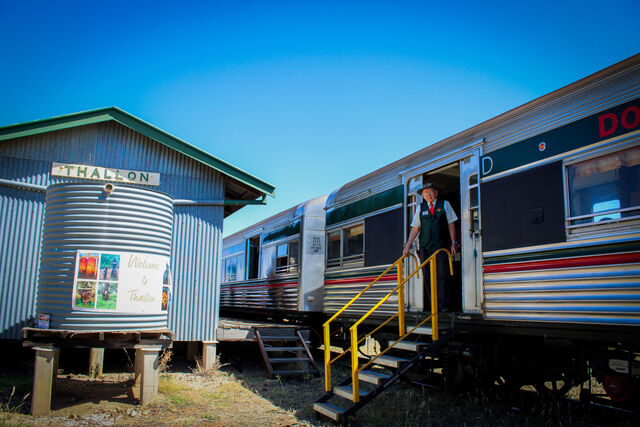
Tilt trains are proven in Queensland – the Brisbane to Cairns runs at 160 km/h on the better sections, and Queenslanders seem generally happy with the service. The infrastructure upgrade to deliver it was a reported $590 million in the 1990s, and a similar amount in the following decade.
But the AECOM study is not considering the Tilt Train. If I was a councilor looking for an outcome, I’d be lobbying Minister Albanese to urgently widen the AECOM’s consultancy brief. We are thinking of stirring the pot on this – please contact us if you are similarly concerned.
Biodiversity Fund
The Biodiversity Fund should interest most councils. It involves a spend of $946 million over the next six years to help land managers store carbon, improve biodiversity and build greater environmental resilience. It funds land managers on public and private land.
The Biodiversity Fund will invest in three main areas – biodiverse plantings; protecting and enhancing existing native vegetation; and controlling the threat of invasive pests and weeds.
There is one funding round per year – Years 1 and 2 have around $32 million each, with the emphasis on 30-40 pilots. Years 3 and 4 have $250 million each and the last two years have around $170 million each.
We are currently preparing submissions on behalf of councils. If you’ve not moved on this yet, then you’ve missed the boat for the first round (closes end January).
Rural not synonymous with economic decline, says OECD
The OECD has just released its first ‘Regional Outlook’ report. It observes that on average 70 per cent of the economic growth of OECD countries occurs outside the big metropolitan hubs. And although predominantly rural regions can be among the slowest-growing regions in the OECD, they are also over-represented among the most dynamic. Contrary to popular belief, “rural” is by no means synonymous with economic decline, the report says.
The OECD argues that huge regional variations in economic and social conditions within a country require a rethink of the way governments design policies to boost growth and jobs. It says that policymakers should pay greater attention to regional factors such as amenities, accessibility to programs, infrastructure and demographics, industry specialisations and networks. It calls for the coordination of policy around these regional factors.
This should be food for thought for the Australia Government because many federal programs are of little use to smaller and remote regions. Access to grants invariably requires quality submissions and huge persistence – but the smaller councils don’t have the resources to do this. As I’ve said repeatedly over the years, the feds have to build flexibility into their program criteria, empower the RDA Committees and appoint Regional Coordinators.
Until then, you’re stuck with me and my colleagues in the Cockatoo Network. Have a prosperous and collaborative 2012.
*Rod Brown is a Canberra-based consultant specialising in industry/regional development, investment attraction, clusters and accessing Federal grants. He also runs the Cockatoo Network. He can be contacted at apdcockatoo@iprimus.com.au or phone (02) 6231 7261.
Go to the blog at www.investmentinnovation.wordpress.com for 550+ articles on issues relevant to Local Government.