Home » Councils surveyed about the carbon tax

Councils surveyed about the carbon tax

The Municipal Association of Victoria (MAV) has released a report into the impact of the carbon tax on Victorian local governments. Surveying 38 councils, ranging across rural, regional and urban areas, MAV has concluded that the carbon price design has a lesser impact on council costs (and on rates) than the previous proposal under the 2009 Carbon Pollution Reduction Scheme (CPRS).

The analysis undertaken by MAV assumes that councils are likely to see their costs influenced in four main areas: automotive fuels, stationary energy, municipal waste and construction. The overall rise in costs in these areas is projected to range from 0.3–1.9 percent of expenses, dependent on particular councils’ energy usage and/or carbon reduction initiatives. This translates to a median rise of 0.8 percent, which is in line with the Federal Treasury’s prediction of the impact on consumer prices nationally.

According to MAV President, Councillor Bill McArthur, the fact that many councils have been reducing their greenhouse gas emissions will also reduce the impact of the carbon tax. “For over a decade Victorian councils have been actively working to lower their greenhouse gas emissions, and two thirds have adopted a formal greenhouse gas mitigation strategy,” says Councillor McArthur.

“Actions have included changes to vehicle fleets, improved building and street lighting energy efficiency, landfill methane gas capture, green purchasing programs and use of GreenPower. This means that in many cases municipal expenses and any flow on impact to rates will be lower than our estimates, as councils find cost savings rather than pass on cost increases to ratepayers.”

The Australian Local Government Association (ALGA) has estimated that the expenditure directly attributable to the price on carbon will add $230 million (0.8 percent) to the approximately $28 billion per year spent by local governments on a national scale. It is projected that the main areas that councils will feel an impact are electricity, gas and petrol costs, the generation of municipal wastes and costs related to the construction of buildings.

Not surprisingly, MAV’s analysis has been met with some relief on behalf of Victorian councils, and indeed, by ratepayers. More than anything, the generally slight impact of the carbon tax on councils attests to the commitment of local governments over a number of years to reduce their carbon footprint.

Digital Editions


  • Big attraction for tiny town

    Big attraction for tiny town

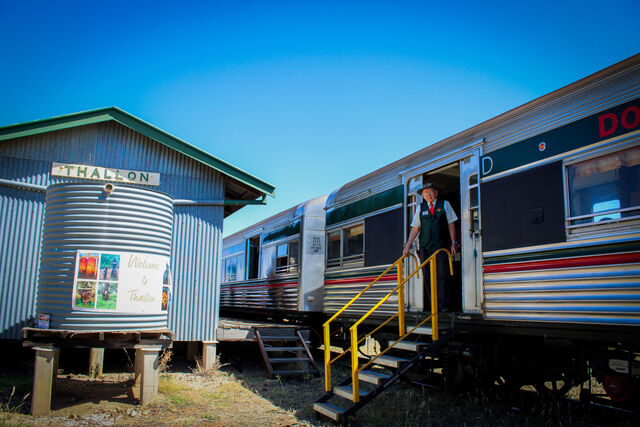
    Dozens of tourists have created history as the first passengers in decades to arrive in the tiny southern Queensland town of Thallon by rail. Excited…

More News

  • Dandycon set to return

    Dandycon set to return

    Dandy Con, Greater Dandenong’s much loved comic and pop culture festival, returns on Saturday 11 April 2026 between 11am–4pm, bigger than ever. This free, all ages event fills Dandenong Library,…

  • A creative future for Kingston

    A creative future for Kingston

    The community has been invited to help shape Kingston’s creative and cultural future. Kingston residents are being invited to help finalise the city’s cultural roadmap, with the Draft Creative and…

  • Tweed residents gunking up wastewater

    Tweed residents gunking up wastewater

    Tweed Shire Council is urging residents to rethink what they flush down the toilet and pour down the drain, after revealing that crews remove around 156 tonnes of rubbish and…

  • In memory of Chris Quilkey

    In memory of Chris Quilkey

    It was with great sadness that we learned that former Blacktown City Deputy Mayor and Councillor Chris Quilkey has passed away. First and foremost, our thoughts are with Chris’s family,…

  • Unit demolished as Ipswich flood recovery continues

    Unit demolished as Ipswich flood recovery continues

    Ipswich Mayor Teresa Harding has welcomed the demolition of Mihi Grove, a flood-hit 42-unit complex in Brassall purchased as part of the Queensland and Australian Government’s Resilient Homes Fund Voluntary…

  • Fraser adopts tree

    Fraser adopts tree

    The Fraser Coast now has an official tree, with Council today adopting the Kauri Pine as a symbol of the region’s culture, history and natural environment. Fraser Coast Mayor George…

  • Council take on much-loved garden

    Council take on much-loved garden

    Glenorchy City Council will take on the administration of the Chigwell Community Garden, securing the future of the much-loved community space and supporting continued shared use by local groups. Glenorchy…

  • Fuel prices hurt country LGAs

    Fuel prices hurt country LGAs

    The fuel crisis is hitting remote, rural and regional communities hard, with farmers, freight carriers, tourism operators and local government all expressing concerns about the lack of supply and the…

  • Navigating grants

    Navigating grants

    How Administrative Complexity Is Eroding One of Local Government’s Most Powerful Tools Local government grants exist to create impact in communities. Yet across the sector, that purpose is increasingly being…

  • Looking to the future

    Looking to the future

    Flinders Lane will be abuzz for two days this month with Townsville Youth Council – supported by Townsville City Council – set to deliver a free festival focused on the…