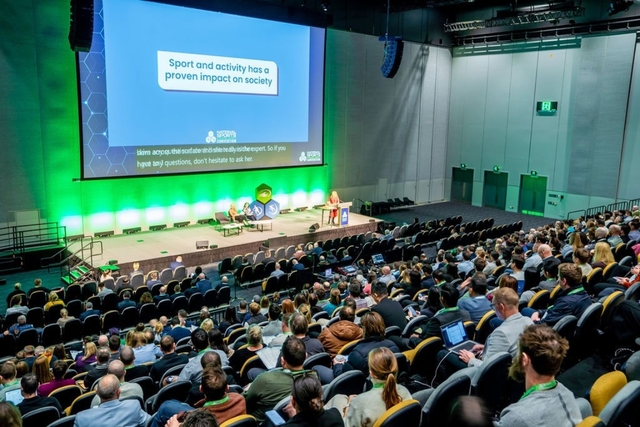
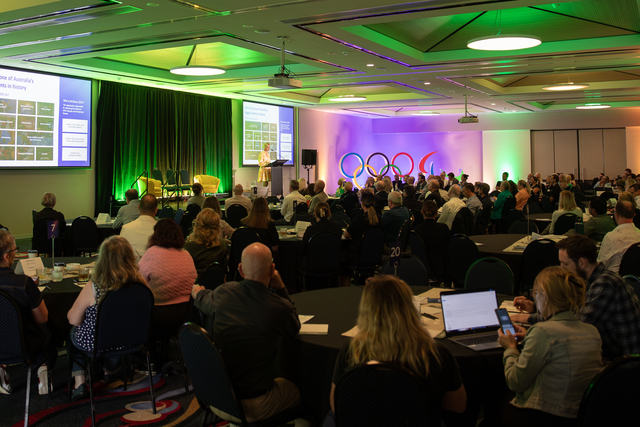
There was a very good rollout at the ALGA National Assembly in Canberra last month. Attendees appreciated the opportunity to better understand the Mad House and its occupants.
Consistent with its move towards constitutional recognition, local government needs to sharpen its lobbying effort. This is especially the case on local issues, because the ALGA and state bodies can’t cover all things.
What is lobbying? It is simply about helping politicians and officials to make the correct decisions. There are some 280 consultants registered with the federal government, and their techniques and skills vary widely.
My company specialises in progressing R&D, investment and infrastructure proposals, as well as anything with an industry or regional development flavour. We also draw on Cockatoo Network members’ professional expertise.
In our experience, successful lobbying by local councils revolves around three steps.
1. Decide your pitch
Canberra is awash with paperwork. It’s generally best to formally write to a Minister rather than the Department because it confers more status. And there are timelines that must be met for Ministerial correspondence.
With respect, councils tend to write to Ministers in convoluted, quasi-legal terms, without making a compelling case. In return, you get non-committal replies about three months later.
My advice is to stick to the KISS principle – cast your thoughts in terms of what, why, where, who, how much, and expected outcomes. We specialise in this stuff.
2. Identify who needs lobbying
It’s important to address your message to the right people. A formal letter to Ministers might be the first step, but in 90 percent of cases, he/she won’t be reading it until signing the reply – the staffer or SES officer will be signing it off. A briefing to these folks is often advisable.
Finding the right Minister and Department isn’t so easy. For example, say you’re an inner-urban council grappling with air traffic noise, road congestion and loss of lifestyle and amenity. You might start by considering the following groupings:
- Industry/infrastructure focus – Industry & Innovation; Resources and Tourism; Agriculture; Communications (BCDE); Infrastructure & Transport; Regional Development & Local Government
- Social/environment focus – Health; Families and Community Services (e.g. FaHCSIA); Vets Affairs; Sustainability, Environment, Water, Population & Communities (SEWPC); Climate Change; Education; Employment
- Unaligned – Treasury; Finance; PM&C; Defence; Attorney-General’s; Immigration; Foreign Affairs & Trade.
As you can see, it’s a bit tricky. In this example, Department of Infrastructure & Transport seems the most relevant, but they might bat like Bill Lawry. The alternative is thus to begin a dialogue with SEWPC; failing that, it would be Regional Development & Local Government or possibly FaHCSIA.
3. Tapping the self interest
Using the same example, you might get a warmer reception from a social planner in SEWPC than an engineer in the Department of Transport. But you need to research SEWPC’s website to confirm things.
And lastly, don’t drop your confidence – buzzwords and acronyms are hallmarks of Canberra-speak. But those spouting jargon about ‘moving forward in a post GFC environment’, etc. are no smarter than you.
Next month – the importance of maiden speeches – engaging your local member – the Red Wine Strategy.
The Creative Class, revisited
Richard Florida is out with his new book The Rise of the Creative Class, Revisited, reports Jeff Finkle at the International Economic Development Council (Washington). Florida is speaking at the IEDC’s Annual Conference in Houston starting 30 September. Recommend it.
Jeff says it has been a decade since Florida’s book on the Creative Class. In this revised and expanded edition, Florida refines his occupational, demographic, psychological and economic profile of the Creative Class and covers the factors that shape ‘quality of place’, such as technology, race, and wealth or otherwise.
Florida also has an article in www.theatlanticcities.com — the gist is that Detroit is drawing on a long legacy of creativity and innovation that’s a part of the city’s DNA, from the industrialist Henry Ford to the architects and designers (Albert Kahn, Charles and Ray Eames, Eero Saarinen, Minoru Yamasaki), and Detroit’s incredible line of musical innovators (John Lee Hooker, Donald Byrd, Motown and Aretha Franklin, The Supremes, The Temptations, the Four Tops, Marvin Gaye, Michael Jackson) plus rock stars like Iggy Pop, Alice Cooper, Bob Seeger, Eminem, etc. Quite amazing!
His proposition is that Detroit can tap into its creative roots as part of its adjustment away from the automotive and engineering industry. Indeed, Chinese imports aren’t going to threaten western music!
Sydney’s entrepreneurial hub
The City of Sydney has somehow facilitated the opening of a creative and cultural hub for entrepreneurs at 66 Oxford Street in February.
Mayor Clover Moore claims that “People started collaborating almost as soon as they moved in; it was quite remarkable to walk around the building and hear their stories”.
The Sydney Morning Herald reports that sixteen tenants, including tech start-up AroundYou, moved in and that the Mayor is converting two other buildings on William Street to create more space for start-ups. She said start-ups needed affordable space, advice, encouragement and support, but the biggest challenge was finance. A lack of venture capital is forcing Australian talent to go offshore.
The City of Sydney is following the lead of other co-working spaces such as Fishburners, which opened last year in Ultimo and filled up with 60 entrepreneurs within six weeks. It charges around $300/month for a desk, Internet, printing facilities, access to a kitchen and boardroom etc.
This is all eminently sensible. Business incubators have had a patchy track record, mainly because they were located in rundown former primary schools and/or distant suburbs. And most required the minnows to move out once they grew up – a silly rule in my opinion. Indeed Sydney entrepreneur Peter Fritz AO got the recipe right two decades ago by renovating a former warehouse in Chippendale, also in inner Sydney. He wrote a book about it, called The Possible Dream. Peter is a true collaborator and visionary, and chairs an OECD group promoting SME development.
Anyway, we applaud Sydney City Council for having a crack. Downtown Sydney is a natural place for such incubators. If the energy created by these entrepreneurs can attract a couple of venture capitalists, the place will really be ‘a rockin’.
Engaging with Canberra workshops
Colin Steele (Section51) and I have joined forces to run one-day workshops around Australia. They are designed to assist councillors, senior managers and middle managers to maximise their access to federal decision makers and grant programs. We will be convening these workshops mostly via the council associations at the state level, but we can do the same for ROCs or individual councils. Please contact us for details.
Rod Brown is a Canberra-based consultant specialising in
industry/regional development, investment attraction, clusters and
accessing Federal grants. He also runs the Cockatoo Network. He can be
contacted at apdcockatoo@iprimus.com.au or phone (02) 6231 7261.
Go to the blog at www.investmentinnovation.wordpress.com for 550+ articles on issues relevant to Local Government.