President’s Comment
In each
edition we feature the views of a Local Government Association
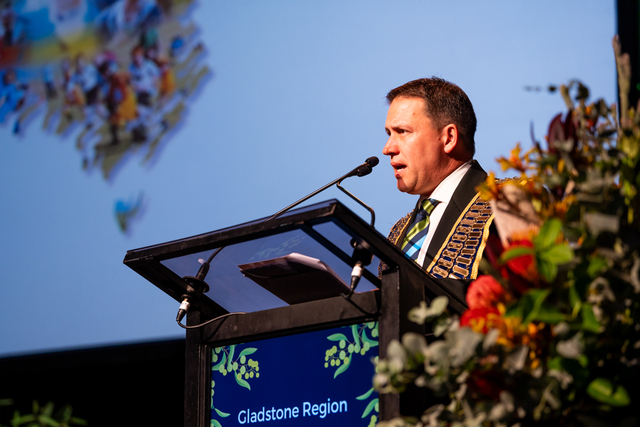
president. Our August issue features a comment from Councillor Troy Pickard, President of the Western Australian Local Government Association (WALGA).
Communities in Western Australia may soon face significant changes in how their council services are provided and how local decisions are made, and there is the strong possibility that by this time next year some WA local governments may no longer exist.
It is anticipated that the local government reform process will gather momentum in the coming months, as the Barnett State Cabinet considers a report into changes to metropolitan councils. An underlying premise of the report by the State Government-appointed Metropolitan Local Government Review panel was to reduce the number of councils in Western Australia.
However, despite a lack of evidence that it is better to have fewer councils, and the fact that the review would aim to terminate councils, metropolitan local governments have generally participated in the review process.
Certainly, in recent times, there has been a genuine commitment from WA councils to explore and define the most appropriate governance structure for the metropolitan area. This, of course, has not always been the case, but I believe a shift to a more pragmatic approach from the majority of the sector has established a firm basis for leadership of our communities into the future, and has positioned us to positively influence the outcome.
The need to explore reform of local government in Western Australia was first nominated by the sector at the WALGA Annual General Meeting in 2004. In response, WALGA undertook its extensive Systemic Sustainability Study, investing more than $500,000 and four years into identifying key changes to improve local government operations, most of which have since been implemented.
The State Government first proposed reform of local government in February 2009, by requesting councils nominate amalgamation options. However, after more than two years of submissions and debate the process had achieved little genuine reform and the process had begun to stall.
WALGA advocated to the State Government that for the review process to work there needed to be recognition of the diversity within the sector and that a ‘one size fits all’ solution would not suit all local governments and their communities. Consequently, the WA Local Government Minister shifted the focus of reform to the metropolitan area and, just over 12 months ago, launched the current review.
With the metropolitan review now moving into the public comment period there is a need to appropriately position regional local governments for any future discussion. It remains a reality that WA is a very diverse state, and this is reflected in the local governments that are needed to serve the diverse communities. It is highly likely that the appropriate governance model for metropolitan Perth does not immediately translate to regional centres, or to rural or remote communities.
Underlying any reform of regional, rural and remote local government needs to be the principle of cooperative regional service delivery with local representation and decision-making. The ‘one size fits all’ approach seems no longer to be a part of the State Government’s thinking on reform, and it is important that WALGA and the local government sector use this to the benefit of local communities.
The active contribution by WALGA and metropolitan local governments to the current review process should not be misinterpreted as the sector falling into line with the State Government. Over the past year there have been numerous decisions by the State Government that WALGA has challenged on behalf of its members.
For example, a recent decision by the State Government to reduce the penalty interest rates that can be charged by Councils on late rates payments was opposed and reversed following sustained and well evidenced negotiations by WALGA, and with the support of the sector.
Indeed, WALGA demonstrated to the Minister that the move would actually end up costing the sector at least $6m, which would need to be recovered and would effectively mean that all ratepayers would be paying more to cover those few who were not meeting their responsibilities.
Local government is the sector of government that provides the services that communities use every day. It is important that local government, on behalf of these communities, is able to directly influence how those services and facilities are provided.