Home » Engineering sustainable sports fields

Engineering sustainable sports fields

With 10,000 tonnes of fill material to contend with and a shallow water table, Warringah Council had to be innovative when it embarked on its mission to build Cromer Park — its first new sports field in more than 20 years.

Cromer Park was first established in the 1950s and over the next 20 years construction material from the development of the Cromer industrial area was used to build large spectator mounds.

In 2011 Warringah Council, responding to community needs, developed a master plan that identified the need to remove the central spectator mound to facilitate construction of a fifth field and the redevelopment of Cromer Park Field 1 using synthetic grass.

Warringah Mayor Michael Regan said the council was committed to providing leading edge recreational facilities.

“Our investment in extensive upgrades at Cromer Park, with its new sports field and facilities for more sports, is clear evidence of this,” he said.

The first major hurdle in providing the new facilities was how to maximise the reuse of the 10,000 tonnes of fill materials from the site. Council resolved this by reusing the high quality topsoils excavated as the growing medium for the new field, reusing the majority of the fill as sub-grade material for the car park and utilising the balance to provide the spectator mound with a gentler gradient.

Council also set out to provide best practice water– sustainable urban design principles for the drainage and irrigation of the site, while contending with a flood zone, reclaimed land fill, deep swampy subsoils and a shallow water table.

These issues were overcome by constructing 1.2 kilometres of pipes that drain water from the synthetic field, the local stormwater network and natural turf fields, with further harvesting mechanisms installed on the stadium roof and in the car park.

Secondly, a new 300kl water tank was constructed underneath the car park, enabling the bulk of the new tanks to be situated above the water table.

These systems increase the performance of the sports fields by draining water during the winter season and filling the water tank, ensuring the supply for the irrigation of the four natural turf fields and surrounding parkland, saving millions of litres of town water per year.

The reduction in the use of potable water also ensures that fertilisers and pesticides are kept on site and not released into the Dee Why Lagoon catchment.

“Cromer Park now has an enviable array of first class public sports facilities and is able to provide an additional 100 hours of play per week for the community,” said Cr Regan.

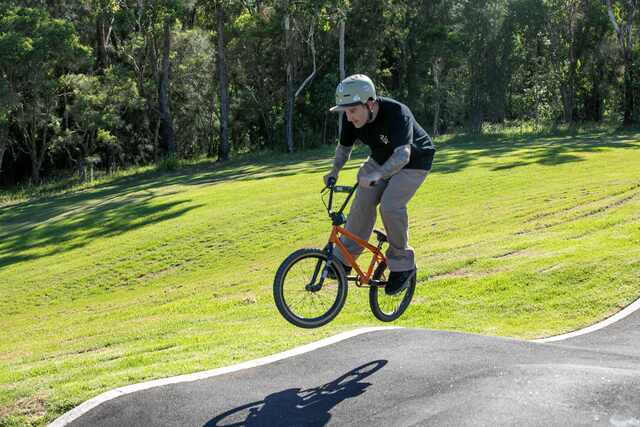
“With the new facilities – bike tracks, numerous fields for junior and professional sports plus a brand new cricket pitch — Warringah Council is confident that the community, including sporting and non-sporting users will enjoy these upgrades to Cromer Park.”
Digital Editions


  • Lockyer send flood expert north

    Lockyer send flood expert north

    Lockyer Valley Regional Council has answered the call for assistance from a community impacted by Ex-Tropical Cyclone Koji, with a staff member from Council’s Disaster…

More News

  • Lockyer announce Scott Greensill as CEO

    Lockyer announce Scott Greensill as CEO

    Lockyer Valley Regional Council has appointed Scott Greensill as its new Chief Executive Officer. Councillors formally approved the appointment of Mr Greensill at a Special Meeting of Council in February.…

  • Myers resigns for health reasons

    Myers resigns for health reasons

    Wollongong’s Councillor Tiana Myers has resigned, as a Ward Three Councillor for City Council due to health reasons. Cr Myers was elected to Council in 2024 with a focus on…

  • Acknowledging women’s role in councils

    Acknowledging women’s role in councils

    Council representatives from across the state gathered in Sydney today for Local Government NSW’s (LGNSW) International Women’s Day event. Mayor Darcy Byrne, President of LGNSW, said the event was an…

  • Kylie Davies beats strong field

    Kylie Davies beats strong field

    Flinders Shire Council is pleased to announce the appointment of Kylie Davies as its new Chief Executive Officer. Ms Davies will start in the role on 13 April following a…

  • Leaving on a high

    Leaving on a high

    Mount Alexander Shire Council’s Chief Executive Officer Darren Fuzzard will end his tenure at the council in July 2026, marking ten years of service to the organisation and community. Mr…

  • Safety first for transport corridor

    Safety first for transport corridor

    Traversing a major Townsville transit corridor spanning three suburbs will soon be safer for motorists, cyclists and pedestrians, with Townsville City Council commencing a $3.8 million upgrade of Hugh and…

  • Creating long-term employment pathways

    Creating long-term employment pathways

    The Shire of Carnarvon is creating long-term employment pathways and strengthening workforce capability through its participation in the Remote Jobs and Economic Development (RJED) Program, a national initiative designed to…

  • Cool summer plan for Campbelltown

    Cool summer plan for Campbelltown

    Extreme heat is the biggest killer of natural disasters in Australia, exceeding that for any other environmental disaster combined, including floods, storms, bushfires and cyclones. While high temperatures pose risks…

  • Bathurst has it’s scrap together

    Bathurst has it’s scrap together

    Bathurst Regional Council has successfully concluded its ‘Let’s Get Our Scrap Together’ campaign, launched on 1 September 2025 with funding from the NSW Government and delivered in collaboration with NetWaste…

  • Baw Baw acting CEO tenure extended

    Baw Baw acting CEO tenure extended

    Baw Baw Shire Council has extended the contract of Acting Chief Executive Officer Sally Jones until 30 June 2026. The matter was considered as a confidential item in the late…