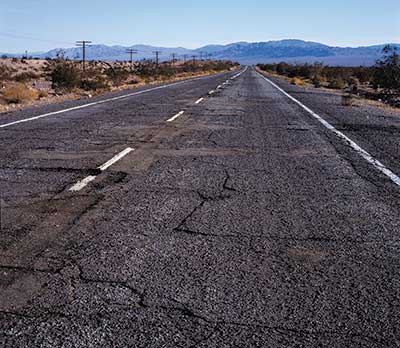
More than 10 percent of council-managed sealed roads are in poor condition and around 65 percent of timber bridges are substandard.
These were among the findings from a national study commissioned by the Australian Local Government Association (ALGA) to examine the condition of community roads and infrastructure.
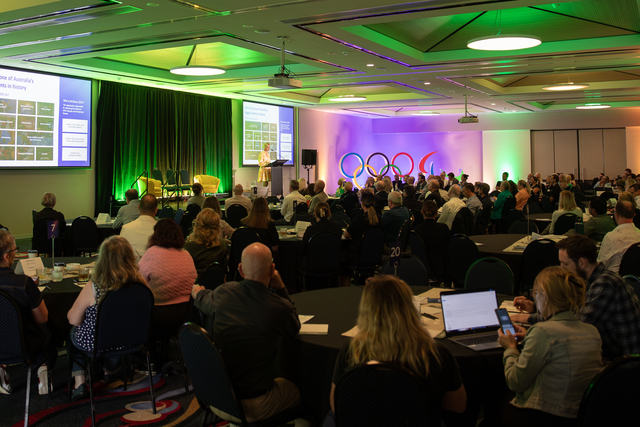
The 2013 National State of the Assets Report was launched at ALGA’s 14th National Local Roads and Transport Congress in Alice Springs, where hundreds of local government representatives met to discuss key issues affecting roads, transport and infrastructure provision in Australian communities.
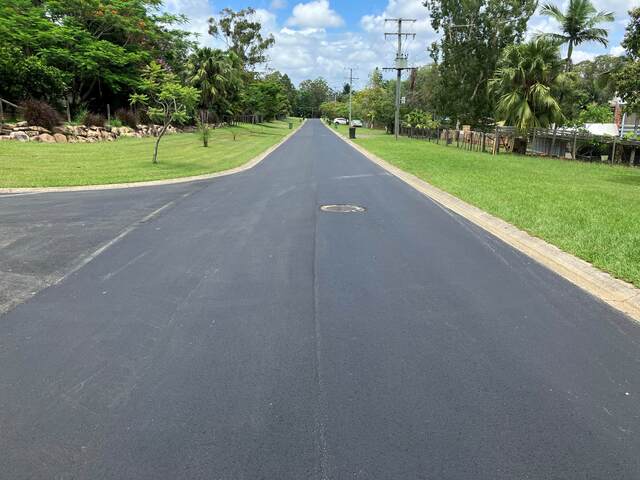
The 2013 Report represents the findings from analysis of data provided by 344 councils, which manage almost $100 billion worth of transport assets, including sealed local roads, unsealed local roads, concrete bridges and timber bridges. Key findings suggest that $8.3 billion in sealed roads are in poor or very poor condition, together with a further $1.9 billion in unsealed roads and $1.4 billion in concrete and timber bridges.
ALGA President Felicity-ann Lewis said the findings reinforced the need for further investment in local roads and bridges, which are critical to the social and economic development of communities and national prosperity.
“We can’t afford to have substandard local roads and bridges. These are the gateways to and from our communities. They provide access to local, regional, state and national services and markets and play a vital role in driving our economy.
“Local roads and bridges make up the first and last mile of every journey. We depend on them to move freight efficiently. But local access points are not of the standard that they should be and the State of the Assets Report confirms that.”
The Report builds on research commissioned in 2010, which indicated that expenditure on local roads would need to increase by an average of $1.2 billion per year to avoid deterioration of the local road network. In 2006, the results of a study undertaken by PricewaterhouseCoopers found that the potential aggregate backlog for all 560 Australian local councils was approximately $14.6 billion, with an annual funding gap of $1.1 billion.
The Federal Government has committed $300 million to replacing old and unsafe bridges. Minister for Infrastructure and Regional Development, Warren Truss, said that through matched funding, the Government’s investment would deliver at least $600 million to much needed infrastructure.
“Funding, to be matched by councils and state governments, will be allocated on a transparent, competitive basis, giving priority to community need and economic return.
“Together with other programs to renew our roads and reduce accident spots, the Bridges to Renewal Program will help deliver the infrastructure our regions and cities need for a strong and competitive global future.”
Councillor Lewis praised the Government’s funding commitment.
“The future of our communities and regions depends on renewing these bridges so they can meet the needs of people and businesses into the future. Stronger bridges mean stronger businesses, stronger communities and a stronger economy.”
But with states and councils expected to match the federal government’s contribution, the ability of local government to make up the shortfall is under question.
The shortfall in funding for local roads is estimated to be $14.6 billion per year, and with more and more roads and bridges reaching the end of their lives, many councils will struggle to adequately maintain local roads with rates alone.
Ku-Ring-Gai Council in New South Wales has applied to continue using a Special Rates Variation to contribute $2.7 million of roads funding. Despite ongoing improvement over the past 12 years, 56 percent of Ku-Ring-Gai’s roads were recently assessed as in ‘poor’ condition. Similarly, Gilgandra Shire Council has proposed rate increases of seven percent per year over three years to meet a $600,000 shortfall in rural road maintenance, a move which will have a huge impact on farmers and residential ratepayers.
In regional Victoria, West Wimmera Council confirmed in October it would cut funds for road maintenance and re-assess projects in order to find savings to match the funding shortfall.
Councillor Lewis said that while councils appreciated assistance provided through the Federal Government’s Roads to Recovery program, more needed to be done to address the estimated funding shortfall for local roads of $1.2 billion annually.
“Local government manages more than 80 percent of our national road network and we need to ensure that we can afford to maintain local roads to a sufficient standard, otherwise local and national productivity will suffer.”