How end-of-life tyres are being reborn as road surfacing materials.
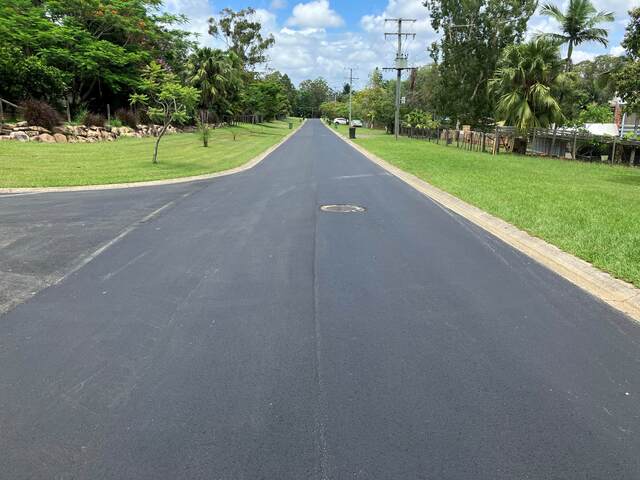
Victorian council, the City of Casey, is embracing the use of Crumb Rubber Asphalt (CRA) for its road surfacing projects and in the process ridding itself of one of its biggest waste headaches.
Michael Apps, City of Casey, Team Leader Civil Construction said, “The main reason we started using CRA is that it’s very environmentally friendly.
“But the driving factor was that we could get rid of the tyres. Like all councils, we have an enormous number of tyres that need to be dealt with every year.”
He said that the environmental considerations were very important to Council’s decision to use CRA, but there are other ‘added bonuses’.
“Soon after we laid it we started to see how good it is. We’re finding it impervious to water and it’s stronger, wearing better than normal asphalt.
“Normal asphalt ruts to 8mm, however CRA only ruts to 2mm, so it’s stronger,” said Mr Apps.
“There is also a noticeable reduction in road noise, anyone with a four-wheel drive will notice a big difference.”
Casey had laid 8,500 tonnes as at the end of September 2017, across a variety of road surfaces, including roundabouts, heavy-vehicle driveways and patching. A total of 13,600 tyres were used in the making of the 8,500 tonnes of CRA.
Mr Apps says Casey will continue to use CRA and will promote its use among other councils.
“Quite a few other councils have contacted me regarding this product. It’s certainly got people’s attention and I know of at least two councils that will soon be using the product for large projects.
“The waste people want it, the environmental people want it, it’s a win-win all the way round.
“If we can get tyres out of our waste stream and into a stronger, better product for our roads, why wouldn’t we? Why wouldn’t everyone?”
Millions of end-of-life tyres are generated each year. Many of them end up in landfill, are illegally dumped, or are exported overseas.
Tyre Stewardship Australia plays a vital role in assisting the development of national markets for tyre derived products.
The Tyre Stewardship Research Fund provides support for the development of markets for Australian tyre derived products. The primary objective of the fund is to invest in projects as a means of increasing demand for locally processed used tyres to develop new markets for local recyclers and manufacturers.
Tyre Stewardship Australia’s CEO, Dale Gilson said, “Rubberised road products not only provide quieter, more durable roads, but will also play a central role in helping to solve the challenge of dealing with nearly 56 million end-of-life tyres each year”.
Although rubber in asphalt and spray seal have been in use in Australia since the 1970’s, the scope to increase the volume used within asphaltic products nationally offers a major opportunity to utilise recycled rubber more extensively in high value applications.
Mr Gibson said, “There is a huge potential to turn the environmental challenge posed by end-of-life tyres into an opportunity to improve Australia’s roads”.
*Copy supplied by Tyre Stewardship Australia