Many local government councils are looking toward technology-enabled solutions that will automate manual processes, drive data-led decisions and release time spent on administrative tasks. Investing in technology, coupled with initiatives designed to improve customer outcomes, should be at the core of any local government focused on continuous digital transformation.
Rather than replace local authorities’ expertise, technology will instead bolster councils in their ability to deliver more value to their rate-paying customers via greater service efficiencies and can, among other things, have a positive impact on the property industry.
However, the expense involved in upgrading the digital capabilities required to transform local governments and address resident needs can prove difficult for elected officials to justify. As with all organisations councils need to balance competing needs of immediate service delivery with adjusting to long term service delivery goals. This is often more difficult in public enterprises where the investments – and the benefits, might span one or more election cycles and administrations.
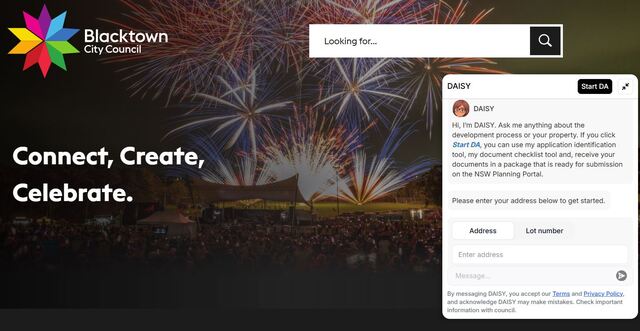
To advance customer-centric initiatives and simplify tasks such as lodging a development application digitally, local governments will need to implement and integrate a robust enterprise software system to overhaul their administrative processes, operations and supply chains.
It is the smart application of enterprise software – often hidden in the back end of a tech stack – that enables councils to streamline their planning, support decision making, improve governance, reduce overheads and deliver real-time, relevant information to their constituents on demand.
This was a motivating factor behind Moreton Bay Regional Council adopting smarter technologies to deliver better customer experiences and efficacies when it partnered with Australian enterprise software provider TechnologyOne.
Moreton Bay Regional Council (MBRC) was formed in 2008 following a merger between three councils. The merger proved operationally challenging as each entity had different methodologies for reporting and budgeting. MBRC had some components of the TechnologyOne solution, as well as a number of other systems.
By the time the council was ten years old, MBRC felt it needed to improve its technology and service delivery capability in order to support smart city initiatives and be more innovative. The council made clear that it was not going to do that under its then-current technology model.
In order to transform, MBRC moved from an on-premise operating model to a full Software as a Service (SaaS) model available on any device, any time, anywhere, using TechnologyOne’s OneCouncil solution on a larger, integrated scale.
In discussing the project at the time, John Rauber, the then Chief Executive Officer at Moreton Bay Regional Council, said, “Moving from three councils into one was a huge challenge, as it was effectively merging three forms of thinking. TechnologyOne acted as a consultant in this process, and we had a dedicated project manager assisting us from data migration to the actual implementation of solutions, to make sure it all ran smoothly.”
Rauber said TechnologyOne’s OneCouncil software was selected at the time as it would give MBRC a single, integrated enterprise solution that would drive operational efficiencies.
“TechnologyOne’s systems have been a valuable resource in helping us manage data analytics. In the past, we were able to collect a lot of data but were unable to analyse it thoroughly. We can now perform a value-added strategic analysis of the business.
“At one glance, TechnologyOne’s enterprise software can tell us the number of purchase orders raised in the system last month, the number of customer service requests made this week or how many projects were launched on a certain date. The team doesn’t have to log into various systems and documents,” Rauber said.
When administrative tasks previously performed by the back-office staff are automated, councils can increase engagement with their community in the planning and development of the local urban environment. This is enabled when the relevant stakeholders have access to information relating to property, land and development applications in a centralised location on a 24/7 basis.
Online customer self-service functionality means community members can track their development submissions and seek feedback digitally, rather than needing to go into a physical office.
At a strategic level increased data and visibility over current building environment, development approvals and proposed planning changes have broader implications on the property industry. It decreases planning holdups and accelerates housing construction, which leads to an increase in housing stock in the economy.
This has positive downstream economic implications for local communities that are served by councils, through increased employment, and better and more-available housing.
However, technology and data alone are not the panacea, as City of Launceston General Manager, Michael Stretton, learned when his council switched to an integrated enterprise solution. Paving the future path for a smarter city requires strong leadership and a customer-first mindset to create a thriving culture.
“My view has always been that technology is one of the core foundations of Local Government. But to foster a culture of innovation, I think the value proposition needs to be demonstrated. People need to see what’s in it for them, as a council and as a community. There’s a compelling story to tell, in terms of improving the services councils deliver, but also in terms of improving the way people use their city or town.
“I believe councils should have more of a private sector mentality, in terms of how they conduct their business and the services they deliver. At Launceston, we understand where our customers’ needs and expectations lie and this should be front of mind when mapping out your digital transformation journey,” Stretton added.
“Today, Launceston is a 365 day, 24 hour council, where residents and ratepayers can access services and launch and track applications online at any time. Not too many councils are able to deliver this level of service.”
If you’re looking for better business intelligence to help deliver improved services – or simply need an enterprise solution that adapts and evolves as you do – speak to TechnologyOne’s Local Government team about our OneCouncil SaaS solution today. To learn more search OneCouncil Effect.
*Copy supplied by TechnologyOne