Many councils across Australia are now communicating to their residents about the Australasian Recycling Label. Are you one of them?
Research shows Australians believe recycling regularly is the most helpful action they can take for the environment. But with hundreds of recycling labels out there, getting recycling right can often be confusing.
While most Australians think they are recycling correctly, an estimated 99 percent still throw at least one item in the wrong bin.
One of the main barriers to understanding is the lack of clear on-pack instructions.
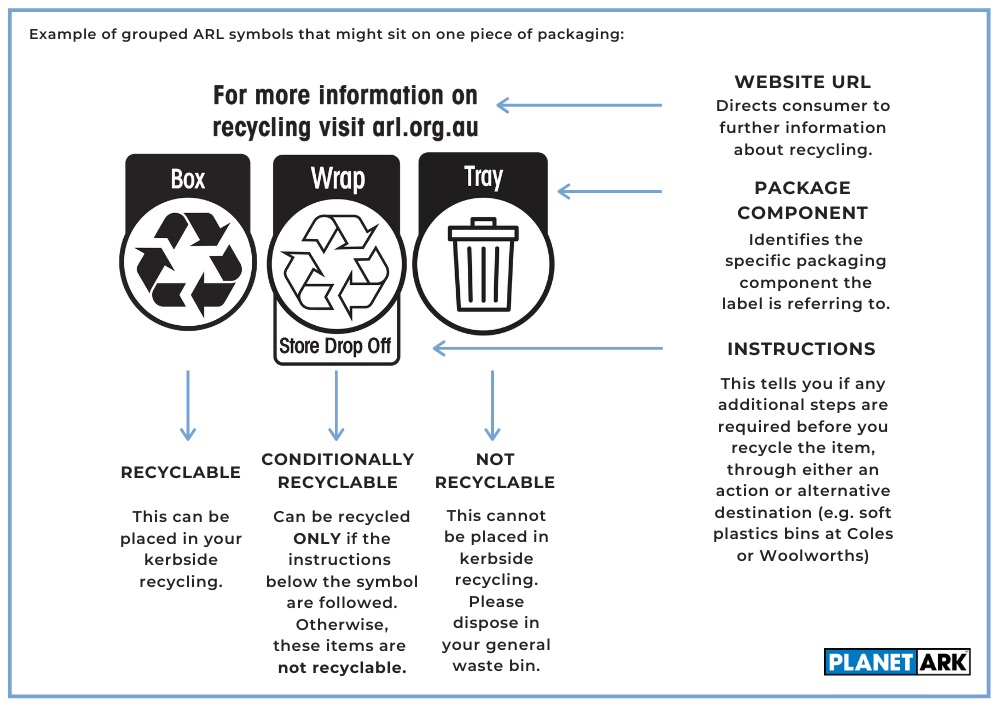
The Australasian Recycling Label (ARL) is an evidence-based system that provides consumers with easy to understand and consistent recycling information for packaging. It removes confusion and reduces contamination by telling Australians how to dispose of each packaging component.
The ARL is a joint initiative by the Australian Packaging Covenant Organisation, Planet Ark and PREP design, supported by the Federal Government and is a key component for the delivery of the National Waste Policy Action Plan.
In 2020 the ARL was recognised as a world-leading initiative in a report from the United Nations Environment Programme, Consumers International, and the One Planet Network. It was commended for its clarity, reliability and accessibility, and singled out as one of the few programs around the world that is delivering informative and useful information that could effectively increase responsible consumer behaviour.
More than 300 organisations have committed to the ARL Program to date, and more are joining every day. By ensuring that our packaging ends up in the right bin, we reduce the contamination in our waste stream, keep valuable recyclable material out of landfill and lower processing costs.
For the ARL to be placed on packaging, it must first be assessed by the Packaging Recyclability Evaluation Portal (PREP). PREP assesses not only the materials used to manufacture a piece of packaging, but also its shape, weight, size, inks, adhesives used and many other variables. PREP simulates the behaviour of packaging in the recycling ecosystem, from the moment it is collected at kerbside to when it is sorted at Materials Recovery Facilities and in subsequent processing facilities.
The availability of collection services is also accounted for. PREP assesses the piece of packaging against the number of people who can recycle it via their council kerbside collection service. Kerbside access levels are determined using the data from Planet Ark’s website RecyclingNearYou.com.au, which is updated annually.
If more than 80 percent of the population with kerbside recycling can recycle an item, it is considered Widely Accepted. Where 60-80 percent of the population have access, it is considered less widely accepted and consumers may be prompted to Check Locally with their councils. If less than 60 percent of the population with kerbside recycling can recycle an item, it is considered below the threshold for recyclability and classified as not-recyclable.
The technical recyclability and council collection status combine to inform whether a packaging item is recyclable, not recyclable or if consumers have to take an extra step to recycle an item.
Consumer education plays a critical role in solving Australia’s waste and recycling challenges. Research shows there are two common sources that people turn to when trying to understand how to recycle correctly: for general recycling advice it’s their local council, while for packaging specific information, they look at the package itself.
Councils are a key messenger to ensure all Australians are aware of the label and understand to look for it every time they dispose of a piece of packaging.
Planet Ark has developed a wide range of resources tailored for local government to make it easy to share information about the ARL and answer any questions residents might have about how it affects them.
Many councils around Australia are already actively engaging with the ARL program, incorporating it into their waste education resources and their communications to residents.
They are part of a growing network of leading organisations – including educators, brands, retailers, community groups and all levels of government – that are communicating about the label and ensuring all residents receive nationally consistent and accurate recycling information.
To find out more about the program and to download an ARL resource kit visit: arl.org.au.
*Copy supplied by Planet Ark