A former workmate from my transport and regional development days is Ed Cory. We recently discussed the Pacific Highway duplication, a project he administered for some years. He offered some very useful pointers for local government.
Ed says the duplication of the Pacific Highway was fundamentally a political decision, arising from the two big bus crashes back in the 1980s – many were killed and injured.
However the feds’ buy-in was slow, basically because of the low cost-benefit ratios (CBRs) and huge cost, even back then, and the road length of some 900km.
The plan was to do the most accident-prone sections first, and work north from Hexham (Hunter River/Newcastle). The NSW government had already got its program underway, so the feds topped that up on a 50/50 basis.
Cost was a big issue, and early on the NSW Roads and Transport Authority was burned by one of the big construction companies in a design/construct/maintain contract dispute over costs.
It was the first example of a serial inability to predict/manage costs as projects went from planning to construction to completion. The underlying problems were too few contractors of size (leading to reduced competition) and difficult terrain viz. river crossings, flood plains, soft soils, acidic soils, environmental issues.
Looking back on the whole project, it’s obvious that the impact on local communities has been complicated and varied. Town bypasses and realignments of roads create winners and losers.
The town loses the through traffic, so cafes and servos are generally hardest hit, motels perform do moderately – some prosper offering a good night’s rest away from the incessant traffic noise. Business becomes more oriented to the locals. The town becomes more attractive to residents and visitors.
Ed contends that if the town is on the coast or river, or some other attraction, it can be positive overall. The main determinants are arguably what the town can make of the new circumstances.
This depends on local leadership, and the willingness or ability of the local council to make the place more attractive to tourists and investors via:
1- Sprucing up the main street.
2- Upgrading historic buildings.
3- Improving caravan parks and recreation areas.
4- Installing toilets, tables, shade, signage.
5- Sealing access roads.
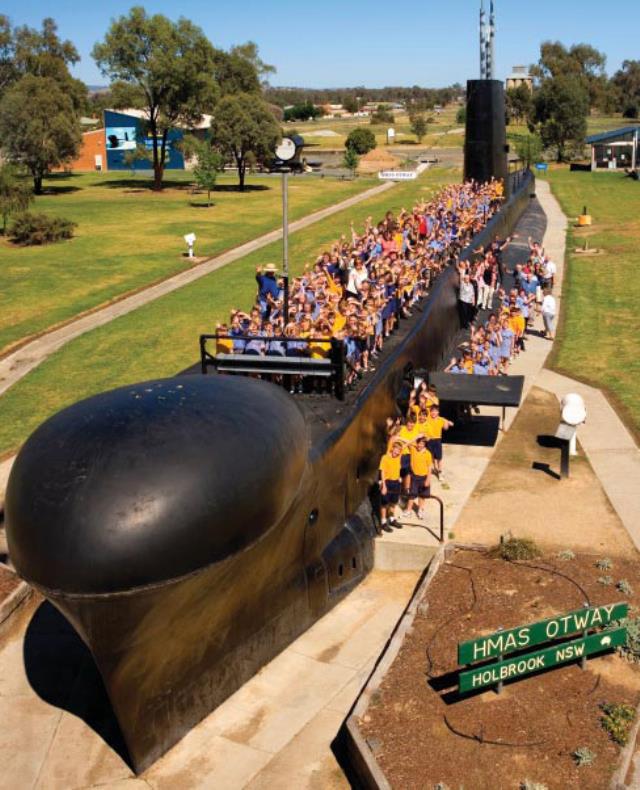
How this pans out is interesting. For example, along the Hume Highway corridor, Tarcutta is struggling, Holbrook seems to be doing okay, Jugiong is jumping, Gunning appears pretty slow, but might be coming back.
Ed goes on to argue that project CBRs are pretty irrelevant for predicting or analysing this. They focus on the road project. The impact on towns is very muddy, and gets buried in the project cost and road user benefits.
There have been studies on the impact on towns, and the collective wisdom is that most towns can survive the disruption. The first determinant is an ‘environmental’ one – where you are, and what you’ve got work with. Then it becomes one of leadership.
Two phases
Ed argues that there are two phases for bypassed towns – the planning/construction phase (of the bypass), and the ‘living with it’ phase.
The first is when the town has the greatest ability to influence route decisions i.e. the number, nature and placement of accesses, and the works needed on the bypassed State road, which will be handed over to the local government as a local road.
The town needs to get the maximum result from this phase, using all the levers it can pull, looking not just at the road authority but at State government too because it wants the bypass and would prefer a compliant town, and will be prepared to ‘buy’ that acceptance (within limits obviously).
The second phase is when the planning and construction circus has folded its tents and moved on, and the town is thrown back onto its own resources, and perhaps something from the State government, noting there is significantly less bargaining power once the project is completed. This process can start any time, but the sooner the better, preferably while the town still has some bargaining position.
Examples
In the case of towns already affected, there’s arguably the clear winners, such as Wangaratta on the Hume Highway. A friend reports that his experience has been very positive.
“Locals don’t have to dodge trucks, and you can get a park in the main street! Some highway service stations and cafes relocated or shut – but they may have regardless – we are well within a fuel tank drive from Melbourne these days. From a commerce viewpoint, the by-passing is not nearly as big an issue as on-line shopping and being only two and a half hour easy drive from Melbourne.”
The second category are the laggards. Ed mentioned Tarcutta and Gunning. Other examples of NSW towns now missing highway traffic and still adjusting to the loss of revenues are Gundagai, Holbrook, Kempsey, Taree, Macksville, Grafton etc.
They don’t have the commuting advantage like Wangaratta. On the other hand they’ve got their communities back, and I figure that they will, over the next decade, be increasingly attractive to city-dwellers looking for reasonably-priced housing and commercial sites with good transport access.
And importantly, my sense is that the NSW government has ‘rediscovered’ regional NSW. It has introduced some very good regional policies and programs in the last 2-3 years, and the trend should continue.
But one huge factor, as mentioned by Ed, is the quality of leadership.
To my mind, it depends on (a) a group of intelligent people with a good mix of skills, (b) a commitment to succeed and (c) someone within Council to help coordinate things.
In my experience, the mix of skills is enhanced by newcomers to the community, with fresh ideas and energy. And a lack of commitment is a death knell – I have a hunch that part of the problem in reinventing communities is that continual knock-backs from government funding agencies cause local folk to become totally disillusioned. They simply withdraw from the conversation.
Anyway, while the Pacific Highway duplication has been completed, numerous more bypasses are in the offing.
For example, I’m reliably informed that towns on the western highway in Victoria (e.g. Ararat, Beaufort, Burrumbeet, Nhill, Kaniva, Horsham, Stawell) could be bypassed in the next decade.
Likewise, Home Hill and Ayr on the Bruce Highway in north Queensland.
Such communities need to be alert to these possible developments.
In this regard, I’m awaiting a call back from Federation University (Ballarat, Horsham) about the prospect of their students getting undertaking regional economic analysis of such bypasses. Please contact us if this is of interest.
In brief
Last month’s federal Budget will need months to digest, and Treasurer Chalmers was coy on some very significant policy developments underway.
One example stems from the Albanese Government’s election commitment of no new taxes – the goss is the states are therefore being sounded out to introduce new taxes on energy companies as part of a contra deal. Sounds plausible.
The Budget also announced the scrapping of the Building Better Regions program, and a new Regional Precincts and Partnerships program to ‘invest in place-based projects that transform regional centres.’ The word ‘clusters’ was sneaked in. More next month.