Turns out there is something to see: what ‘only 10 per cent left to recover’ looks like for local councils and communities
Australia can be proud of the close to 90 per cent of passenger, bus and truck tyres the nation recovers, but the remaining 10 per cent gap is critical to achieving national waste reduction goals, reducing carbon emissions and deterring tyre eco-hazards in the future.
Data shows that the impact of only 10 per cent of unrecovered tyres is still an unacceptable eco-hazard and, until we eliminate illegal dumping, stockpiling and rogue waste operators, we run the risk of going backwards.
“There’s a misguided and, arguably, dangerous belief being perpetuated that we have done enough in the recovery of passenger, bus and truck tyres. That the job is done. That there is nothing to see here,” says TSA CEO Lina Goodman.
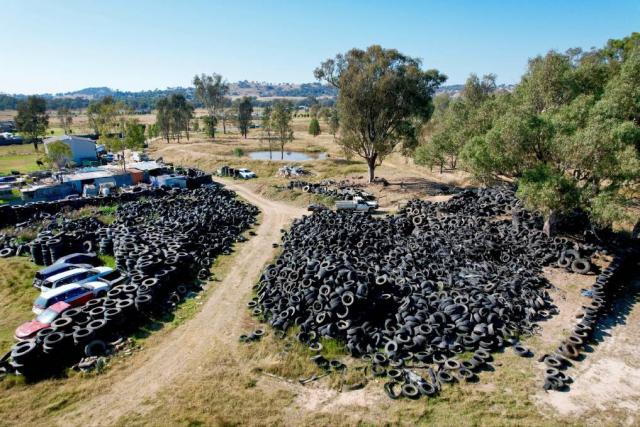
“This couldn’t be further from the truth. Data provided by Snap Send Solve shows that, on any given day, there are at least eight reports of tyres dumped on the side of the road, in a creek, or the bush around Australia, with local government and communities bearing the brunt of costs and risks.
“We’re not talking about bottles and aluminium cans that are easy to put in a wheelie bin, transport, and process. Tyres, like mattresses, are another logistics ball game altogether.”
Here’s the reality for local councils and communities: 10 per cent of passenger, bus and truck tyres unrecovered equates to 5.7 million passenger tyres not being collected each year.
This is greater than the population of Queensland. Sadly, the cost is shouldered by rate payers, as local councils are left with precarious and costly clean ups of illegally dumped tyres and the ongoing risk of dangerous fires.
Dumped tyres are taking up more time and more money for councils to deal with. Time and money used to clean up tyres is taken away from other rate payer services – like road and facility maintenance – to deal with tyres dumped by cowboy operators who are profiting at the cost of our environment and future progress.
Goodman says: “Whilst we are being notified by councils and landowners across the nation of an increase in dumped tyres, it is councils in regional, rural and remote Australia that are disproportionately exposed to the excessive strain of managing dumped tyres.
“These are the same communities that bear the brunt of environmental forces – such as drought and fire – and can ill-afford council resources being diverted from local services. It really isn’t a fair go.”
So, how do we tackle the 10 per cent? What’s left to do?
We need to face reality – to listen to and look at what the data is telling us.
Snap Send Solve is a useful tool for communities to let their councils know the reality of the problem at a local level.
Managing Director, Danny Gorog says: “Dumped tyres have a tendency to ‘multiply’ if left unattended for too long; and a quick ‘snap’ can be the easiest first step to preventing this environmental issue getting bigger.
“We have over 530 councils connected to the application to receive reports on local issues, and we’re working hard to connect over 400,000 ‘snappers’ to provide real time alerts of illegally dumped tyres.”
We need to learn from those that have dealt with the problem.
This is a problem not isolated to Australia, the cost of dumped tyres is well documented.
Progressive countries that have dealt with this problem have one thing in common – a regulated scheme and supportive policies.
An ‘all-in’ structure, rather than the existing ‘opt-in’ structure, for the national tyre scheme would prevent industry from discharging its responsibilities to manage used tyres on to local councils and communities. Globally ‘all-in’ tyre schemes with regulatory support increase the capability and sustainable value across the industry for all stakeholders.
“We’ve learnt that ‘all-in’ schemes around the world succeed in driving a circular economy for tyres,” says Goodman.
“The opt-in and opt-out approach of Australia’s current tyre scheme has only been able to go so far, and it’s not far enough.
“An ‘all-in’ scheme means a fair go for everyone, which is good news for local government and regional, rural, and remote Australians, who currently bear the brunt of illegal dumping and stockpiling.
“And the story gets even better for those communities where there is around 130,000 tonnes of mining, agriculture and other off-the-road tyres being buried in pit each year. An ‘all-in’ scheme would see these mining and agriculture used tyres create the opportunity for local economic growth, increased manufacturing, and ultimately regional jobs.”
A regulated scheme is on the federal, state and territory governments’ radar, with end-of-life tyres included on the Federal Minister’s Product Stewardship Priority List in October 2022, telling the industry that if it doesn’t act, the government will. The government doubled down at the June Environment Ministers Meeting, agreeing to fast track a review of the Australia’s tyre stewardship framework.