Spending a few days in Dubai last month, I marveled at the world’s biggest shopping mall – 1,124,000 sq. m. or five times the size of our biggest, Chadstone Mall. Next door is Burj Khalifa, the world’s tallest building at 828 metres. Meanwhile Dubai Airport is expected to soon overtake Atlanta as the world’s busiest.
The city’s population has doubled in 15 years to four million – it is basically a huge construction site. Low energy prices and low labour costs underpin the economic growth. For example, UAE energy users pay less than half that of their Australian equivalents, mainly due to a complicated gas reservation program for the domestic market. And unskilled labour costs are about a quarter of those in Australia. As a result, the UAE now has very significant capability in aluminium, steel and metal fabrication.
Landing back in Oz, the big news was the imminent closure of Rio Tinto’s Tomago aluminium smelter (Australia’s largest) together with updates on the approval of gas drilling adjacent to the Great Ocean Road. Both matters are a testament to the unwillingness of Australian governments to restrict gas exports.
Rod Campbell, Research Director at The Australia Institute, has been a constant critic of our energy policy. He argues that Tomago’s problems stem from the fact that its energy source is gas-fired electricity, the cost of which has gone through the roof as our gas exports have progressively climbed. Campbell also notes that little to no royalty payments are in place for these exports.
Rio Tinto’s Tomago smelter’s problem reportedly stems from its inability to source competitively-priced renewables energy, whereas its other smelter – at Boyne Island (Gladstone) – is further down the transition to renewables road.
It would be lamentable if the federal and state governments bail-out the Tomago smelter. It would be a band aid solution. The need surely is to acknowledge that gas has a place in our economy’s transition to renewables, and that some level of gas exports – both current and future – must be diverted to the domestic market. The feds need to loosen up its longstanding position that modifying energy contracts with foreign multinationals would damage our international reputation.
I have a strong feeling that the refusal of the federal government to act on this is due to the energy and manufacturing industry responsibilities now residing within the same portfolio – the Department of Industry, Science & Resources. To explain, Australian manufacturers are crippled by high energy costs and are thus lobbying the feds for greater gas supplies into the domestic market. Their concerns are going nowhere arguably because DISR is conflicted and thus keeping out of the debate. The key point is that the Westminster system is based around Cabinet ministers from different fields thrashing out issues. In the past, a strong industry minister like John Button would probably have won a Cabinet stoush with the resources minister.
There are hundreds of manufacturing and minerals processing companies in the same bind as the Tomago smelter. Our comparative advantage in energy is simply not translating into a competitive advantage. Councils with a strong manufacturing presence are encouraged to keep engaged on this issue.
Small offerings of local produce – a lesson from Crete
We’d finished a heavy meal on the Greek island of Crete last month. The waiter was a friendly character who gave a spiel on the island and reminded us about Melbourne being the city with the largest Greek population outside of Greece. He explained that Crete ‘goes to sleep’ in late November when the tourists depart. While the Cretan economy is overwhelmingly tourism-based, agriculture is also a good contributor by virtue of cheese, wine and spirits, honey, raisins, fruit and vegetables.
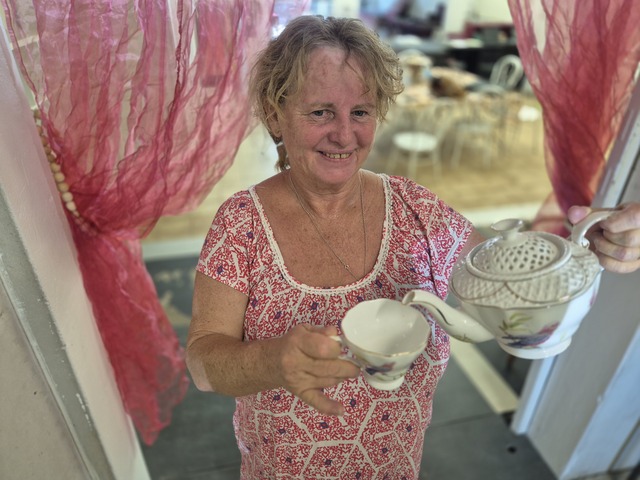
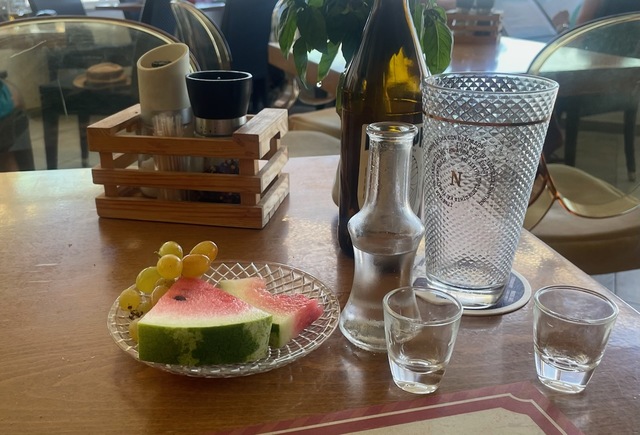
Anyway, my new best friend then arrived at the end of the meal with slices of watermelon and a small glass of tsipouro, the local spirit. The watermelon was refreshing, and the tsipouro was a nice touch.
The waiter explained that this was a custom in Crete and other parts of Greece – a small memento of appreciation. Sometimes it’s a small bunch of grapes when in season, or a small bowl of local yoghurt. He uses his judgement on to whom he offers the tsiporou.
I’d love for this custom to become popular in Australia. Why? Well, many small country towns need a WOW factor to bring travellers off the highway. Something that sticks in the mind and will lead to return business. The offering should wherever possible be local produce. Perhaps slices of apple or pear, or an Aussie equivalent of tsiporou.
In this regard, a few years back I was undertaking food cluster work for the City of Playford when I stumbled on an Adelaide company producing limoncello from Riverland lemons. These days there is Ambra Spirits, and it serves it in shot glasses free to restaurant clientele. If restaurants or pubs in your LGA are interested in the idea, tell them to contact Finn at Ambra – the ballpark cost is $360 for a case of twelve bottles.
Similarly, a nip of Bundaberg Rum could be offered in restaurants in the Wide Bay-Burnett region, given that company is a local institution. Or apple cider in Tasmania, or say the Dandenong Ranges. Or in WA there is Sin Gin producing wonderful sloe gin from the berries of blackthorn bushes grown in Tasmania. The company also produces limoncello from lemons grown around Gingin north of Perth – around $300 for six 500ml bottles.
The key point is that a small offering of local produce can be a great incentive for return business. A restaurant bill of $80 for two is commonplace these days – and $3-4 worth of liqueur and/or fruit will have patrons filing away the experience.
Defence land sales
The Albanese Government is to soon announce details of a sell-off of Defence land to assist with the delivery of housing supply. A report on the issue has been with the Government for some time. Notwithstanding resistance from the Defence Department, Housing Minister Clare O’Neil and Treasurer Jim Chalmers won the day. Interestingly, O’Neil’s ministry sits within Treasury! She is a rising star – strong CV and good media skills.
I had flagged the Defence sell-off in April 2023 in this column when discussing land supply options, as follows:
‘Another opportunity might lie in Defence land sales. Although Defence has had a land sell-off in recent times, the Department of Finance would now be arguing for more. Perhaps I’m dreaming, but Defence has facilities on prime urban land that are an accident of history. Think about HMAS Penguin (14 hectares) near Taronga Zoo and Watsonia Barracks (55 hectares) in Melbourne’s northern suburbs. These facilities could arguably be moved to regional areas, and the sites turned over to medium density housing with parklands.’
Local councils should track this issue and get directly involved where possible. One scenario is for councils to lead the process of land remediation and rezoning of the former Defence sites.
The second scenario is for councils to (i) identify sites for the relocating Defence facilities, (ii) pitch these sites to the Defence Minister, and (iii) commission work to identify activities that could be co-located with these Defence facilities viz. defence equipment, research laboratories, logistics hubs, cybersecurity etc.
Please email us if you’d like to pursue these opportunities.