On behalf of the Council and residents of our City, I wish to take this opportunity to introduce you briefly to the City of Kalgoorlie-Boulder and the region.
The City of Kalgoorlie-Boulder is the largest city in the Australian outback, with several thousand people more than Alice Springs, and thus we’re looking forward to playing a lead role in this year’s ‘Year of The Outback’ celebrations. Kalgoorlie-Boulder is Australia’s ‘Gold Capital’, with gold mines in this Local Government area alone, including Kalgoorlie Consolidated Gold Mines’ giant Super Pit operation, producing gold to a value of almost $750 million in 2000.
In recent years nickel has become an increasingly important resource in this region, with cobalt a valuable by product. The Kalgoorlie Nickel Smelter processes ore from around the region. The Silver Swan, Bulong and Cawse nickel mines are located within the City’s boundaries. The total value of nickel concentrate, nickel metal and cobalt from the City of Kalgoorlie-Boulder was in excess of $570 million in 2000, with the whole region producing in excess of $2.2 billion in nickel and related products – 68 per cent of the State’s total.
Kalgoorlie-Boulder is the regional centre for the Goldfields-Esperance region which includes nine Local Governments. This region makes up a third of the area of Western Australia and is three times larger than the State of Victoria.
The City of Kalgoorlie-Boulder has the largest population of any regional city in Western Australia with a population of over 32,000, just managing to squeeze into a mere 95,000 square kilometres! The City has a rich and proud heritage. Gold was discovered in Coolgardie, 38 kilometres west of Kalgoorlie-Boulder in 1892. One year later in 1893, Paddy Hannan with two of his mates – Daniel O’Shea and Tom Flanagan – found gold in Coolgardie East, which is today known as Kalgoorlie-Boulder.
The City was built to last with imposing stone and brick buildings being constructed over the next ten years. One of the most prominent is the Post and Telegraph building which has a magnificent clock tower. This building was completed in 1899.
Water was in short supply and very expensive so in 1895 the Colonial Government of Western Australia lead by Premier Sir (later to be Lord) John Forrest asked the Director of Public Works, Charles Yelverton O’Connor, to produce a practical plan for pumping water to the goldfields. This was an ambitious project with many critics, but in 1896 the State Parliament gave approval to raise £5 million to finance the scheme, such was the confidence in the future of Kalgoorlie-Boulder and the surrounding goldfields. It was not until 1902 that pumping began from Mundaring Weir, in the foothills above Perth, taking water – ‘liquid gold’ – the 597 kilometres to Kalgoorlie-Boulder. Tragically, criticism of the scheme was too much for Charles Yelverton O’Connor and he took his own life on Fremantle beach in 1902 just three weeks before the water started its journey. Thus he never saw his dream become reality.
The water reached Northam on 18 April, Cunderdin on 22 April, Merredin on 22 August, Coolgardie on 22 December and finally, Kalgoorlie on 24 January 1903, in time for the formal commissioning ceremony.
The railway line ran from Perth to Kalgoorlie from 1896 onwards. While Premier of Western Australia, Lord Forrest had as one of his preconditions to joining the Australian Federation that there would be a railway line traversing Australia from the East to the West coasts. The Trans Australian line was completed in 1917 and weekly carries a total of 22 passenger trains – 18 Prospectors and four Indian Pacifics – and 80 freight trains.
A new Prospector train is due to be commissioned in 2003. It will be the fastest train in Australia and complete the 600 kilometre journey from Perth to Kalgoorlie in just five hours.
It is worthy of note that Western Australians would not have joined the Australian Federation if it had not been for Kalgoorlie-Boulder and the goldfields. When the gold rush to Western Australia started in the 1890s, many miners and their families moved from the diggings in Ballarat and Bendigo, Victoria, to the eastern goldfields of Western Australia of which Coolgardie and Kalgoorlie-Boulder were the major towns.When the referendum was held to determine whether Western Australia would join the Federation, this region was the most populated part of the State. The vote in the goldfields was overwhelmingly in support of Federation, due to the knowledge that miners and their families had of the eastern States and also as part of a backlash to express their dissatisfaction at the Colonial Government of Western Australia and Premier Sir John Forrest.
Thus came about the goldfields slogan concerning Western Australia and joining the Federation – ‘If it weren’t for us, it wouldn’t have happened’. It is true that since deciding to join the Federation there has been concern expressed by the residents of Kalgoorlie-Boulder and Western Australia as to whether the State derived any benefits from being a member. In the 1930s there was a very active secessionist movement in WA which resulted in a petition being presented to King George VI.
We have made a major contribution to WA and Australia in an economic, social and historical perspective and will continue to do so. We look forward to sharing our rich heritage and our generous hospitality with you.
We would be greatly honoured if you would choose to live in or visit our region some time in the future to enjoy the diversity of experiences that you can have.
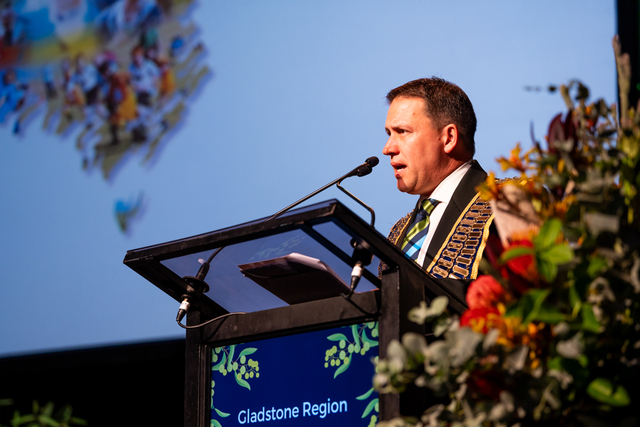
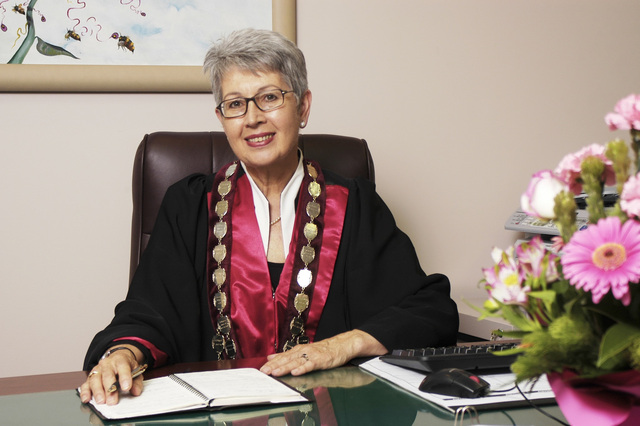
Paul Robson, Mayor