A regular feature this month profiling two Councillors from Western Australia.
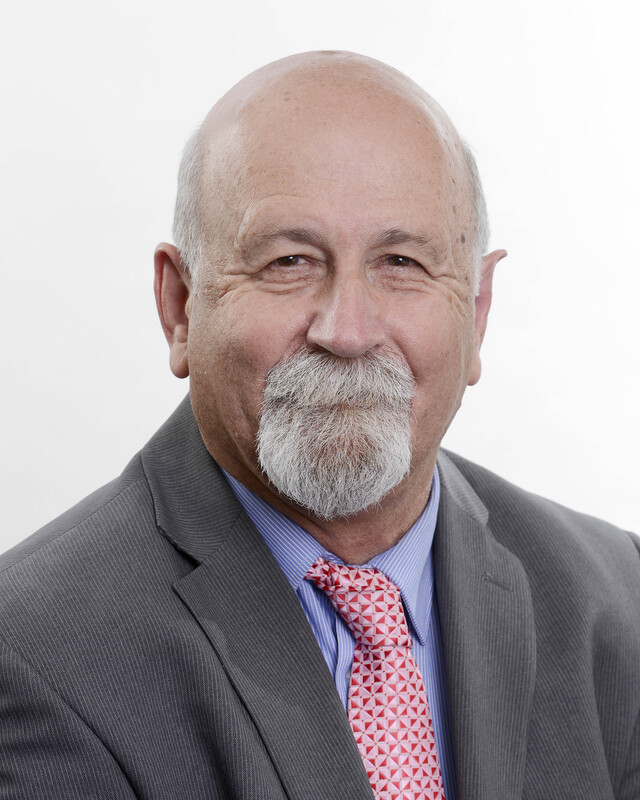
Councillor Patrick Hill, Shire of Laverton, Western Australia
Q. Can you tell us about yourself and how and when you first got involved in Local Government?
The Laverton region has been home to my family since 1898. My great grandfather, William C Hill, and my grandfather, Horace W Hill, were Councillors on the old Mt Margaret Road Board. This road board was renamed the Laverton Road Board and eventually in 1961 changed into the Shire of Laverton. My father, Peter Hill, served as a Councillor for 40 years and is a Freeman of Laverton. I was first elected to the Shire of Laverton in 1992 and have been Deputy President for the past eight years. In 1991 – 92 Laverton was going through a phase from a thriving mining town to a town in decline, the reason being that the mines which had supported Laverton for over 20 years were running out of ore and about to close down. This meant most of the employment, housing and major infrastructure in Laverton, where the workforce was based, would go. When the mine did close it was expected that Laverton would just become a ghost town. I didn’t want to see this happen and this was one of the main reasons I joined the Shire Council, as I believed that Laverton could have a bright new future and I wanted to be part of the rebuilding which has been a great challenge and honour.
Q. What are some of the unique features of your Shire and community?
Laverton is situated on the edge of the Great Victoria desert, 960 kilometres from Perth. The Shire of Laverton is the second largest Local Government area in WA. It covers nearly 184,000 square kilometres, with 4,300 kilometres of unsealed roads and 90 kilometres of sealed roadway. Kalgoorlie Boulder is 370 kilometres south west and this is where the closest banks are located. With an arid climate, there are 11 pastoral stations, both sheep and cattle, and three Aboriginal communities within the Shire. There are large gold and nickel-cobalt mining activities in the area but these mines all operate on a fly-in fly-out to Perth basis with a combined workforce of over 1,500. A major attraction in the area is the Windarra Mining Heritage trail, 27 kilometres north west of Laverton, which is the site of the famous Poseidon Nickel Share boom of the early 1970s when shares went from 20 cents to $280 per share. In March 2003, the Northern Goldfields Golden Quest Discovery Trail will be launched. This is a 965 kilometre adventure drive from Coolgardie through the Menzies and Leonora Shires to Laverton and returning to Kalgoorlie Boulder, covering some fascinating parts of the outback.
Q. What are the specific Local Government issues that your Council and community are currently facing?
Last year our hospital was closed and downgraded to a nursing post due to the fact that nursing staff could not be attracted to the town. The Laverton Shire took a major role in advertising for staff and funding bonuses for resident nurses who stayed from six to 12 months. Within six months the hospital was reopened with a full complement of staff and was not having to rely on agency nurses. This was a real community issue.
Q. What have been some of the challenges and achievements you have experienced while in Local Government?
Laverton is a strong, close, working community with a very positive future. Broadening the economic base and making Laverton a pleasant place to live has always been a challenge, but the Shire has spearheaded a number of initiatives which are having a very positive effect. We have employed a Community Development Officer and introduced four channel television stations, mobile phone reception, the Laverton TeleCentre, and the Laverton Tourist Information Centre. It has been of great personal satisfaction to have been part of the establishment of the Outback Highway Development Council (OBHDC) which is lobbying for an all weather road from Laverton to Alice Springs and on to Winton in Queensland. At present the gravel road to the WA border is maintained by the Shires of Laverton and Ngaanyatjarraku. Through the OBHDC there has been a great opportunity to develop partnerships with interstate Shires including Alice Springs and Boulia and Winton in Queensland and the Aboriginal Councils and Government agencies. I have been most privileged to be Chairman of the Outback Highway Development Council since it was formed in 1997.
Q. How do you foresee the future of Local Government? What needs to be done?
Unfortunately, I feel in forthcoming years more and more pressure will be put on Local Governments to take on funding essential services which up until now were the responsibility of the State and Federal Governments. Local Government is being forced into additional costs just in the implementing of Government policies, for example Acts and Regulations. The Shire of Laverton is now having to provide its own funding for maintaining our doctor in town. Local Government should not be expected to take on additional financial and administrative responsibilities without a significant increase in funding.
Q. Any last words?
The development of the Outback Highway, the new trans-continental link across the heart of our country, providing a direct link from Townsville to Alice Springs to Perth, is by far my most passionate project; and turning Laverton into a ‘gateway’ town which will increase tourism development and employment opportunities not just in Laverton but across outback Australia.
Councillor Helen Hewitt, Fremantle City Council, Western Australia
Q. Can you tell us about yourself and when and how you first got involved in Local Government?
My close association with the City of Fremantle began in 1970 as an employee with the Customs Department. Since that time my study and work have been focused in the arts and culture field; as a teacher, curator, writer, and for a period from 1995 – 2000, proprietor of a specialty arts and philosophy bookshop in the West End of Fremantle. I was elected to Council in May 2001, after being stimulated by a variety of issues which gripped the town at that time. My husband had been on Council for a period in the early 1990s and had been runner-up for Mayor in the 1999 elections; so Council issues and town politics have always played a large part in our household conversations! We were great fans of the ABC’s Grassroots television series and often wondered if one of our own local scriptwriters was supplying the story lines.
Q. Describe your Council and community
The Fremantle community is ‘larger than life’ and issues are played out with great passion and, in most cases, with acceptance and respect for differing positions. There are a number of threads that make up the fabric of the Fremantle community: the town as a storehouse of unique heritage buildings of international standing; the working port and its social history, associated with a mix of firm working class values and enterprising merchant services; the fishing industry and its social history of immigration, bringing a distinctive European style to the town and suburbs; the artists and architects who came to Fremantle in the 1970s because it was cheap and had character; the tourism and entertainment industries which have taken over from traditional retailing in the period since the America’s Cup; the ‘alternative’, or green movement, often associated with nearby Murdoch University; and most recently, neighbourhood precincts and action groups, and their major role in the community consultation process.
Q. What are some of the specific issues your Council and community is currently facing?
Some of the specific issues being faced at the moment revolve around heritage and the expansion of the heritage agenda into the outer suburbs, where homes of relatively recent construction and modest value are being placed on the Municipal Heritage Inventory. Many owners feel that this limits their freedom to redevelop or modernise. In the inner urban areas, the creation of local area policies runs the risk of replacing readily accepted heritage criteria with nostalgia and backward looking aesthetic standards. There is also a tension between heritage and more energy efficient modern building design and materials. Liquor issues in the CBD always draw a crowd at Council meetings. The main players are inner city residents who cop the brunt of afterhours bad behaviour, and although they are a relatively small group, are seen as important in safeguarding the city’s family safe reputation. Of course, the established bar and nightclub owners in town are also fierce opponents of any new licenses and so there is often what seems to be an ‘unholy alliance’ between these two groups to keep out or limit the operations of third parties.
Q. Any last words?
There’s material enough for a Grassroots mini series in every set of agenda papers!