Home » Canopy sprinklers control flying-foxes

Canopy sprinklers control flying-foxes

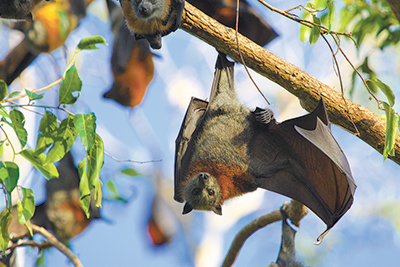
A proactive approach to flying-fox management is delivering nation-leading results for the Sunshine Coast Council in Queensland.

The humble sprinkler is proving to be an effective tool to manage flying-foxes across the Sunshine Coast as council works in partnership with local residents to manage suburban roosts.

Council recently voted to extend the use of proactive management techniques following a three-year trial funded through the Environment Levy.

Environment Portfolio Councillor Jenny McKay said flying-foxes irregular roosting habits presented a challenge for local councils.

“Council appreciates that flying-fox management does present challenges, particularly for communities where there are large roosts,” Cr McKay said.

“This report demonstrates that the best outcomes are achieved by partnering with the community, empowering local residents to have direct involvement in innovative management techniques and leading the way in education and research.

“In addition to managing vegetation and creating buffer zones, we have initiated an innovative partnership approach which gives residents the ability to control the use of canopy-mounted sprinklers to deter flying-foxes from buffer zones; this has proven to be very effective.

“While moving these animals on can provide temporary relief for affected residents, there are also no guarantees that the flying-foxes may not return, sometimes within days.

“By managing the surrounding areas, and keeping a level of distance between residents and flying-fox roosts, we’re doing everything we can to minimise interactions and reduce the effects of noise and odour that can come from large roosts.”

Council has also embarked upon a nation-leading flying-fox tracking project to gain a better understanding of the species’ habits.

That research is now being included as an education resource in the national primary school curriculum.

“We know that flying-foxes are highly nomadic creatures and we cannot control where they land, but we are working with some of Australia’s most esteemed researchers from the University of Queensland, CSIRO and the University of Melbourne to learn as much as we can about the factors that affect their roosting habits,” Cr McKay said.

“We have successfully used satellite tracking of a number of flying-foxes to gather data over a six-month period, and that data is now being analysed to give us a better picture of where these animals travel, not just within our region, but across Australia.

“We are also trialling use of acoustic fences to address noise issues caused by large flying-fox roosts, and investigating ways to potentially attract flying-foxes to alternative habitats, such as environmental reserves, to try and coax the animals out of suburban areas.

“The results of this ongoing research will continue to inform our flying-fox management practices into the future.”
Digital Editions


More News

  • Coonabarabran VIC punches above it’s weight

    Coonabarabran VIC punches above it’s weight

    Warrumbungle Shire Council has welcomed new data confirming the Coonabarabran Visitor Information Centre as one of the top three performing Visitor Information Centres in New South Wales. Official figures released…

  • Storm-proofing Seymour River Bridge is long overdue

    Storm-proofing Seymour River Bridge is long overdue

    If I had a dollar for every time I saw the question, “Is the Seymour River Bridge open?” on social media, the upgrade to that stretch of road might already…

  • Newcastle Lord Mayor resigns

    Newcastle Lord Mayor resigns

    Newcastle Lord Mayor Cr Ross Kerridge resigned from his role as Lord Mayor of Newcastle in early February. The Lord Mayor wrote to City of Newcastle CEO Jeremy Bath to…

  • Unwavering support and thanks in Bondi aftermath

    Unwavering support and thanks in Bondi aftermath

    Councils across NSW are being encouraged to continue to provide direct support for the Waverley community in the wake of December’s devastating terrorist attack at Bondi while Waverley has paid…

  • Redlands Koala population stable

    Redlands Koala population stable

    Redland City Council has become the first local government in south-east Queensland – and within the koala’s federally-listed northern endangered range – to report stabilisation of its city-wide koala population.…

  • Looking for “Red Fleet” Solutions

    Looking for “Red Fleet” Solutions

    The Country Mayors Association of NSW (CMA) has met with NSW Emergency Services Minister the Hon Jihad Dib MP about the Red Fleet issue, which refers to local Councils currently…

  • Three small changes making big differences in grand programs

    Three small changes making big differences in grand programs

    Local government grant programs are designed to create community impact. Yet for many councils, the effectiveness of those programs is shaped less by intent and more by the processes that…

  • Alice skating program a success

    Alice skating program a success

    Free ice skating, packed programs and smiling faces have marked the end of a hugely successful school holiday program delivered through a partnership between Alice Springs Town Council, the Northern…

  • Supporting Waverley

    Supporting Waverley

    Councils across NSW are being encouraged to continue to provide direct support for the Waverley community in the wake of December’s devastating terrorist attack at Bondi. In the aftermath of…

  • New deputy for Liverpool

    New deputy for Liverpool

    Councillor Peter Harle has been elected Deputy Mayor of Liverpool City Council following the resignation of Cllr Dr Betty Green. Councillor Harle, who has served the office in the past,…