Home » Canopy sprinklers control flying-foxes

Canopy sprinklers control flying-foxes

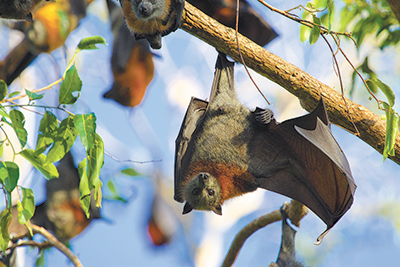
A proactive approach to flying-fox management is delivering nation-leading results for the Sunshine Coast Council in Queensland.

The humble sprinkler is proving to be an effective tool to manage flying-foxes across the Sunshine Coast as council works in partnership with local residents to manage suburban roosts.

Council recently voted to extend the use of proactive management techniques following a three-year trial funded through the Environment Levy.

Environment Portfolio Councillor Jenny McKay said flying-foxes irregular roosting habits presented a challenge for local councils.

“Council appreciates that flying-fox management does present challenges, particularly for communities where there are large roosts,” Cr McKay said.

“This report demonstrates that the best outcomes are achieved by partnering with the community, empowering local residents to have direct involvement in innovative management techniques and leading the way in education and research.

“In addition to managing vegetation and creating buffer zones, we have initiated an innovative partnership approach which gives residents the ability to control the use of canopy-mounted sprinklers to deter flying-foxes from buffer zones; this has proven to be very effective.

“While moving these animals on can provide temporary relief for affected residents, there are also no guarantees that the flying-foxes may not return, sometimes within days.

“By managing the surrounding areas, and keeping a level of distance between residents and flying-fox roosts, we’re doing everything we can to minimise interactions and reduce the effects of noise and odour that can come from large roosts.”

Council has also embarked upon a nation-leading flying-fox tracking project to gain a better understanding of the species’ habits.

That research is now being included as an education resource in the national primary school curriculum.

“We know that flying-foxes are highly nomadic creatures and we cannot control where they land, but we are working with some of Australia’s most esteemed researchers from the University of Queensland, CSIRO and the University of Melbourne to learn as much as we can about the factors that affect their roosting habits,” Cr McKay said.

“We have successfully used satellite tracking of a number of flying-foxes to gather data over a six-month period, and that data is now being analysed to give us a better picture of where these animals travel, not just within our region, but across Australia.

“We are also trialling use of acoustic fences to address noise issues caused by large flying-fox roosts, and investigating ways to potentially attract flying-foxes to alternative habitats, such as environmental reserves, to try and coax the animals out of suburban areas.

“The results of this ongoing research will continue to inform our flying-fox management practices into the future.”
Digital Editions


  • In memory of Chris Quilkey

    In memory of Chris Quilkey

    It was with great sadness that we learned that former Blacktown City Deputy Mayor and Councillor Chris Quilkey has passed away. First and foremost, our…

More News

  • Navigating grants

    Navigating grants

    How Administrative Complexity Is Eroding One of Local Government’s Most Powerful Tools Local government grants exist to create impact in communities. Yet across the sector, that purpose is increasingly being…

  • Looking to the future

    Looking to the future

    Flinders Lane will be abuzz for two days this month with Townsville Youth Council – supported by Townsville City Council – set to deliver a free festival focused on the…

  • WA leads the way as people to the regions

    WA leads the way as people to the regions

    Ten million people now call regional Australia home, and Western Australia is leading the way with its regional population growing faster than the cities, according to a deep dive into…

  • Sewer grant sought

    Sewer grant sought

    Fraser Coast Regional Council will seek Queensland Government funding for two major water and sewerage projects with capacity to support more than 11,000 new homes across the region. At its…

  • Mayors call for waste levy

    Mayors call for waste levy

    Mayors across NSW have called for waste levy to soften the blow of fuel price increases. More than 60 Councils from across NSW have issued a call for the NSW…

  • Lismore four years on

    Lismore four years on

    Four years on: How Lismore is building back and setting a national benchmark. When the 2022 flood inundated Lismore, it was not simply another extreme weather event. It became Australia’s…

  • A golden celebration

    A golden celebration

    Cockburn Libraries will mark a major milestone in 2026 – 50 years of serving, supporting and connecting the community. Spearwood Library opened its doors on 23 March 1976 as one…

  • Local Governments vital for fuel supply

    Local Governments vital for fuel supply

    Fuel supply constraints and rising costs are putting councils and communities under increasing pressure across Australia, with implications for essential services and community infrastructure. The Australian Local Government Association is…

  • Nathan Daniell elected Mayor of Adelaide Hills Council

    Nathan Daniell elected Mayor of Adelaide Hills Council

    Adelaide Hills Council is pleased to advise that Nathan Daniell has formally been elected Mayor following confirmation of results from the supplementary election. Mr Daniell has served as a councillor…

  • Community mourns beloved former mayor

    Community mourns beloved former mayor

    The NSW local government sector is deeply saddened by the passing of former Lismore Mayor Jenny Dowell OAM, a widely respected and much-loved leader who dedicated her life to serving…