Partnerships with key stakeholders and delivery of an innovative project has seen Great Lakes Council make promising inroads into control of an invasive aquatic weed.
Cabomba (Cabomba caroliniana) is an aquatic plant native to South America.
It is fully submerged except for occasional floating leaves and emergent flowers.
Cabomba has the potential to cause significant impacts to water bodies.
It can form dense underwater monocultures that affect the biodiversity and function of wetland and riparian ecosystems, water quality, water storage and distribution, infrastructure, and impact on recreation and amenity values.
According to Great Lakes Council’s Noxious and Environmental Weeds Coordinator, Mr Terry Inkson, a ‘do nothing’ approach to cabomba management in the region would potentially result in the further spread to key waterways.
“Limited effective management options were available for the treatment of cabomba in Australia, especially in the high rainfall environment of the mid north coast of NSW.
“Since the suspension of the registration of Rubbervine Spray™ in 2004, there were no registered herbicides available for the treatment of cabomba in Australia.”
Between January 2008 and June 2010 Great Lakes Council, in partnership with the NSW Department of Primary Industries, participated in a national project to find a suitable herbicide for the effective control of cabomba and seek its registration nationally.
The herbicide Shark™ (240g/L carfentrazone-ethyl) proved to be very effective and in 2011 was subsequently registered for use on cabomba, providing weeds managers with a much-needed tool to control the weed.
In 2011 with the impending availability of this new herbicide, Great Lakes Council and the Mid North Coast Weeds Co-ordinating Committee successfully applied for $191,760 from the Australian Government’s “Caring for our Country” program to implement a two-year project to manage cabomba.
A project team consisting of representatives from Great Lakes Council, Mid-North Coast Weeds Co-ordinating Committee, NSW Department of Primary Industries, National Aquatic Weeds Management Group and Macspred Australia, was established to oversee the implementation of the project and the rollout of the Shark™ herbicide.
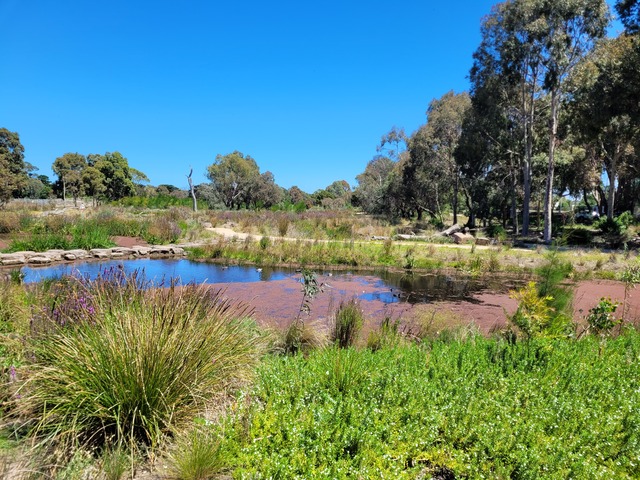
The key outcome of this project is a reduction in the biomass of cabomba infestations at the nine targeted sites (approximately 11 hectares) to less than 1 percent of their original size within the project’s two year time frame and one subsequent follow up.
This initial control of cabomba has in turn led to a reduced risk of floodwaters or other vectors (e.g. eel traps) further spreading cabomba to nearby water bodies, including the Myall Lakes and other water bodies.
It has also reduced infestations to a level where eradication can be achieved through follow-up efforts after the two-year project period.
“Although the results of the project are extremely promising, it is too early to determine if cabomba has been eradicated from these sites,” said Mr Inkson.
“The project management team has set a goal of five years with no re-emergence of the weed before there can be a definitive call of eradication.”
Further monitoring and follow-up for this project is ongoing to ensure efforts of this project have not been wasted.
Monitoring and follow-up will form part of Council’s current noxious weeds program in accordance with associated plans and strategies.
A comprehensive case study report has been prepared for the information of all stakeholders and the wider community.
This case study report has now been adopted as the national “best management practice guidelines for the herbicide control of cabomba” which is a supplement document to the current national Cabomba Control Manual.