Temperatures across the country soared in January breaking all time records, while in Victoria businesses and residents were once again subjected to rolling blackouts as the Australian Energy Market Operator ordered load shedding across the grid, leaving thousands sweltering without air conditioning or refrigeration.
Load shedding occurs when demand for power outstrips supply, and the aging coal-fired supply again showed it was not up to the task.
Energy Minister Lily D’Ambrosio admitted at the time the state had a 20th century energy system for a 21st century climate.
Seven Tasmanian mayors believe that they have the answer and are calling on the Federal Government to support the development of an additional power interconnector across Bass Strait as the most cost effective and secure solution to Victoria’s energy woes.
A new interconnector could also unlock the potential of Tasmanian hydropower as a player in the transformation of the Australian energy market, according to a report by Hydro Tasmania, Battery of the Nation: Analysis of the future National Electricity Market.
The group of Tasmanian mayors propose that the state’s natural resources could sustainably support Australia’s energy needs of the future if the Federal Government was willing to commit to Battery of the Nation and invest in another interconnector cable across Bass Strait.
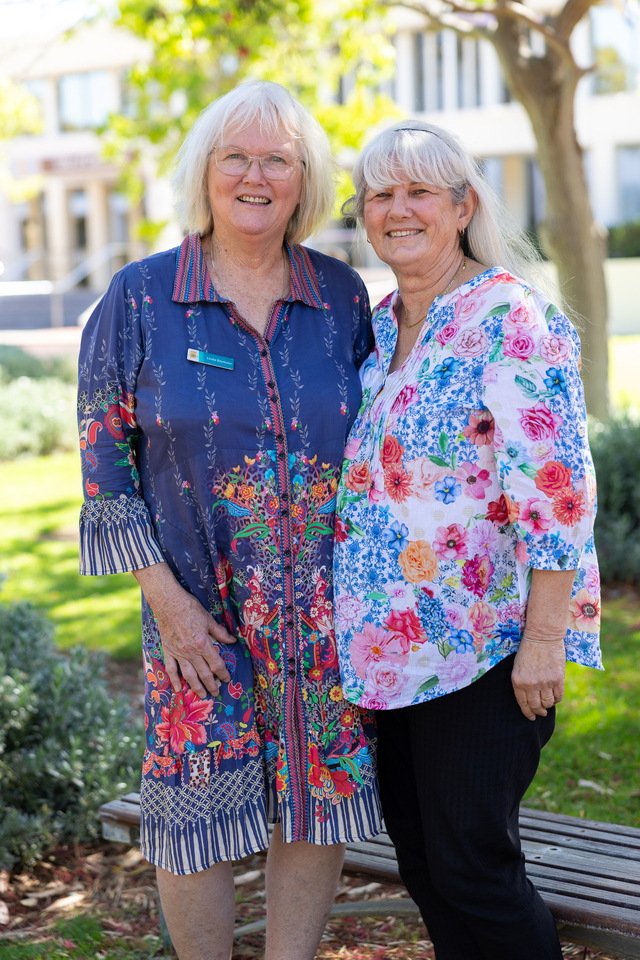
Kentish, Central Highlands, Northern Midlands, Burnie City, Circular Head, Latrobe and West Coast councils welcomed the Tasmanian Government’s commitment to the Battery of the Nation and are asking the Federal Government to commit funding to the project, which would see the expansion of Tasmania’s existing hydropower system through development of pumped hydro to support solar and wind energy generation ‘when the sun doesn’t shine and the wind doesn’t blow’.
Hydro power uses the gravitational energy of water to generate power. Pumped hydro recaptures the water at the bottom of the mountain and, using power from the grid when it is cheap and in low demand, pumps the water back up the slope; where it is stored to be released again as needed in periods of high demand.
The mayors, while receiving the nod on the scheme from all major political parties in the run up to this year’s federal election, are seeking a commitment from the Federal Government as it transitions the country’s major energy sources from coal plant to solar and wind.
A $20 million feasibility study known as Project Marinus, co-funded by state owned electricity supplier, TasNetworks, and the Australian Renewable Energy Agency (ARENA), is exploring the viability of building the second, and possibly even a third, underwater interconnector across Bass Straight to transport clean energy to the mainland.
The final report and business case assessment are expected in December 2019.
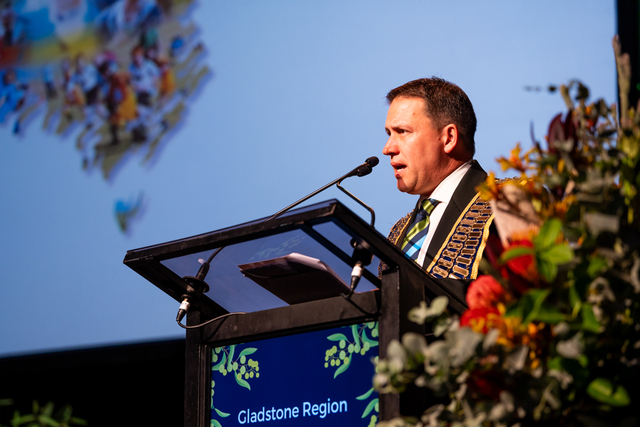
Circular Head Mayor, Daryl Quilliam, said a second Bass Strait interconnector cable was vital for the state and the nation.
“The interconnector cable will support the investments in pumped hydro and wind farms.
“But more importantly, it will provide the cheap and reliable power our nation will need in the future.”
Hydro Tasmania has shown it could supply an additional 400 megawatts of electricity without any new investment.
Tasmania plans to be self-sufficient by 2022 using a combination of pumped hydro, wind and solar power.
“It is pointless generating additional power in Tasmania if we have no way of supplying it to the mainland,” the Mayors said.
“That is why the Bass Strait Interconnector is such a vital project, not only for Tasmania, but for the rest of Australia.”
The excess energy produced would travel through interconnectors to the mainland, to shore up the national grid.
The Mayors said it was important that the Battery of the Nation project proceed as quickly as possible as the project was critical to meeting the energy needs of the nation and could not wait for the Federal and State Governments to develop a new energy policy.
“With the projected shutting down of generation assets on the mainland, time is of the essence in providing new sources of cheap and reliable power.
“We therefore call on the Federal Minister to work closely with the State Government and provide the necessary financial support to progress Bass Strait Interconnection, as the first step in developing Tasmania as the nation’s renewable battery.”
West Coast Council Mayor, Phil Vickers, said, “We understand that there are still a number of critical technical and economic studies to be completed before the Project will be investment ready, and this will require an investment of almost $100 million.
“Without this work being completed it will be impossible for the necessary financing to be gained for the interconnector cable.”
Central Highlands Mayor, Loueen Triffitt, said a federal government investment made sense.
“The Bass Strait interconnector cable meets the investment priorities of Federal Government, in helping deliver secure and reliable energy to the nation, and improving the productivity of current energy infrastructure.
“The interconnector cable will also meet the government’s priorities in supporting new renewables technologies that will deliver cheap and reliable power.
“We urge the Federal Government to demonstrate its commitment to Battery of the Nation by providing funding for the necessary technical and feasibility studies to support interconnection”.
The Mayors said that with the country looking to the Federal Government for direction on energy policy, support for the Bass Strait Interconnector would clearly show its commitment to cheap, reliable and clean power.