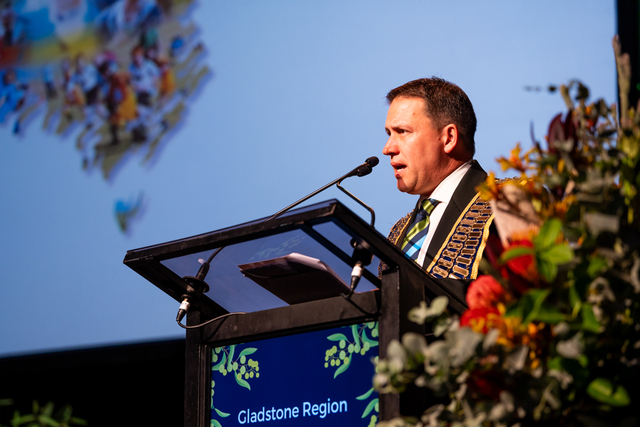
Councils impact local communities more than any other tier of government. They are the custodians of hundreds of billions of dollars of infrastructure assets, and they deliver hundreds of real services for every person in the country – whilst managing roads, drainage, community buildings, parks, footpaths, gutters and more.
However, this objective is often hamstrung by ageing infrastructure and outdated technology.
Elected members must understand the impact transformative technology has on operations. As current systems reach end-of-life, new systems must allow councils to focus on customer-centric models, reflecting contemporary life.
Peter Suchting, Group Director of Local Government at TechnologyOne – Australia’s leading enterprise SaaS provider, long-recognised for its expertise in local government – said consumer expectations of councils are influenced by their interactions with commercial organisations like retailers or banks: the service needs to be easy, efficient, online and available from any mobile device.
However, council managers often find it challenging convincing elected members that technology investment is vital to long-term efficiency and sustainability.
“It may not be as well understood as it is in the boardrooms of listed companies,” he said.
“Councils don’t operate in competitive environments or react to the same drivers other commercial service providers do. The technology they invest in is not always the most effective. It is often directed at keeping the lights on, rather than more strategic initiatives that improve business outcomes.”
Councils are often constrained by rate-capping in a number of states, meaning they cannot easily increase revenues without going through complex approval processes. Plus, they have huge infrastructure backlogs of upgrades and renewal to keep current infrastructure safe and at risk-free levels of service while planning for long-term growth.
This is further exacerbated for councils in booming outer metropolitan areas of Brisbane, Sydney, and Melbourne that are challenged to keep pace with the sprawl caused by housing and industrial growth.
Setting the foundation
Contemporary software designed specifically with local government in mind is a key enabler. It helps councils better connect with their communities on any device, anywhere, at any time. Software must be driven by configuration rather than customisation. Configuration should embody legislative and regulatory compliance, and incorporate proven business practices, but also be flexible enough to meet the specific needs of each and every council.
“Configuration is ultimately unique and private to each customer,” Suchting said.
“We preconfigure regulatory compliance, common processes and templates so councils don’t have to start from scratch. Each template represents a proven practice. Councils can adopt or augment, rather than revert to what they might have done in the past.
“There’s no reason every council in the country shouldn’t adopt similar processes for standard activities such as procure to pay. They’re all buying the same things, under the same regulatory environment.”
Suchting said that as councils evaluate their new requirements – and the solutions needed to meet these – there is an opportunity for ongoing transformation, which often requires significant cultural change.
“If you can whip out your smartphone and be located on a map where you’re standing, circle a pothole on the road and send it straight to council, generate a work order that can be automated to a contractor who can fix the problem. That’s quite a different process to filling in a form at a counter, or making a phone call to council. Councils have to change the way they do things to a degree.”
Transforming digitally … and culturally
The City of Holdfast Bay in South Australia is one of many councils leading the charge. Recognising the link between digital transformation and enhanced service delivery, the council implemented OneCouncil – TechnologyOne’s fully integrated enterprise SaaS solution – in an effort to transform the culture of service across its organisation.
Strategy and Innovation Manager, Pam Jackson, said, “We made the decision to move to SaaS to free up resources, improve efficiency and ultimately deliver better business outcomes.
“Since moving to SaaS, we’ve saved the equivalent of two full-time employees, which we’ve redirected into other areas – like ensuring we can deliver online services that will make our ratepayers’ lives easier.”
The transformation has enabled Council to better utilise the skill sets of its employees and function more effectively.
“The hours we’ve saved from streamlining and digitising manual processes have been unquantifiable – the value of people’s jobs has improved enormously as a result,” Jackson said.
“We’re confident the course we’ve taken is the right one.”
Suchting said the first mountain for councils to climb is getting their tech stack right. “The second, third and fourth is where you go to from there: deploying more customer-facing applications.”
Digital transformation and cultural transformation go hand in hand. If you can get your technology foundation right and improving service delivery becomes a lot easier.
If you’re looking for better business intelligence to help deliver improved services – or simply need an enterprise solution that adapts and evolves as you do – speak to TechnologyOne’s Local Government team about our OneCouncil SaaS solution today. To learn more search OneCouncil Effect.
*Copy supplied by TechnologyOne