Nothing like a crisis to bring out the best in people. And it extends to our national and state government leaders who have been exemplary in their bipartisanship and in keeping us reliably informed of COVID-19 developments. Victorian Premier Andrews really has shone with his no-nonsense TV grabs. And the National Cabinet has been an outstanding success.
Three spin-offs
A wonderful spin-off of the global turmoil has been our leaders getting into national self-assertion mode viz. introduction of a mandatory code of conduct on four United States multinationals, calling for an independent review of the pandemic, sending a frigate into the South China Sea, seeking an independent enquiry into wet markets. This is smart when there’s a vacuum created by a lack of leadership in the White House.
Indeed, the goss here is that the PM, Treasurer, Foreign Minister and Health Minister have an ‘understanding’ to take decisive leadership on the big issues, and to shape a more independent foreign policy framework. The mantra of being driven by ‘our national self-interest’ is often heard. The ghosts of Fraser, Whitlam and Hawke would be pleased.
A second spin-off is the general acceptance of the necessary role of government in times of crisis. The expenditure commitments being made by the feds are eye-watering, and Treasurer Frydenberg has clearly no problem with this. He figures he has total absolution in the eyes of the corporate heavies who’d been singing hymns about balanced budgets and a low tax regime. My tip is that the looming big budget deficits will lead to a 15 percent GST – the states will keep the 10 percent but the 5 percent top up will go to federal coffers.
A third, related spin-off is a growing empathy for the simple things in life, and the need to shed the business and lifestyle excesses of the last three decades. Our political and business leaders are embracing the need to protect the unemployed, the disadvantaged and those in the so-called ‘discretionary expenditure’ industries like hospitality, tourism and the arts. However, the way forward is unclear, especially since the feds have declared that many in the arts field are not eligible for JobKeeper payments.
Arts and culture
Last month the Federal Government announced a $27 million support package for the arts in response to COVID-19, which has shut down gatherings and arts events across the country – $10 million for regional artists and organisations, $7 million for Indigenous artists and arts centres, and $10 million for the industry charity Support Act.
But the Media, Entertainment and Arts Alliance (MEAA) has accused the Government of being missing in action given that thousands of freelance and casual performers and crew are denied access to the JobKeeper subsidy. MEAA Chief Executive, Paul Murphy, said, ‘the Arts and Recreation sector has 47 percent of businesses still trading, while the figure for Media and Telecommunications is 65 percent – the lowest of all 17 trading sectors. It is hard to comprehend why the Government would, through inaction, seek to compound this damage.’
Other critics emphasise that the $27 million is a far cry from the $850 million live performance and support package called for in March, or the $715 million announced recently for the aviation industry.
This is a complex issue because our creative folk do march to a different drum. Job security and hefty superannuation pay-outs aren’t their gig. They are nevertheless a core part of our personal and community wellbeing. Local government is in the middle of this, and it gets one thinking about how it could help shore things up for artists at the local level. The following suggestions are offered:
1. Map capability. The creative class are not properly understood, and mapping their presence and inter-linkages would be a start. For example, in Sydney it’s the Rocks, Newtown and the inner west, Bondi and Surry Hills/Darlinghurst. In Perth, it includes Northbridge, Subiaco and Fremantle. In the regions, it’s funky places like Broken Hill and Alice Springs, and even fire-ravaged Cobargo. Arts tourism can help lead regional communities back into economic health.
2. Rejuvenate pubs and clubs. The pandemic has encouraged us to slow down and smell the roses. So, let’s modernise our social venues by getting music and theatre into them. And wind back pokies – they’re anti-social.
3.Ramp up collaboration. The arts are close cousins of wine, food and tourism. Let’s find projects that leverage collaboration between them.
Wilcannia – persistence and a trigger
Twelve years ago, Central Darling Shire and Regional Development Aauthority Far West were pitching for a $2 million grant to refurbish the burnt out shell of a building at the main crossroad in Wilcannia. The components were an art gallery with studios a café and offices. It would entice tourists to stop, provide indigenous jobs, restore community pride. I scoped the project and loved every minute. Things drifted due to some sort of environmental/heritage issue, the very professional General Manager and his key staff were moved on, and the council was sacked. All very sad.
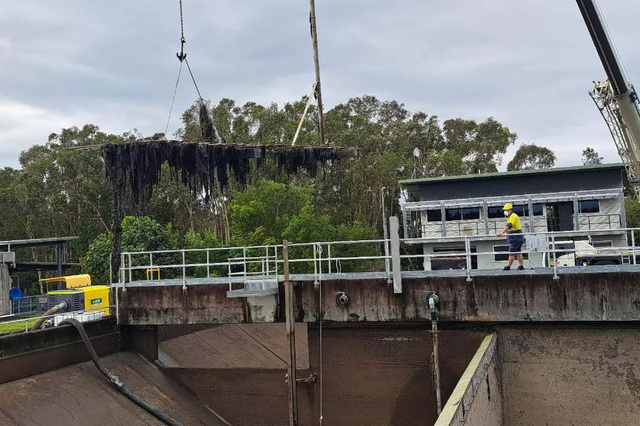
I recently heard that the feds and New South Wales government each committed $3.5 million to the project. The trigger was the fish kill on the Darling River, which apparently attracted 20 politicians to visit. The Shire Administrator had the plans in his drawer.
Rod Brown is a Canberra-based consultant and lobbyist specialising in industry/regional development, investment attraction and clusters, and accessing federal grants. He also runs the Cockatoo Network.
Phone: (02) 6231 7261 or 0412 922 559
Email: apdcockatoo@iprimus.com.au