The Bureau of Meteorology’s annual climate data declares 2022 wetter and warmer than average for Australia with more serious climate emergencies expected this year.
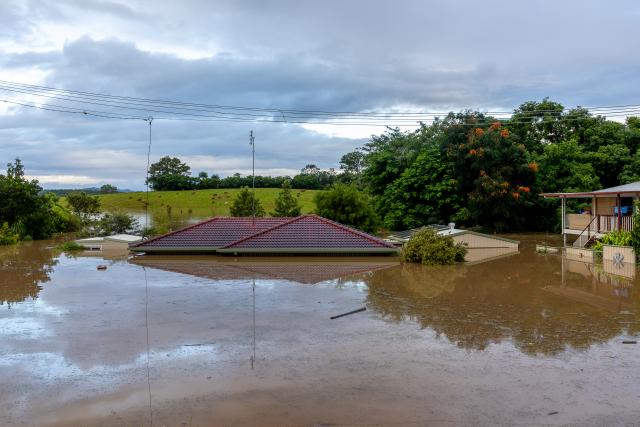
The Bureau of Meteorology has just published its annual data and key statistics highlighting the high rain fall last year, particularly for south east Australia where persistent heavy rain led to repeated and widespread flooding.
Climate Council and Professor Emerita, Macquarie University Professor Lesley Hughes said following the La Niña drenching, emergency services and regional communities are gearing up for what could be a serious bushfire season, as high fuel loads couple with a potential return to El Niño conditions later this year.
The ongoing flood emergency in the Kimberley has been described as the worst ever seen in the state with communities cut off, homes inundated, and a significant loss of infrastructure across the region.
“Australians will remember 2022 as the year of the ‘great deluge’, when record-breaking rain and floods, supercharged by climate change, left a trail of devastation from Queensland down to Tasmania,” Professor Lesley Hughes said.
“The climate risk to Australians is likely to remain high over the coming summer, with more rain and flooding expected in saturated catchments, a high chance of more tropical cyclones, and warnings of a major Japanese Encephalitis outbreak that could affect up to 750,000 people.
“Australians are footing the multi-billion dollar damage bill from climate-fuelled worsening floods, bushfires, droughts, heatwaves, and storms while the coal, gas and oil companies fuelling climate destruction are raking in piles of cash and paying little to no income tax.
“There is nothing natural about these disasters. They are being unleashed on Australians by decades of reliance on fossil fuels. In Australia, these same companies are enjoying billions in public subsidies. It’s high time we end fossil fuel subsidies and use the savings to create a climate disaster fund so that we can help communities deal with the fallout of compounding and worsening disasters.”
Greg Mullins AO AFSM, former Commissioner of NSW Fire and Rescue and founder, Emergency Leaders for Climate Action, said all of the rain had created fuel for potential fires.
“There has been a large amount of regrowth in the forested areas hit by the Black Summer fires that will eventually die off and burn. Our bushfires are becoming far more frequent and severe,” he said.
“If we head into an El Niño pattern, and it gets hot and dry, anything could happen.
“We’re already seeing warnings for fires in Western Australia, and grassfires are already happening in parts of New South Wales and South Australia, so our fire season is already under way.
“Australia’s current disaster planning and management systems are struggling to keep up with escalating disaster threats fuelled by climate change.
“In recent years, we have seen emergency responders overwhelmed by the scale, speed, and severity of extreme weather events, like the 2022 floods and Black Summer bushfires. Long-term recovery operations are also more challenging because disasters are striking more frequently.
“We need to make our disaster management systems fit-for-purpose in the face of worsening climate disasters. Governments must invest in emergency services, better disaster management coordination, more accurate risk models, and community resilience programmes.”
Climate Councillor and former leader of the CSIRO Earth Systems and Climate Change Hub, said David Karoly said 2022 was the wettest year for over a decade.
“The continuing La Niña event has led to our wettest year across Australia since the previous multi-year La Niña over 2010 and 2011,” he said.
“Despite lower-than-average Australian temperatures since the record highs we saw in 2019 prior to this event, we’ve still seen them come in at 0.2C to 0.3C hotter than the previous La Niña events due to global warming. Not only that, the extreme rainfall and flooding that has swept through many parts of the country this year has been made worse by these warming temperatures.
“What we’ve got is a climate system on steroids. Climate change is amplifying extreme events – like the heavy rainfall causing the floods in NSW in 2022 and the heat waves and bushfires in the 2019 Black Summer – making them bigger, more frequent and more dangerous. We are at risk of seeing more weather records broken if we stay on this trajectory of warming.
“Ensuring that we avoid the worsening effects of climate change on our weather systems is paramount to protecting our communities. We need urgent, deep, emissions cuts this decade to limit any further warming. Every fraction of a degree counts. Every tonne of carbon dioxide emissions adds to global warming.”