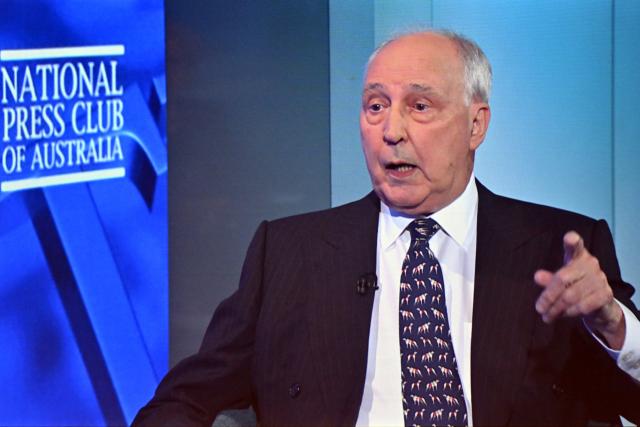
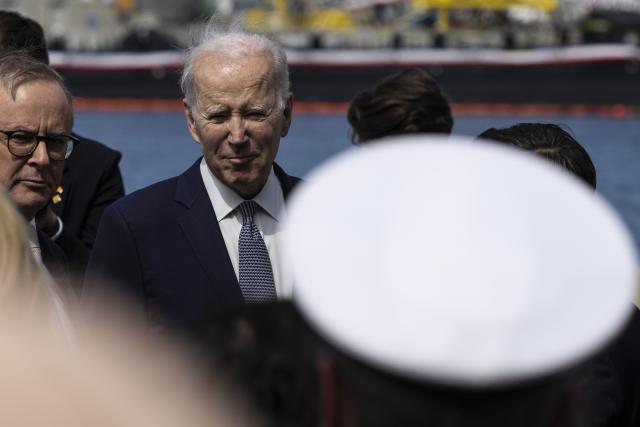
Former PM Keating’s foray into the feds’ $368 billion Virginia Class submarine deal is now etched in Australian history.
It’s the latest in a sequence of questionable decisions by our defence chiefs, viz., a proposal to buy Japanese subs that was scuttled, then a switch to French subs that was also scuttled and caused international embarrassment. Now back to square one with our Anglo Saxon colleagues.
Sadly it took the trenchant criticism from Keating to generate the debate that we should have been having beforehand.
The core of the problem is that the Department of Defence has no checks or balances. It does what it likes, under the shroud of ‘national security’ and an existential threat. Contrast this with the primary and manufacturing sectors, which have the Productivity Commission and various parliamentary bodies questioning every dollop of federal assistance.
While there’s no turning back now, there are questions that will linger for years. And the Defence hierarchy owes it to the nation to begin answering them. Here’s just two.
Local content?
The first question is whether the manufacturing the subs in Adelaide was really the best option. Sure, we’ll get loads of jobs and economic spin-offs. But the better option – which we’ll never be able to measure – might have been to buy the submarines ‘off the shelf’ from the USA (at a lower unit lower price), and then use savings to seed-fund in manufacturing activities better suited to our competitive advantages.
Defence surely undertook a comparative analysis of the two options, but we’ll never know. Defence Minister Marles refused point-blank on ABC Insiders recently to disclose the cost breakdown, let alone any insights into the economics of the project.
On the bright side, Adelaide has its longstanding Defence Teaming Centre – with a track record in clustering concepts and collaboration with overseas partners. And another bright spot is the new Minister for Industry Ed Husic. He was impressive at the National Press Club last month – a great grasp of new global technologies and how Australia can leverage them.
Impact on other federal programs?
The second question is the likely impact of the submarine project on federal funding on health and education, as well on programs directly relevant to local government such as infrastructure and regional development.
Senior defence officials are running the line that expenditure on the submarines will be spread over three-four decades, and thus manageable within the federal Budget. The Department of Finance will have a different view, and with a likely $5 billion impact annually, programs outside the mainstream such as regional development will be under the gun.
Suggestions for local government
While the big winners are Adelaide and Perth, there is scope for other cities and towns to derive economic benefits. In the USA, for example, there are companies in many unlikely places involved in defence work. If you’re interested in this opportunity, you should talk to some of the defence primes. Matching their needs with your local capabilities is the basic aim. We have Cockatoo members who have assist in this regard.
Another opportunity might lie in Defence land sales. Although Defence has had a land sell-off in recent times, the Department of Finance would now be arguing for more. Perhaps I’m dreaming, but Defence has facilities on prime urban land that are an accident of history. Think about HMAS Penguin (14 hectares) near Taronga Zoo and Watsonia Barracks (55 hectares) in Melbourne’s northern suburbs. These facilities could arguably be moved to regional areas, and the sites turned over to medium density housing with parklands, and help address the housing shortage.
Ron Joseph – master lobbyist
The brains behind the emergence of North Melbourne FC in the late 1960s was the CEO, Ron Joseph. His death last month led to anecdotes about how he lured AFL greats to the club to activate things, viz., Ron Barassi, Barry Cable, Doug Wade and Barry Davis.
Ron’s key success factors were his passion, constant travel for face-to-face meetings, and appeal to the mindsets and egos of his targets. He kept using the same strategy when he became CEO of the Sydney Swans – they were also-rans in need a great coach and some pizazz. He thus pitched again to Ron Barassi to coach Sydney, this time appealing to his nationalistic streak by arguing that a strong Swans Club was needed to consolidate the AFL as a national competition. And the rest is history.
There are direct lessons for councils and regional stakeholders trying to get projects off the ground. The first is those face-to-face meetings, especially with politicians and their advisers. The second is to think about your targets, understand their mindsets/egos and pitch accordingly.
An example here is the ANU footy club pavilion. I’m currently helping them pitch for a new grandstand – the current one is 70 years and is embarrassingly unfit for purpose. The ANU has spent $700 million – $800 million in recent years on capital works, but seemingly isn’t convinced about $3 million for a decent pavilion.
I’m thus hunting around for a new-age Ron Joseph to lobby Julie Bishop, the ex-Foreign Minister who is now the ANU Chancellor. I’m thinking that the pitch to Julie is that it’s NOT just a pavilion – it could be an iconic piece of infrastructure in a fantastic setting. It could host cricket matches between embassies or between ACT characters and international teams (similar to the Lords Taverners), or simply cater for afternoon gatherings of embassies or community groups. If you think that’s wild, who thought up $368 billion worth of submarines?
Rod Brown is a Canberra-based lobbyist specialising in industry/regional development. Email apdcockatoo@iprimus.com.au