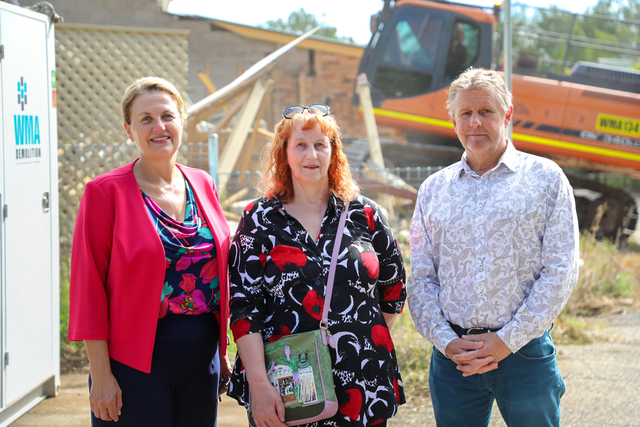
An interview with Maria Cabrera, Manager Corporate IT Services, Bankstown City Council, NSW
Bankstown City Council’s Manager Corporate IT Services, Maria Cabrera, said IT managers need to provide all Council staff with resources and tools that will enable them to meet their business objectives.
“IT is an ever evolving industry, and as such many challenges exist in allowing us to fulfil this goal,” she said. “We need to understand the objectives of each Council department and always be up to date with changes in technology.”
Maria Cabrera said in the past, Local Government has been too reliant on vendors and their expertise.
In the early 1970s Bankstown was developing its own property rating software inhouse and initiated a bureau where Councils could come together and share the use of the technology. As integrated packages and software products specific to Local Government later became available, member Councils began to leave the bureau as the cost of software began to decline.
In the 1990s, with new developments of technology and standards, integrated Local Government packages were replaced by best of breed solutions, with integration of these disparate systems becoming critical.
Maria Cabrera said that very few Councils were good at identifying for themselves what their business wanted and needed and they often relied on vendors to sell them the benefits of technology.
“In the future, Local Government needs to be clear with their objectives, business outcomes and benefits to be achieved, so that vendors can develop products to meets those demands or work with Councils to create solutions that deliver the outcomes and benefits expected.” she said. “Smaller, rural Councils in particular rely on vendors and readily accept whatever they suggest. Councils need to be vigilant with vendors when they say they can reduce their costs. We need to ensure that cost analyses are done over several years, not just one, to get an accurate projection. We need to start taking more control and develop positive relationships with vendors.”
Maria Cabrera said while Councils do need to become more independent, they should still rely on vendors for expert support.
“Developing software inhouse can become expensive and difficult to manage,” she said. “Staff need to be constantly trained and systems must be maintained and supported.
“In the past, Bankstown spent a lot of money training staff to create and implement programs only to see them move on to the private sector where they were better paid. Today, we use an outsource/inhouse combination, where we look closely at what we need, but work with vendors to develop it.”
Maria Cabrera said that outsourcing does have a place in Local Government, but its role needs to be responsibly analysed. She said that helpdesks are one area where outsourcing should be avoided.
“Local Government has a heavy transaction process, where immediate responses are often needed,” she said. “Helpdesk staff need to understand the business of Local Government and why it is critical to get a response out quickly. If the staff aren’t based in Australia they may not understand this need.”
Maria said another challenge that will continue into the future is the provision of electronic service delivery. As this evolves it has a significant impact on internal processes, but change is not readily accepted by all staff.
For example, at Bankstown, 50 per cent of staff are baby boomers or pre baby boomers. These staff members are often still accepting and getting used to new technologies such as the internet. On the other hand, the other 50 per cent of staff are generation X and Y, who like to work with new tools, such as forums, wikis and so forth.
Maria Cabrera said Councils need to pace the type of technology they introduce to cater for all staff. The technology should also refelct the needs of all generations in the wider community.
“For example, communities with a predominantly senior rate base are less likely to rely on new technologies and may be comfortable with more traditional means,” she said.
“In working towards the future, Councils need to think more about the business of Council and what value the new technology will bring. We also need to look further into sharing resources. The New South Wales Local Government IT Managers are currently investigating ways they can work together. This in itself is a challenge, as Local Governments are unique and focused within their own constituency. While some needs are the same, the demands are always different.”