At the 2010 Local Government Managers Australia National Congress in Adelaide, Local Government FOCUS invited delegates to nominate individuals or teams from their councils who are
improving operations or enhancing service delivery for their local community.
In this edition, we showcase the next two of our high achievers for 2010.
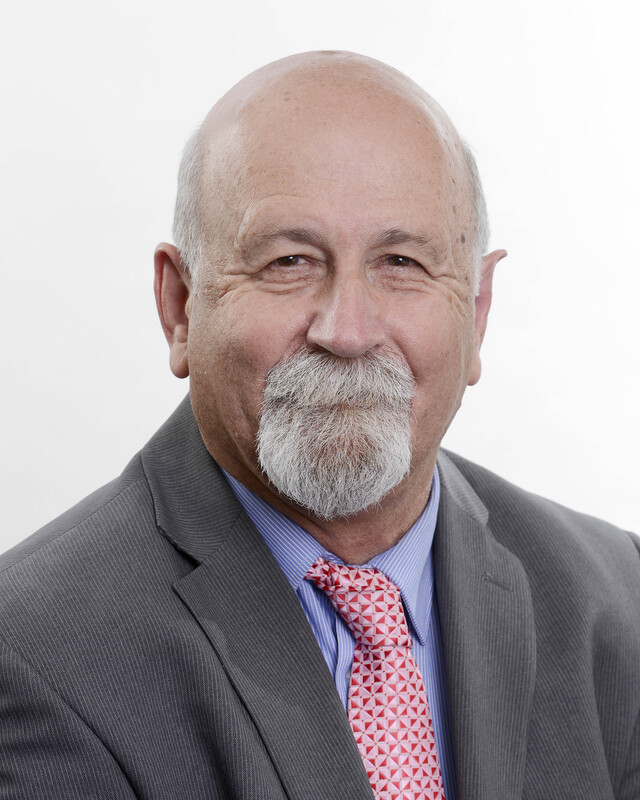
Andrew Whiteley, Team Leader Asset Management, Sunshine Coast Regional Council, Queensland
Located in southeast Queensland, Sunshine Coast Regional Council is the fourth largest council in Australia in terms of population and assets. Home to more than 320,000 people, the Council area contains 4,200 kilometres of roads and 210 kilometres of coastline.
Council’s Team Leader Asset Management Andrew Whiteley leads a team of seven people, with the major goal of introducing strategic asset management systems and processes to Council’s building and facilities portfolio.
He and his team are implementing core asset management principles and philosophies, which will become the main driver of the Buildings and Facilities Services Branch. The aim is to introduce an industry standard asset management function within a Government framework backed by good policy documentation to assist in the delivering of quality services.
Council’s Manager Building and Facility Services, Steve Linnane nominated Andrew to appear in FOCUS.
“Following the amalgamation of the former City of Caloundra with Maroochy and Noosa Shires, Andrew was faced with the challenge of addressing workspace accommodation issues for more than 2,800 staff spread over a 3,412 square kilometre area,” Steve Linnane said.
Andrew particularly enjoyed working on this task, drawing on Queensland Government design and fit out policies to do so. Over the last 18 months, his team has managed the accommodation process, transitioning staff to suit the revised operational requirements of various departments.
“We have worked with each Council Department and are introducing environmentally sustainable design principles to achieve high quality office fitouts,” Andrew Whiteley said. “In a short time, we have seen major change and we are beginning to operate our facilities in a more sustainable fashion. This is in line with Council’s Corporate Plan, which sets out our aim to be ‘Australia’s most sustainable region – vibrant, green and diverse’.”
Andrew said that bringing the organisation together as a unified entity following amalgamations was a significant challenge that continues today. The Asset Management Team is now working towards integrating all systems into a computerised asset
management system. It will comprise all technical documents, budget forecasting, maintenance management and planning,
project delivery and capital works planning in one database.
Andrew has worked for Council for almost five years, following a string of engineering and construction positions in other spheres of government and the private sector.
He enjoys the challenges Local Government presents and the wide variety of assets with which he is able to work.
“Working in the private sector, my attention was often focused on multi storey high rise buildings or single large projects,” Andrew Whiteley said. “But in Local Government, I am able to immerse myself in a range of different projects, working with a number of assets and equipment I wouldn’t usually be exposed to. This includes anything from Council offices, to aquatic centres and more.
“I also enjoy the dealing with people aspect of my position. Organising working spaces for the whole organisation means that we interact with the whole spectrum of Council employees.”
Andrew is proud of the sizeable difference his team has made to the organisation, and the way his branch manages facilities for Council.
“We have a great mix of really motivated staff, and the right people with the right training in the right positions,” he said. “We have made huge leaps and gains in a short period of time – everyone has worked hard and has been committed to the task at hand.
“We have got to the point where we have the policy and procedures in place to drive and backup delivery of the branch, but there is still a huge amount of work to do.”
The Dam Busters, Shire of Mundaring, WA
With 2010 being the Year of Women in Local Government (YoWiLG), it was only fitting that this year’s Local Government Managers Australia (LGMA) Management Challenge included a task based on promoting women in the workplace. Held annually, the LGMA Management Challenge is a professional and team development program that aims to bring the best out of present and potential Local Government leaders.
Located on the eastern fringe of metropolitan Perth, the Shire of Mundaring entered an all female team – the Dam Busters – to take part in the challenge.
The team of five spent the weeks preceding the challenge developing team skills, getting to know each other’s strengths and planning their strategies.
A pre challenge task was set and completed within Council prior to the regional finals. It involved teams reviewing the gender balance in their councils and proposing actions to help women achieve management positions.
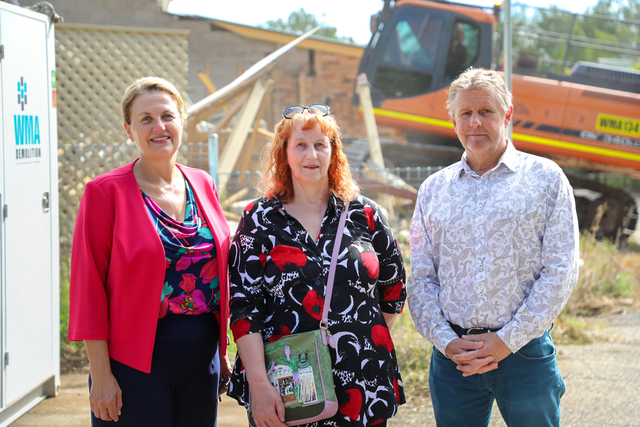
The task was undertaken by Dam Busters team members Rebecca Noakes (Communications), Deborah Handyside (Human Resources), Ginetta Evans (Libraries), Briony Moran (Planning) and Lisa Skrypichayko (Customer Service).
Team Leader Rebecca Noakes said to investigate the perceptions of gender balance issues, the team developed questions and surveys for elected members, as well as the Shire’s CEO, directors and managers.
“Anonymous feedback slips were provided to all female employees in an attempt to identify some of their concerns, and we spoke informally with female colleagues about their work life balance,” she said. “From this, we presented our findings and recommendations to Council’s Strategic Leadership Team, which is currently working to implement some of the ideas.”
The Shire of Mundaring has good female representation both on Council and among staff overall. The Shire has five female elected members forming 42 per cent of Council and 67 per cent of its 223 staff are female.
However, there are particular areas, including management, where there is an imbalance of male and female employees.
Rebecca Noakes said the research undertaken by the Dam Busters found the main issue affecting career advancement opportunities for women were personal or family responsibilities.
“Accordingly, one of our proposed actions is to implement a parent led crèche for school aged children from 3:00 to 5:00pm,” she said.
“We have a lot of parents with children in that age group and it was suggested that parents could take turns to look after up to 10 children using a room at the Shire.
“The Executive Leadership Team has provided in principle support for the idea and we are now working to find out how many staff are interested and exactly how we will make it work.”
The Dam Busters also recommended a trial of part time or job shared management roles.
“Some women are held back from applying for management positions because of a perceived lack of flexibility in hours and the tension between career and family commitments,” Rebecca Noakes said. “Job sharing would allow two managers to work part time, while ensuring their service is managed effectively.”
This was the first year that any of the team members had taken part in the challenge, so it was an exceptionally good result to come in second in the Western Australian State challenge after the City of Subiaco.
The Dam Busters were also selected as one of only three teams from 128 nationally to present their gender balance findings to the LGMA National Congress in Adelaide in June.
“We learned so much from being involved in the Management Challenge that we are now encouraging others to participate in the future,” Rebecca Noakes said. “We built a really great rapport and respect for what other departments do, and as a result, we’re promoting cross departmental collaboration wherever possible.
“Our plan is to encourage teams for next year, with at least one person from each Council department so that staff have the opportunity to work with and meet a range of people they haven’t worked with before.
“This cross council culture builds a stronger team as a whole, as we each become aware of the different challenges and opportunities different departments face. External services can become segregated, and in this one instance it has bought us so much closer. If teams like this were organised across council, imagine how much stronger the whole organisation could become.”
Rebecca Noakes said the challenge was most enjoyable, not just for the experience of meeting and growing relationships with staff from other departments, but because the task was related to a real life situation, with the results and research applicable to her own workplace.
“The task was not just a YoWiLG activity to fill in time, but had real meaning and relevance to all councils,” she said. “We have been able to identify real challenges and problems, and we have reported back to Council with meaningful strategies that can be used to address these.”
The Dam Busters are developing a short DVD presentation to promote the challenge on a wide scale. It will be uploaded to Council’s intranet to gain as much exposure as possible.