Home » Regrowth and recovery after bushfires

Regrowth and recovery after bushfires

The Tasman municipality faced many challenges following disastrous bushfires early this year which left homes destroyed, trees burnt and wildlife lost.

The small,  rural Tasman Council’s initial response included setting up support communication networks with SES personnel to address the needs of thousands of locals and trapped visitors with no power, road access or mobile phone reception.

Support and practical help then proceeded to rebuilding, collecting information, planning, removal of waste and dangerous and hazardous materials.

The turmoil and trauma of the event affected the community in different ways, and only now, without the sounds of chainsaws and large machinery clearing the land, are green shoots appearing out of the ashen wastelands.

Early stages of recovery included grant assistance, removal of burnt trees, hanging limbs or other dangerous vegetation, advice for rebuilding and replanting, and setting up communication networks.

A strong community spirit has seen numerous new programs commence and has strengthened existing partnerships.

Council has assisted with the Tasman Landcare Groups’ free garden assessment program, to assist people wanting advice on weed control and vegetation management. A focus was on what to expect after fire in the garden, along with an upcoming revegetation program.

The Council has also worked closely with the Dunalley Tasman Neighbourhood House to support revegetation, weed control and beach rubbish clean ups. The bushfire exposed years of rubbish accumulated in beach reserves. A recent clean up by volunteers collected half a skip load of debris on just one section of the beach.

The fire, which ripped through from Forcett Forests and jumped across waterways, was described as a fireball travelling at ferocious speed and with intense heat.

As well as houses reduced to rubble and ash in minutes, cars, water tanks and other objects were moulded into mangled sculptures in temperatures in excess of 2000°C.

The risk of septic tanks being weakened and rainwater contamination in water tanks was high, with other hazards including falling trees, gas, live power lines, explosive materials, aerosol cans, diesel, pesticides, unstable structures and health risks from dust and ash.

Planning, clearing, planting and subsequent regrowth is proving to be a therapy in a number of ways.

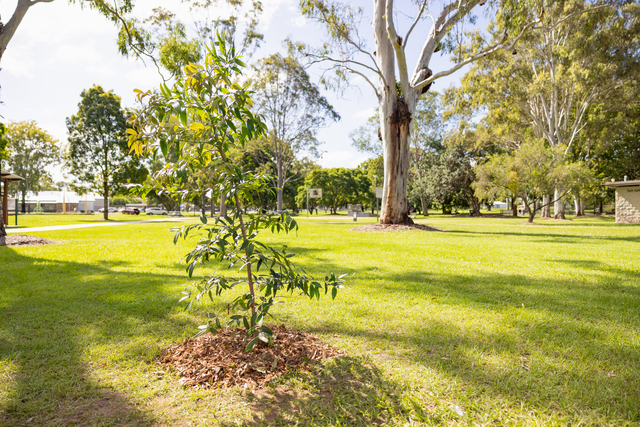
The replanting plan has used fire resistant plants or species which trap burning embers and sparks and reduce wind speed around buildings, in order to reduce the chance of future bushfires causing such devastation.
Digital Editions


  • From books to bots

    From books to bots

    Tenterfield Library is proving that technology is more than just tools and devices. From coding and robotics to tech support, the Library has become a…

More News

  • Myers resigns for health reasons

    Myers resigns for health reasons

    Wollongong’s Councillor Tiana Myers has resigned, as a Ward Three Councillor for City Council due to health reasons. Cr Myers was elected to Council in 2024 with a focus on…

  • Acknowledging women’s role in councils

    Acknowledging women’s role in councils

    Council representatives from across the state gathered in Sydney today for Local Government NSW’s (LGNSW) International Women’s Day event. Mayor Darcy Byrne, President of LGNSW, said the event was an…

  • Kylie Davies beats strong field

    Kylie Davies beats strong field

    Flinders Shire Council is pleased to announce the appointment of Kylie Davies as its new Chief Executive Officer. Ms Davies will start in the role on 13 April following a…

  • Leaving on a high

    Leaving on a high

    Mount Alexander Shire Council’s Chief Executive Officer Darren Fuzzard will end his tenure at the council in July 2026, marking ten years of service to the organisation and community. Mr…

  • Safety first for transport corridor

    Safety first for transport corridor

    Traversing a major Townsville transit corridor spanning three suburbs will soon be safer for motorists, cyclists and pedestrians, with Townsville City Council commencing a $3.8 million upgrade of Hugh and…

  • Creating long-term employment pathways

    Creating long-term employment pathways

    The Shire of Carnarvon is creating long-term employment pathways and strengthening workforce capability through its participation in the Remote Jobs and Economic Development (RJED) Program, a national initiative designed to…

  • Cool summer plan for Campbelltown

    Cool summer plan for Campbelltown

    Extreme heat is the biggest killer of natural disasters in Australia, exceeding that for any other environmental disaster combined, including floods, storms, bushfires and cyclones. While high temperatures pose risks…

  • Bathurst has it’s scrap together

    Bathurst has it’s scrap together

    Bathurst Regional Council has successfully concluded its ‘Let’s Get Our Scrap Together’ campaign, launched on 1 September 2025 with funding from the NSW Government and delivered in collaboration with NetWaste…

  • Baw Baw acting CEO tenure extended

    Baw Baw acting CEO tenure extended

    Baw Baw Shire Council has extended the contract of Acting Chief Executive Officer Sally Jones until 30 June 2026. The matter was considered as a confidential item in the late…

  • Farewell to a much-loved bridge

    Farewell to a much-loved bridge

    Narrabri Shire Council hosted a special community farewell event in mid-January, Brekkie on the Bridge, ahead of the upcoming demolition of the Violet Street Bridge. The event brought together community…