Home » 20 year database helps understand local economies

20 year database helps understand local economies

Hard data on historical trends in local economic activity is now available directly from the internet. The recent release of a new 20 year database by the Bureau of Transport and Regional Economics (BTRE) provides Local Government with a new tool which will underpin local research and planning and provide insight into each Council’s recent economic history.

The database and associated paper, Information Paper 54, Focus on Regions 3: Taxable Income, provide detailed information on income and economic activity for every Local Government Area (LGA) in Australia from 1980–81 to 2000–01.

BTRE’s Deputy Executive Director, Dr Judith Winternitz, points out that until now, Local Government has had to rely on population or employment figures to gauge their economic progress. Good income based data has only been available every five years through the Census. The BTRE’s annual database is freely available on the Bureau’s website.

State and Local Governments, researchers, business people and regional communities are encouraged to use it in their everyday work.

“We all know that national economic growth is not evenly spread across the regions and this data allows us to understand the different economic growth patterns,” Dr Winternitz said. “This work will help government, private industry and communities pinpoint where differences occur and identify underlying causes.”

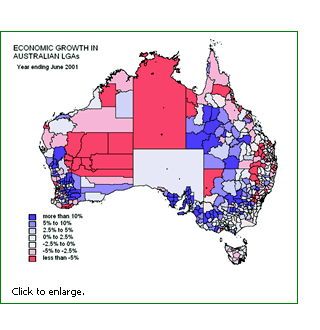
The information paper released with the database looks at some trends in the data. It shows that the economies of most Councils tend to move in line with the national economy with some local variation. However other, usually non metropolitan, regions are more dependent on a single industry or commodity. These economies diverge much more from national trends and fluctuate extensively with drought, price or exchange rate movements.

Overall, metropolitan regions tend to have higher growth rates than non metropolitan regions but are also more heavily impacted by international and national economic downturns.

The difference between the LGAs with the highest and lowest income per taxpayer is growing in metropolitan areas, but in non metropolitan Australia, these differences are declining and income is becoming more evenly spread.

Dr Winterniz said the database was drawn from the individual taxable income of regional residents.

For convenience, the figures have been calculated on consistent 2001 Local Government area boundaries and adjusted for the effects of inflation. While the database currently covered the period 1980–81 to 2000–01, it will be regularly updated to reflect new data published by the Australian Taxation Office.

The database builds on earlier BTRE Focus on Regions reports dealing with regional Industry Structure and regional Education, Skills and Qualifications. These publications and their associated databases are available free of charge at www.btre.gov.au
Digital Editions


  • Greater Geraldton bridge lauded

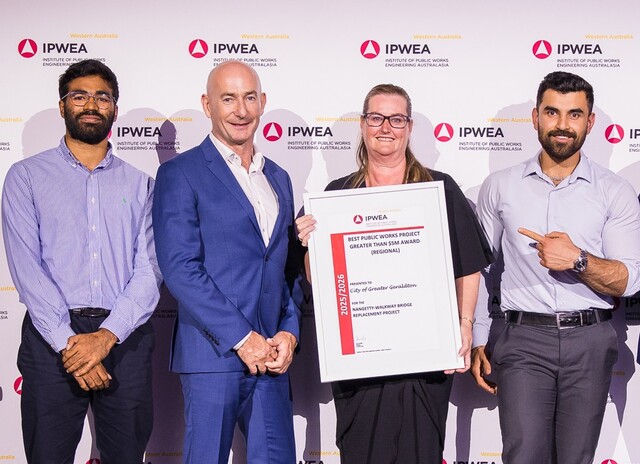
    Greater Geraldton bridge lauded

    City of Greater Geraldton bridge replacement project wins prestigious engineering award Inovative engineering has earned the recently completed Nangetty-Walkaway Road Bridge Replacement Project top honours…

More News

  • Big attraction for tiny town

    Big attraction for tiny town

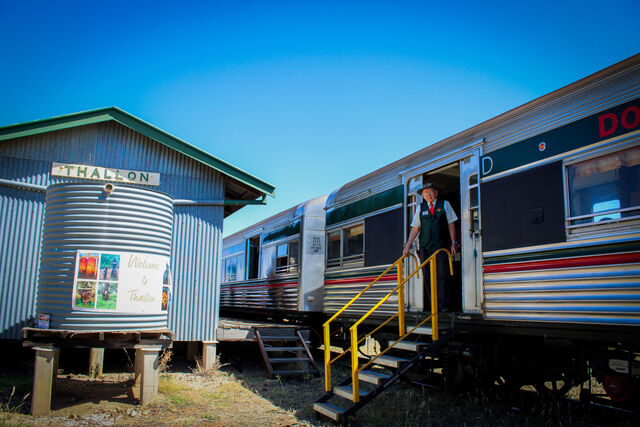
    Dozens of tourists have created history as the first passengers in decades to arrive in the tiny southern Queensland town of Thallon by rail. Excited passengers travelled for hours on…

  • Together Butchulla Talk

    Together Butchulla Talk

    A new Indigenous book celebrating the Butchulla language and local animals was launched at Hervey Bay Library earlier this month with storytime, language, dance and art activities for families to…

  • New Logan arena

    New Logan arena

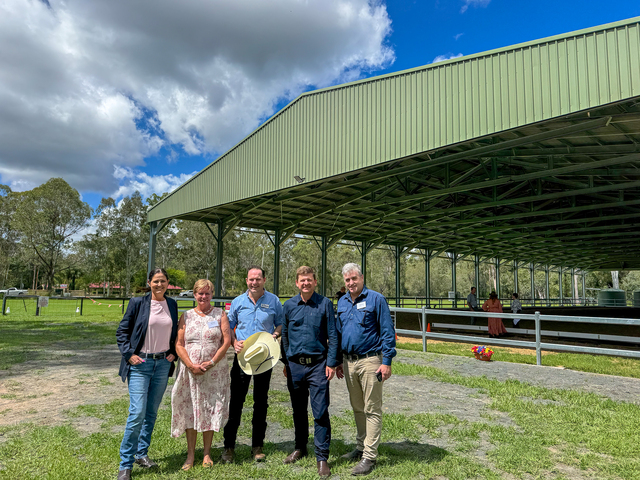
    An upgraded arena for equestrians has officially opened at Skerman Park in North Maclean. Logan City Council delivered the $928,000 project, which includes a weatherproof roof, to support members of…

  • Noosa mastering AI

    Noosa mastering AI

    Digital Hub is trying to help Noosa locals get the most out of AI. Mastering AI can make life easier in countless ways. From planning weekly meals with specific dietary…

  • Change in the weather

    Change in the weather

    AUSSIE FLOOD RESCUE It’s obvious to everybody that we are seeing weather changes. It appears to be more erratic and frequent than ever before. Local government bodies are plagued by…

  • Dandycon set to return

    Dandycon set to return

    Dandy Con, Greater Dandenong’s much loved comic and pop culture festival, returns on Saturday 11 April 2026 between 11am–4pm, bigger than ever. This free, all ages event fills Dandenong Library,…

  • A creative future for Kingston

    A creative future for Kingston

    The community has been invited to help shape Kingston’s creative and cultural future. Kingston residents are being invited to help finalise the city’s cultural roadmap, with the Draft Creative and…

  • Tweed residents gunking up wastewater

    Tweed residents gunking up wastewater

    Tweed Shire Council is urging residents to rethink what they flush down the toilet and pour down the drain, after revealing that crews remove around 156 tonnes of rubbish and…

  • In memory of Chris Quilkey

    In memory of Chris Quilkey

    It was with great sadness that we learned that former Blacktown City Deputy Mayor and Councillor Chris Quilkey has passed away. First and foremost, our thoughts are with Chris’s family,…

  • Unit demolished as Ipswich flood recovery continues

    Unit demolished as Ipswich flood recovery continues

    Ipswich Mayor Teresa Harding has welcomed the demolition of Mihi Grove, a flood-hit 42-unit complex in Brassall purchased as part of the Queensland and Australian Government’s Resilient Homes Fund Voluntary…