Senator Ian campbell was appointed to the Cabinet in October last year. The following interview covers his views on his new portfolio.
Q. What were your first thoughts on hearing you were to be the Federal Minister for Local Government, Territories and Roads?
I was absolutely over the moon – both about becoming a minister and about the quite fascinating areas of responsibility.
Q. Had you had particular interests and/or experiences in these areas before becoming Minister?
As a senator for Western Australia I’ve maintained close contact with Local Government and quite a few issues have come up in my term as senator. Before coming into Parliament, I set up a business association in West Perth designed to ensure that the business community there had more of a say in Local Government. I’ve worked on campaigns and I’ve worked on encouraging pro-business people to run for Local Government: I’ve been active in supporting Lord Mayoral candidates and Council candidates throughout my adult life.
Q. How do you see Local Government in Australia – any notable strengths or weaknesses as it currently is?
It’s very patchy across Australia. Over the last decade or so Local Government has certainly become more professionally organised at a State and national level, with various State Local Government Associations being quite focused on their relationship with the Commonwealth. They’ve been able to create a very good two-way relationship with the Australian Government, which has had very positive dividends in such programmes as Roads to Recovery. Many Local Governments have also been at the forefront of using Information Technology to empower their citizens and deliver better services.
As for weaknesses, I think there’s a continuing challenge to attract good and highly skilled people onto Councils. There are a lot of very good people on Councils but there’s a hell of a lot on the outside who whinge about them. The more people you’ve got with financial skills and experience in development, the better. Many argue against people who are involved in real estate and development, but as long as there’s a balance I think it’s a good idea. There’s a tendency because of minority groups getting organised and getting their people – green or radical anti-development people – onto Councils, that they’re not reflective of the community. We have to keep finding ways to make sure the Councils reflect the whole community, including those minorities.
The other issue is planning. I’m keen to see a significant improvement in planning and development procedures in Local Government because it has a massive impact on Australia’s economic development.
Q. Would you like to comment on Local Government amalgamations?
I’m very strongly opposed to them in principle. If local Councils and local communities drive it we shouldn’t stand in their way – in fact we should facilitate it. But I think forced amalgamations are at odds with wanting to build strong communities that can govern themselves. In my own experience smaller Councils are generally far more in touch, and there’s no reason why Councils can’t combine regionally as they’ve done in many, many places in parts of Australia. Councils can cooperate on service delivery, such as waste disposal and collection, transport and other issues, but still maintain the integrity of the smaller Council. You can create the economic efficiencies that pro amalgamation people claim by having better quality regional cooperation.
It is probably easier for State Governments to deal with fewer Councils, but it’s driven from a wrong premise – from the top down. My own experience is that smaller Councils better serve the people. If people have trouble with Councillors they can kick them out at the next election. Australian Government policy is to not create any fiscal incentive for amalgamations.
Q. What do you see as the major challenges of your portfolio?
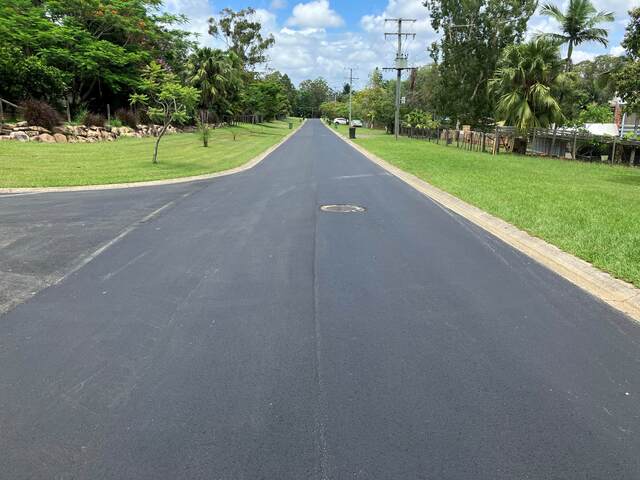
The Hawker Inquiry has thrown up some very good opportunities for us to move on. And the Roads to Recovery Programme continuation announcement is very positive, but a major challenge is to make it an even better programme for the next four years. We need to make sure more of the money gets to areas of higher need. Some Councils in Australia have honestly assessed that their roads are in good condition: they don’t actually need all the Roads to Recovery money for roads. We obviously need to work with Councils to find ways to ensure that more of the money goes to those areas of highest need. Developing the policy for the one third of the new Roads to Recovery programme that will go to regional programmes as opposed to just on the formula is also at the top of my list.
Q. How do you see the role of Local Government changing over the next ten years?
I believe Local Government has become more dynamic and more constructive, but finding ways to make it more representative and responsive to local community needs, with more regional cooperation will be issues over the coming years. I think regional cooperation will be one of the big changes. I’ve spent time with the Sunshine Coast Regional Organisation of Councils – Caloundra, Noosa and Maroochy – who are forging the way there. I also met with Councils in Western Australia recently who are doing a similar thing. I think the Commonwealth has a role in encouraging that, by saying to individual councils that we’re happy to deal with you directly, but if you’ve got a regional issue that we can work with you on, then we can set up processes to ensure that you have good access to us.
Q. How do you see the Commonwealth’s role vis-à-vis Local Government over the next ten years?
I think we have shown that the Commonwealth can have very good direct relationships with Local Government. We can build strong local democracies and get very good results by the sort of direct funding that’s occurred in Roads to Recovery. Local communities can see that the relationship has produced results on the ground very quickly. Our job is to build an even stronger direct relationship over the next few years.
Q. What particular qualities do you see yourself bringing to the role of Minister for Local Government, Territories and Roads?
A keenness to get things done. To set very clear goals and to get people all working in the same direction as quickly as possible. It’s a privilege to be given the responsibility of governing Australia – a huge privilege. You’re given a comparatively short time to do things and I’m driven to do things in a way that makes a demonstrable difference to peoples’ lives. The quick response to Roads to Recovery was one of the goals I set for myself back in October last year. That’s the first one ticked off. Getting the detail of that right is another one, and planning reform is another one.
I’m keen to get as many of these important things done as I can this year. And hopefully, if I’m successful, then having the chance of doing some more. We’ll leave that to the people to decide.