Home » Editorial

Editorial

Recent moves by both the New South Wales and Victorian Governments, and in September changes by the Western Australian Government to its Planning and Development Bill, indicate that State Governments are starting to work more closely with Local Government on the vexed issue of planning controls. Local Government Associations across the nation have argued long and hard on behalf of their council members to protect local responsibility for planning matters. The local council and its community are key stakeholders in contentious planning proposals because, long after the developer has left with money in the bank, it is the local community that has to live, and deal with daily, the consequences of bad planning decisions.

In Western Australia, clauses in the Planning and Development Bill, giving the WA Planning Commission power to amend local planning schemes or determine development applications, have now been withdrawn after lengthy lobbying of the Minister for Planning and Infrastructure and other Members of Parliament by the Western Australian Local Government Association.

In New South Wales, the Local Government and Shires Associations have welcomed the Carr Government’s recent announcement that it will reduce and streamline planning definitions and zonings. However, then President of the Local Government Association, Councillor Sara Murray, said that the Associations remain vehemently opposed to private certification. She predicts increasing problems over the next decade culminating with private certifiers not being able to get insurance.

In Victoria, the recent decision to set height limits for residential streets has been welcomed by the Municipal Association of Victoria (MAV) and Victorian Local Governance Association.

Providing more certainty for councils and their communities, MAV President, Councillor Geoff Lake, said this move by the State Government is significant recognition of Local Government’s status as the planning authority with the mandate to determine areas where local amenity should be protected, while concentrating future high rise development to designated activity centres.

These moves by the respective State Governments to work with Local Government to achieve a win win situation are a step in the right direction in intergovernmental relations. However, cost shifting still looms as a major hurdle, including the Federal Government’s role in this practice. Former Mayor and now Independent MP in New South Wales, Richard Torbay, soon found calls by Local Government for funding fairness continues to fall on deaf ears of all the major parties in this State (refer page 6).

The return of the Howard Government with an increased majority, and control of both Houses, may mean it will take on the States with greater gusto in regard to cost shifting. However, its own cost shifting practices may prove to be its Achilles’ heel.
Digital Editions


  • Jack Iori honored by the Hills.

    Jack Iori honored by the Hills.

    The Hills Shire Council has officially named the grandstand at Kellyville Memorial Park Community Centre the Jack Iori Grandstand, recognising the enormous impact Jack Iori…

More News

  • Unwavering support and thanks in Bondi aftermath

    Unwavering support and thanks in Bondi aftermath

    Councils across NSW are being encouraged to continue to provide direct support for the Waverley community in the wake of December’s devastating terrorist attack at Bondi while Waverley has paid…

  • Redlands Koala population stable

    Redlands Koala population stable

    Redland City Council has become the first local government in south-east Queensland – and within the koala’s federally-listed northern endangered range – to report stabilisation of its city-wide koala population.…

  • Looking for “Red Fleet” Solutions

    Looking for “Red Fleet” Solutions

    The Country Mayors Association of NSW (CMA) has met with NSW Emergency Services Minister the Hon Jihad Dib MP about the Red Fleet issue, which refers to local Councils currently…

  • Three small changes making big differences in grand programs

    Three small changes making big differences in grand programs

    Local government grant programs are designed to create community impact. Yet for many councils, the effectiveness of those programs is shaped less by intent and more by the processes that…

  • Alice skating program a success

    Alice skating program a success

    Free ice skating, packed programs and smiling faces have marked the end of a hugely successful school holiday program delivered through a partnership between Alice Springs Town Council, the Northern…

  • Supporting Waverley

    Supporting Waverley

    Councils across NSW are being encouraged to continue to provide direct support for the Waverley community in the wake of December’s devastating terrorist attack at Bondi. In the aftermath of…

  • New deputy for Liverpool

    New deputy for Liverpool

    Councillor Peter Harle has been elected Deputy Mayor of Liverpool City Council following the resignation of Cllr Dr Betty Green. Councillor Harle, who has served the office in the past,…

  • Erosion reef wins awards

    Erosion reef wins awards

    A West Australian-first coastal erosion research reef installed off C.Y. O’Connor Beach in 2022, reducing wave height and energy and blossoming into a thriving habitat, took out the 2025 WA…

  • More rehabilitation works for Coffs

    More rehabilitation works for Coffs

    Scores of local flood-damaged roads will be improved after the City of Coffs Harbour determined to expand rehabilitation works. An initial program of stabilisation works had already been approved for…

  • First-class Pump Track opens in Ballina

    First-class Pump Track opens in Ballina

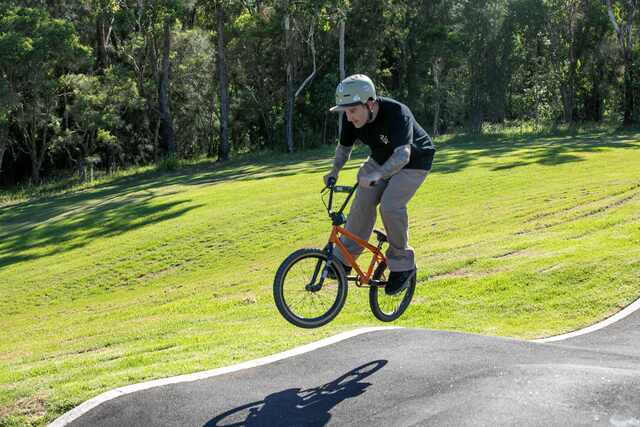
    Ballina Shire Council is thrilled to announce the completion of the new Ballina Pump Track at Kingsford Smith Reserve in the heart of Ballina. Designed to national competition standards, the…