Home » Editorial

Editorial

In Melbourne’s City of Moreland, Optus vehicles have been impounded and in NSW Councils are threatening to send in teams of workers to rip down cables if rates they intend to impose are not paid.

Under Section 112 of the NSW Local Government Act, Councils are able to rate infrastructure passing overhead, such as aerial walkways over roads, as well as underground tunnels. It would follow that Optus, as a private company, can therefore be charged rates for its overhead cables.

According to Peter Woods, President of the NSW Local Government Association, Councils will be able to apply a differential rate, with the overhead cabling charged at a far higher level due to the adverse affect it has on local amenity.

In South Australia, where no rollouts have occurred to date, the Local Government Association of South Australia (LGASA) also believes its Councils have the power to impose a specific rate on any overhead cabling installed by Optus. The LGASA will be using this as a disincentive, that if carriers do the right thing by local communities and go underground then rates need not be applied.

Western Australian Councils have found a strong ally in the shape of the State Government. The Court Government has said an emphatic Œno’ for the use of its power poles to string up cables. This presents a possible scenario of carriers erecting their own poles throughout the State. With overhead cabling being four times cheaper than underground this could still be economically viable!

With this outdated technology cheaper and faster to install, in the race for Pay TV subscribers, Telstra has announced it will also be using aerial cabling. In Moreland, where trucks rolling out cables were impounded after Optus refused to apply to Council for a permit to carry out the work, Telstra also has announced it intends to use overhead cables in 90% of the area. This City faces two lots of cables, with Telstra strung one metre below Optus cables, and who knows how many more carriers will get into the act after deregulation in July next year.

Compared to many other cities around the world, Australia already has extensive aerial wiring. In 2000, with the Sydney Olympics, we face the potential of presenting ourselves to the rest of the world as a nation going into the new millennium with our cities blighted by a tangled web of nineteenth century technology.

In turn, both the current and former Federal Governments have totally deserted local communities on this issue. The action of Councils, on behalf of their communities, standing up to the Corporate moguls, hell bent on chasing maximum market share and profit margins, is to be applauded.

Much to the consternation of the telecommunication giants this issue is not just going to disappear.

 

Digital Editions


  • Stretching for a good cause

    Stretching for a good cause

    Ballarat residents stretched, smiled and snuggled their way through a unique Kitten Yoga event that combined relaxation with a heartwarming cause – helping kittens find…

More News

  • Kylie Davies beats strong field

    Kylie Davies beats strong field

    Flinders Shire Council is pleased to announce the appointment of Kylie Davies as its new Chief Executive Officer. Ms Davies will start in the role on 13 April following a…

  • Leaving on a high

    Leaving on a high

    Mount Alexander Shire Council’s Chief Executive Officer Darren Fuzzard will end his tenure at the council in July 2026, marking ten years of service to the organisation and community. Mr…

  • Safety first for transport corridor

    Safety first for transport corridor

    Traversing a major Townsville transit corridor spanning three suburbs will soon be safer for motorists, cyclists and pedestrians, with Townsville City Council commencing a $3.8 million upgrade of Hugh and…

  • Creating long-term employment pathways

    Creating long-term employment pathways

    The Shire of Carnarvon is creating long-term employment pathways and strengthening workforce capability through its participation in the Remote Jobs and Economic Development (RJED) Program, a national initiative designed to…

  • Cool summer plan for Campbelltown

    Cool summer plan for Campbelltown

    Extreme heat is the biggest killer of natural disasters in Australia, exceeding that for any other environmental disaster combined, including floods, storms, bushfires and cyclones. While high temperatures pose risks…

  • Bathurst has it’s scrap together

    Bathurst has it’s scrap together

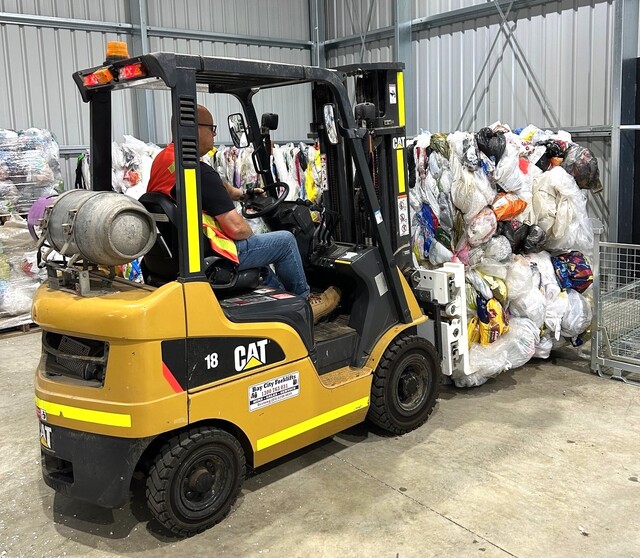
    Bathurst Regional Council has successfully concluded its ‘Let’s Get Our Scrap Together’ campaign, launched on 1 September 2025 with funding from the NSW Government and delivered in collaboration with NetWaste…

  • Baw Baw acting CEO tenure extended

    Baw Baw acting CEO tenure extended

    Baw Baw Shire Council has extended the contract of Acting Chief Executive Officer Sally Jones until 30 June 2026. The matter was considered as a confidential item in the late…

  • Farewell to a much-loved bridge

    Farewell to a much-loved bridge

    Narrabri Shire Council hosted a special community farewell event in mid-January, Brekkie on the Bridge, ahead of the upcoming demolition of the Violet Street Bridge. The event brought together community…

  • Toolkit provides resources for staff to live values

    Toolkit provides resources for staff to live values

    Organisational values are at the core of every workday and task and Bundaberg Regional Council has developed a practical tool kit to support its workforce and promote its values. The…

  • New system for Blacktown

    New system for Blacktown

    Blacktown City Council has launched DAISY, a new digital planning assistant designed to help residents better understand planning requirements and prepare residential development applications. DAISY, which stands for Development Application…