Home » Unique style of LG

Unique style of LG

Local Government in the Northern Territory continues to grow in its capacity to provide the services required by residents. There are now 68 local governing bodies, 38 of these created under the Local Government Act. The Act provides for two streams of Local Government &endash; Municipal Councils and Community Government Councils.

The other 30 Councils are Incorporated Associations with limited powers. The Northern Territory Government is committed to encouraging these bodies to change their status to full Local Government Councils.

“This process is one of encouragement, never pressure,” said David Coles, Assistant Secretary, Department of Housing and Local Government. “Before a new Council is created, the Government must be sure that a substantial majority of the residents is in favour of the new Council.”

While over 85 percent of Territorians reside within Local Government boundaries, these combined only cover five percent of the land area. This point emphasises the vast tracts of the Territory that exist between population centres. In fact, only four Councils share common boundaries.

The largest Council, Darwin, has 70,000 people, while some of the remote and predominantly Aboriginal Community Government and ‘Association’ Councils have populations under 300 people. While the Municipal Councils, such as Darwin and Alice Springs, have very well developed infrastructures and self sustaining economies, many small centres have not achieved these levels.

“Community development is an important task for these smaller Councils and for the Department of Housing and Local Government,” David Coles said. “The core strategy is for social, economic and administrative development to improve quality of life, enhance social stability and create future opportunities for residents.”

These are some of the challenges that are being met by Councils, together with the provision of core services such as waste management, road maintenance and community leadership. Community Government Councils often have an importance beyond that accorded similar sized Councils elsewhere in Australia. They are expected to operate as the community’s primary interface with a wide range of government agencies, non government organisations and entrepreneurs that deal with communities.

Most Community Councils have an extended range of functions that can include responsibilities for social security, power, water and sewerage agents, community store, mechanical workshops, post office, radio and TV rebroadcasting, airstrips and barge landings. Balancing the demands of community management, service delivery, local politics and traditional and cultural obligations, can often be a daunting task for elected members and Council staff.

A unique feature of Local Government in the Territory is that there are some 600 elected Aboriginal members of Councils. The NT clearly leads the way in having successfully achieved this degree of involvement.

Digital Editions


  • Lockyer send flood expert north

    Lockyer send flood expert north

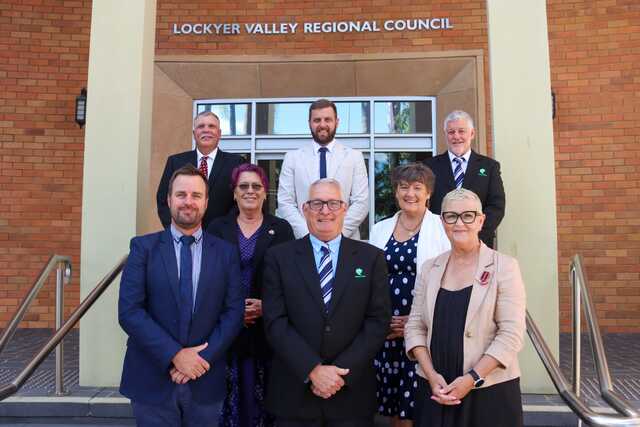
    Lockyer Valley Regional Council has answered the call for assistance from a community impacted by Ex-Tropical Cyclone Koji, with a staff member from Council’s Disaster…

More News

  • Lockyer announce Scott Greensill as CEO

    Lockyer announce Scott Greensill as CEO

    Lockyer Valley Regional Council has appointed Scott Greensill as its new Chief Executive Officer. Councillors formally approved the appointment of Mr Greensill at a Special Meeting of Council in February.…

  • Myers resigns for health reasons

    Myers resigns for health reasons

    Wollongong’s Councillor Tiana Myers has resigned, as a Ward Three Councillor for City Council due to health reasons. Cr Myers was elected to Council in 2024 with a focus on…

  • Acknowledging women’s role in councils

    Acknowledging women’s role in councils

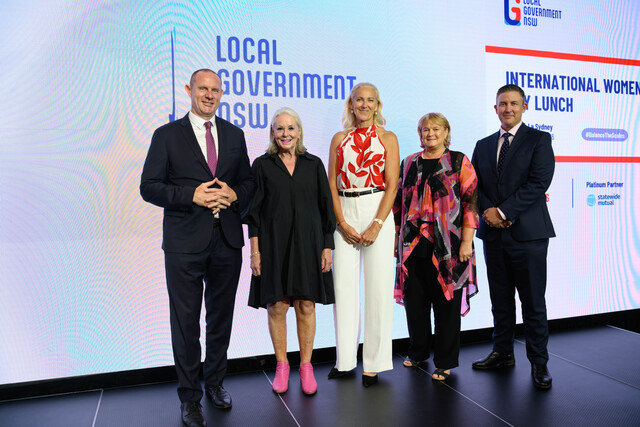
    Council representatives from across the state gathered in Sydney today for Local Government NSW’s (LGNSW) International Women’s Day event. Mayor Darcy Byrne, President of LGNSW, said the event was an…

  • Kylie Davies beats strong field

    Kylie Davies beats strong field

    Flinders Shire Council is pleased to announce the appointment of Kylie Davies as its new Chief Executive Officer. Ms Davies will start in the role on 13 April following a…

  • Leaving on a high

    Leaving on a high

    Mount Alexander Shire Council’s Chief Executive Officer Darren Fuzzard will end his tenure at the council in July 2026, marking ten years of service to the organisation and community. Mr…

  • Safety first for transport corridor

    Safety first for transport corridor

    Traversing a major Townsville transit corridor spanning three suburbs will soon be safer for motorists, cyclists and pedestrians, with Townsville City Council commencing a $3.8 million upgrade of Hugh and…

  • Creating long-term employment pathways

    Creating long-term employment pathways

    The Shire of Carnarvon is creating long-term employment pathways and strengthening workforce capability through its participation in the Remote Jobs and Economic Development (RJED) Program, a national initiative designed to…

  • Cool summer plan for Campbelltown

    Cool summer plan for Campbelltown

    Extreme heat is the biggest killer of natural disasters in Australia, exceeding that for any other environmental disaster combined, including floods, storms, bushfires and cyclones. While high temperatures pose risks…

  • Bathurst has it’s scrap together

    Bathurst has it’s scrap together

    Bathurst Regional Council has successfully concluded its ‘Let’s Get Our Scrap Together’ campaign, launched on 1 September 2025 with funding from the NSW Government and delivered in collaboration with NetWaste…

  • Baw Baw acting CEO tenure extended

    Baw Baw acting CEO tenure extended

    Baw Baw Shire Council has extended the contract of Acting Chief Executive Officer Sally Jones until 30 June 2026. The matter was considered as a confidential item in the late…