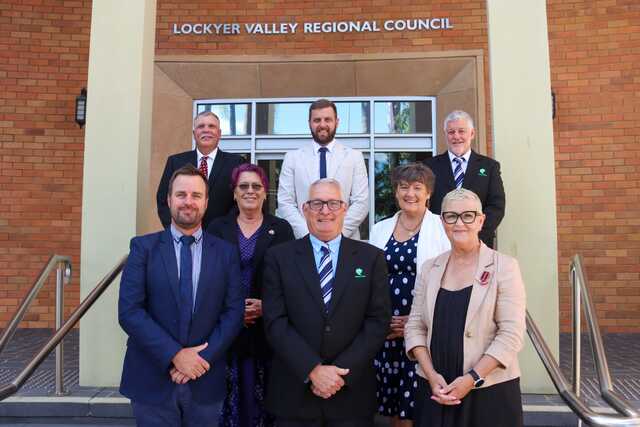
Each edition we feature the views of a State Local Government Association President. The following is from Councillor Bill Bott, President New South Wales Shires Association.
Now the Federal election is over, the impact of changes to the taxation system can be discussed in a less partisan fashion. It is time to get down to the serious business of implementing a tax system which reflects national requirements into the next century.
This is a time when the international economic climate is vastly more complex than when the current mix of direct and indirect taxes emerged half a century ago. It is a time when the pressure on the public purse is swelling, both because the population is ageing, increasing demands on health and housing, and because much national infrastructure is ageing and needs replacement.
As we have moved from an economy based upon primary and secondary production to an economy with a large service sector component, income tax collection as a percentage of total revenue has contracted.
The present system is inequitable in that bracket creep has seen PAYE taxpayers paying a disproportionate share of total taxation. Revenue leakage through the cash economy, avoidance and minimisation all contribute to a taxation system needing reform.
Irrespective of which political party is in government, a similar level of funding is required to finance the nation’s needs and service the demands of good governance. If income taxation as a percentage of total revenue contracts further, the pressures to raise finance through asset sales, increased user pay charges, and further rationalisation of service delivery will all continue.
All of which impact unfavourably on rural areas particularly those of greatest isolation. We need therefore to reform the system and broaden the taxation base. What is required now is a taxation system flexible enough to meet the challenge of increasing economic globalisation and broad based enough to raise the revenue for adequate levels of public services across the community and across the country.
Yet despite the high productivity of rural areas, more and more cutbacks in services, public and private, are under threat. The answer is not to load up productive enterprises with excessive taxes – either through massive fuel taxation or high rates of wholesale tax on traditional manufactured goods. There are far too many taxes on business inputs already.
It makes good sense in both equity and efficiency terms to spread the taxation burden as widely and as evenly as possible. A tax on services as well as goods is urgently needed. The effects of such a tax will inevitably affect some groups of consumers more than others, so it is essential to ensure reasonable compensation.
Also, there are some kinds of services – education, health, water, Local Government – where no good purpose would be served by including them in the tax net. However, restrict the net too much and we will be back where we started from, with a system constricted and distorted by being based too narrowly. By including the widest range of goods and services within the net, the rate can be also be kept as moderate as possible.
From the point of view of Local Government, two issues arise. First, there are the many services for which the local citizens are now charged a nominal fee to assist with costs of service provision.
We have been advised that these nominal charges will be exempt from a GST, which will only apply to Council commercial activities to bring them into line with private commercial activities. Together with zero rating of rates and charges, that the impact of a GST on Council services will be minimal
Second, it is in the interest of Local Government to make the tax system more robust and responsive to changing patterns of production and consumption. If we do not, then Local Government’s own revenue base will come under increasing threat &emdash; not from the Commonwealth, which has plenty of other options, but from the States.
Already Councils’ tax base is eroded through land tax and stamp duties on property transfers. Unless the States are presented with a taxation system which guarantees they are able to provide services at a reasonable level in the future, there will be further and more widespread incursion into property taxation, the traditional preserve of Local Government.
Our principal objective now must be to achieve a fixed percentage of the proposed growth tax (GST) for Local Government, and to ensure that Local Government’s financial assistance is not eroded in any way by the States. Taxation reform is not only needed and will be good for Australia; it may well be good for Local Government.